22, February 2024
Kremlin lashes out after Joe Biden aims sweary barb at Vladimir Putin 0
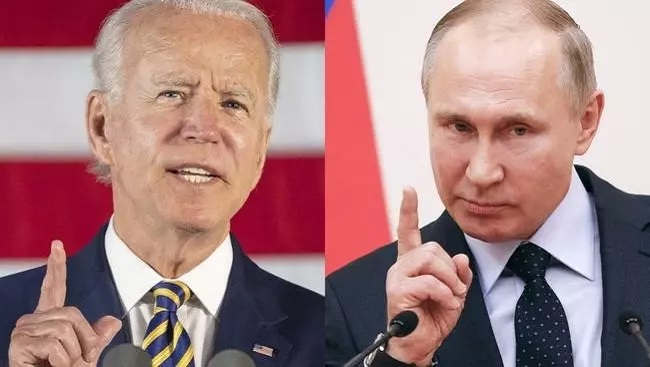
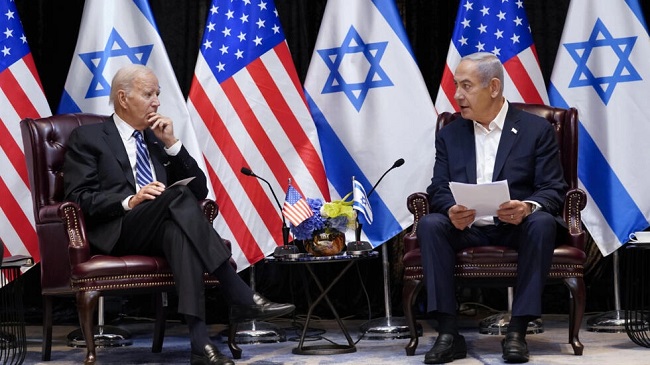
The Kremlin has accused Joe Biden of attempting to appear like a “Hollywood cowboy” after the US president called Vladimir Putin “a crazy SOB”.
Mr Biden made the comments at a public fundraising event on Wednesday in California, warning about the threat of nuclear conflict.
In response, Kremlin spokesman Dmitry Peskov called it a poor attempt to appear like a “Hollywood cowboy”.
He added that such vocabulary “debases America itself”.
In a brief speech in San Francisco, Mr Biden said: “We have a crazy SOB like that guy Putin, and others, and we always have to worry about nuclear conflict, but the existential threat to humanity is climate.”
It is not the first time the US president has used the offensive term. In a hot-mic slip in 2022, Mr Biden called a Fox News journalist a “son of a bitch”.
He has also called Mr Putin a “butcher” and a “war criminal” in the past.
The Kremlin spokesman said it was “unlikely to infringe on our president, President Putin. But it debases those who use such vocabulary”.
Mr Peskov said the remark was “probably some kind of attempt to look like a Hollywood cowboy. But honestly I don’t think it’s possible”.
“Has Mr Putin ever used one crude word to address you? This has never happened. Therefore, I think that such vocabulary debases America itself,” he added.
In California, Mr Biden also took aim at Donald Trump, who he is likely to face off against in November’s presidential election.
Mr Trump has appeared to compare himself to Alexei Navalny, the Russian opposition activist who died in jail last week.
The Republican has not assigned blame to Mr Putin for Navalny’s death, while Mr Biden said there can be “no doubt” the Russian president was responsible.
“If I stood here 10 to 15 years ago and said all this, you’d all think I should be committed,” Mr Biden said.
Last week, Mr Putin raised some eyebrows when he said he would rather Mr Biden take the presidency over Mr Trump in November.
“He’s more experienced, he’s predictable, he’s an old-style politician,” Mr Putin told Russian TV.
Source: BBC













5, March 2024
US Supreme Court rules Colorado cannot ban Trump from presidential ballot 0
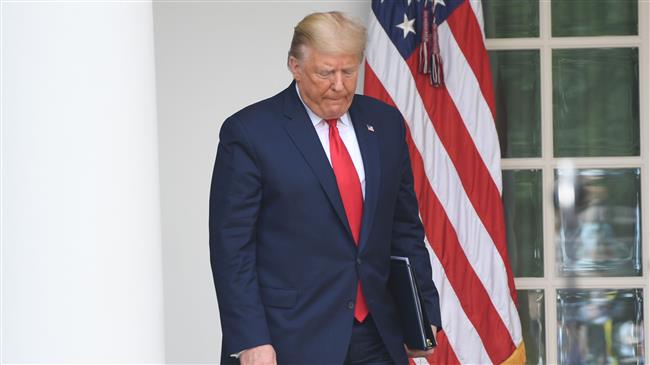
The US Supreme Court has struck down efforts by individual states to disqualify Donald Trump from running for president using an anti-insurrection constitutional clause.
The unanimous ruling is specific to Colorado, but it also overrides challenges brought in other states.
Colorado had barred Mr Trump from its Republican primary, arguing he incited the 2021 Capitol riot.
The court ruled that only Congress, rather than the states, has that power.
The top court’s decision clears the way for Mr Trump to compete in the Colorado primary scheduled for Tuesday.
Mr Trump is the front-runner for the Republican nomination and looks likely to face a rematch with Democratic President Joe Biden in November’s general election.
On Monday, the ex-president immediately claimed victory following the ruling, taking to his Truth Social media platform to claim a “big win for America”. The message was followed by a fundraising email sent to supporters of his campaign.
Speaking from his estate in Mar-a-Lago, Florida, soon afterwards, he said that the decision was “very well crafted” and will “go a long way towards bringing our country together, which it needs”.
“You can’t take someone out of a race because an opponent would like it that way,” Mr Trump added.
Colorado’s Secretary of State, Jena Griswold, said that she was disappointed by the ruling and that “Colorado should be able to bar oath-breaking insurrections from our ballot”.
Additionally, the watchdog group that brought the case in Colorado, Citizens for Responsibility and Ethics in Washington (Crew), said in a statement that while the court “failed to meet the moment”, it is “still a win for democracy: Trump will go down in history as an insurrectionist”.
Maine and Illinois had followed Colorado in kicking Mr Trump off the ballot on similar grounds.
The efforts in both those states were put on hold while his challenge to the Colorado ruling was escalated to the Supreme Court.
“We conclude that states may disqualify persons holding or attempting to hold state office,” the court’s opinion says. “But states have no power under the Constitution to enforce Sections 3 with respect to federal offices, especially the presidency.”
The nine justices ruled that only Congress can enforce the 14th Amendment’s provisions against federal officials and candidates.
Part of the Civil War-era amendment – Section 3 – bars federal, state and military officials who have “engaged in insurrection or rebellion” against the US from holding office again.
Groups including Free Speech For People had argued that the attempt to delay the peaceful transfer of power on 6 January 2021 matched the definition of insurrection outlined in the amendment.
One of the court’s justices, Amy Coney Barrett, wrote separately that the fact that all nine justices agreed on the outcome of the case is “the message that Americans should take home”.
Source: BBC