24, August 2021
Southern Cameroons Bishops call for an end to the conflict: Our people are tired of living in uncertainty 0
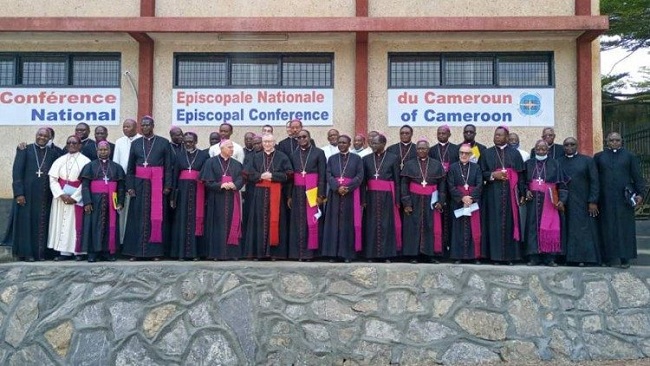
“We deplore the violence, insecurity, kidnappings, torture and senseless killings, sometimes of innocent people and children”, emphasized the Bishops of the Bishops’ Conference of Bamenda Province (BAPEC) in a statement published on Sunday, August 22nd, in which they renew their appeal for the end to the long conflict in the Anglophone regions of Cameroon.
The BAPEC members appeal to all armed groups to “end the violence with immediate effect and work towards a peaceful solution to the conflict”. “Our people have suffered enough and are tired of living in uncertainty and fear”, said the bishops, who praised the commitment of the priests who “stood by the people entrusted to them with pastoral care and have made and continue to make heroic sacrifices in this time of crisis”.
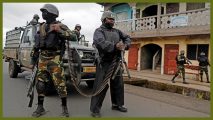
On August 20, a seven-year-old student at the St. Theresa Catholic Primary School in the Kumbo diocese of Cameroon was killed by a stray bullet in a gun battle between Cameroonian soldiers and separatists near the school.
On Sunday, August 22nd, a female parishioner was killed and a pastor was wounded during a service in the Presbyterian Church in northwest Bali.
A military patrol was ambushed by separatists. In the exchange of fire, stray bullets killed the women and wounded the pastor.
The conflict in the Anglophone regions in the southwest and northwest of Cameroon has been dragging on for more than four years and has intensified since the separatists symbolically declared the independence of the two areas that have been grouped into one in Ambazonia on October 1, 2017.
The separatists chose the date of October 1st to commemorate the independence of the English-speaking area from the United Kingdom in 1961. The French-speaking part had gained independence from France in 1960. The creation of a single bilingual state was then decided in a referendum. However, residents of the English-speaking regions complain that they are discriminated against in legislation and in education compared to French speakers.
The conflict has already claimed more than 3,500 lives and forced more than 700,000 people to flee their homes.
Source: Agenzia Fides

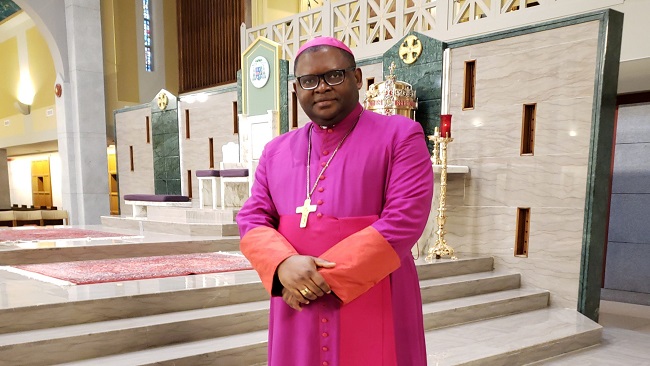
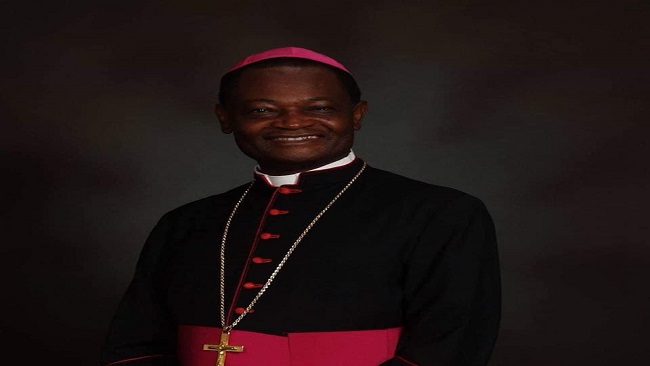
 The conflict had erupted in Cameroon’s Northwest and Southwest regions earlier in 2017 when protests against new government-appointed judges in the regions turned violent. As government forces responded with lethal force, tensions mounted and many English speakers in the predominantly French-speaking country started asking for independence. The ensuing conflict between separatist fighters and government forces has killed at least 3,000 civilians, according to Human Rights Watch. The Internal Displacement Monitoring Centre estimates that at least 460,000 have been forced to flee the affected areas, with tens of thousands seeking refuge in neighboring Nigeria. The Catholic bishops said the government has been too violent in its response to those seeking to form an English-speaking state. Esua said Biya’s 2017 pledge effectively made clear that “anybody who identified himself with the Anglophone cause was considered a terrorist.” After two years of fighting between the two sides, Biya called for a one-week “Major National Dialogue,” held Sept. 30-Oct. 4, 2019. However, the president said the dialogue would not only consider the insurgency but also “issues of national interest such as national unity, national integration and living together.” Bishop George Nkuo, who has headed the Kumbo Diocese in the Northwest Region since 2006, said that approach was wrong because it didn’t address the urgency of the Anglophone problem. Nkuo said the forum should have been used to discuss the Anglophone problem and not all the problems of the nation. He said it was necessary to use that dialogue to revisit the root causes of the conflict as the only possible way of bringing forth a sustainable solution. And the causes of the problem, he said, are rooted in Cameroon history. Initially colonized by Germany in 1884, Cameroon would be divided between Britain and France after the defeat of the Germans in World War I. Britain got one-fifth of the formerly German territory, which it administered as part of Nigeria until 1961 — when through a plebiscite, the British Southern Cameroons (as the British administered entity of Cameroon was then called) voted to reunite with the part formerly administered by France (which had gained its independence in 1960). The two entities went into a federal structure of government, with each entity allowed to freely run its affairs in line with the systems inherited from the colonial powers. But in recent years, some people in the English-speaking regions had accused the central government of trying to quash their traditions.
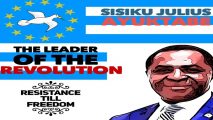
 A view of the Catholic cathedral of Kumbo, in Cameroon’s English-speaking Northwest Region In 2016, four Catholic bishops in the English-speaking regions accused Biya’s government of trying to strangle their culture. “Anglophone Cameroonians are slowly being asphyxiated as every element of their culture is systematically targeted and absorbed into the Francophone Cameroon culture and way of doing things,” they wrote at the time. Nkuo said the 2019 dialogue should have revisited these historical perspectives to come up with the right answers to the problem. The current archbishop of Bamenda, Andrew Nkea Fuanya, criticized the format of the dialogue, saying it didn’t involve the appropriate representatives of the English-speaking regions. “That wasn’t a dialogue at all,” Fuanya told NCR. Esua was invited to participate in the dialogue. “To be frank, it was a monologue,” he said. “In a dialogue, you take two people to dialogue. And in a dialogue, you have different opinions. You have to listen to the other person and the other person listens to you, and gradually you come to an agreement.” “Ninety percent of the participants at the National Dialogue were all government people, or people with government allegiance, but the real persons with whom you had to dialogue were not there,” said Esua. Separatist leaders weren’t part of the dialogue. Sesseku Ayuk Tabe, the recognized leader of the movement to form a new country of Ambazonia, was arrested in 2018 and is now serving a life sentence. “You couldn’t talk of a dialogue if these people weren’t there,” Esua said of the separatist leaders’ absence at the negotiating table. Nevertheless, the dialogue came up with a number of recommendations, including the adoption of a special status for the two Anglophone regions, the immediate relaunch of certain airport and seaport projects in the regions, the rapid integration of ex-combatants into society, and a hastening of decentralization of power away from the central government.









30, August 2021
Southern Cameroons Crisis: Suspected Amba Boys kidnap Catholic priest in Mamfe 0
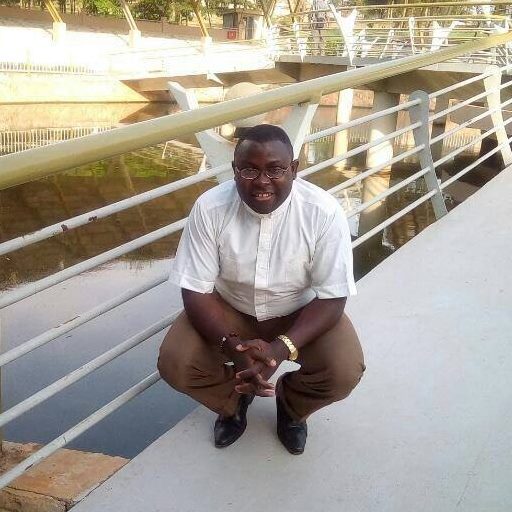
The Mamfe Roman Catholic Diocese in the South West region asked Monday for prayers for a priest abducted by suspected members of the Ambazonia Restoration Forces defending Manyu territory.
“Kindly join us in praying for the quick and safe release of Rev Fr. Julius Agbortoko Agbor, who was abducted by suspected members of the Ambazonia Restoration Force yesterday August 29, 2021” His Grace Archbishop Andrew Nkea, told local and international media earlier today.
Rev Fr. Julius Agbortoko Agbor, Priest of the Diocese of Mamfe and current Vicar General of the Diocese of Mamfe was ordained on April 14 2004.
Cameroon Concord News understands he served in various capacities including Parochial Vicar and Parish Priest. The man of God also studied Dogmatic Theology at the Pontifical Urban University in Rome and was appointed Spiritual Director and Lecturer at the St John Paul II Major Seminary, Bachuo Ntai Mamfe.
In 2018 he was appointed Vicar General of the Diocese of Mamfe , a position he has occupied till his abduction yesterday August 29, 2021.
By Soter Tarh Agbaw-Ebai with files