Featured
Most Commented Posts
 4 Anglophone detainees killed in Yaounde
18 comments Chantal Biya says she will return to Cameroon if General Ivo Yenwo, Martin Belinga Eboutou and Ferdinand Ngoh Ngoh are sacked
13 comments The Anglophone Problem – When Facts don’t Lie
12 comments Anglophone Nationalism: Barrister Eyambe says “hidden plans are at work”
12 comments Largest wave of arrest by BIR in Bamenda
10 comments
Featured
-

Manyu Division is badly in need of a neutral, credible and unifying voice
-

Iran’s missiles more accurate and destructive day by day
-
Cameroon, a republic of drunkards with 44 years of national intoxication
-
Pete Edochie: An Iroko Falls
-
Veteran Nigerian Nollywood actor Pete Edochie dies aged 79
-
CPDM faces internal revolt over candidate selection for 2027 elections
-

Senegal regains AFCON title after successful appeal at sport arbitration court
26, November 2026
Manyu Division is badly in need of a neutral, credible and unifying voice 0
by soter • Headline News, Religion
There is no gainsaying that Manyu Division is divided. The recent primaries within the ruling CPDM party have merely exposed in painful and unmistakable fashion, the depth of the cracks running through Manyu Division’s social, political and communal fabric. What many had suspected but quietly ignored has now become increasingly difficult to conceal: Manyu is wounded, Manyu is fragmented and Manyu is struggling to find its common voice.
But the greatest tragedy is not that Manyus disagree. Disagreement is a natural feature of democratic life. The tragedy is that Manyu disagreements increasingly threaten to overshadow its shared identity, its collective aspirations and the future the constituency owe to future generations.
The question therefore, is no longer who won, who lost, who was favoured, who was sidelined or who has the strongest political machinery. The more urgent question is: Who can unite this land? Who can heal Manyu?
These are uncomfortable questions coming from a news reporter who is hated in Manyu, but they are necessary ones. A wounded community cannot heal by pretending that its wounds do not exist. Neither can it heal by continually reopening them through political rivalries, bitterness, personal ambition and the endless pursuit of influence. Manyu needs to pause and search beyond the familiar political circles.
Perhaps the person who can help bring Manyus together is not necessarily the person who has spent decades navigating local power struggles. Perhaps the answer is not another political heavyweight, another partisan champion, or another individual whose loyalties and relationships are already deeply entangled in the acrimonies Manyus are attempting to overcome.
We of the Concord Group think that Manyu Division needs a fresh voice. A voice that commands respect across political, ethnic, generational and geographical boundaries. A voice that has nothing to prove to local political godfathers. A voice that is not indebted to factions. A voice whose credibility comes not from the ability to mobilise hostility, but from the capacity to inspire trust, encourage dialogue and remind Manyus of what they have in common. This begs the question: Could that voice be found in the Diaspora?
For years, Manyu sons and daughters have travelled beyond its borders in search of education, opportunity and professional fulfillment. Some have risen through the ranks of international organisations, global financial institutions, diplomatic establishments, universities, multinational corporations and humanitarian agencies. They have been exposed to cultures of professionalism, institutional accountability, negotiation, leadership and conflict resolution.
Among them are men and women serving, or who have served, in institutions such as the World Bank, the International Monetary Fund, the African Development Bank, SHELL Petroleum and the World Health Organization. These institutions, whatever their limitations and criticisms, operate in environments where complex problems demand dialogue, technical competence, strategic thinking and the ability to work with people who do not necessarily share the same interests.
Could Manyu draw inspiration from one of its sons or daughters who has acquired such experience? Could Manyu look beyond its immediate political environment and identify a person of integrity, humility, competence and unquestionable independence who might be willing to contribute to the healing and rebuilding of the Manyu community?
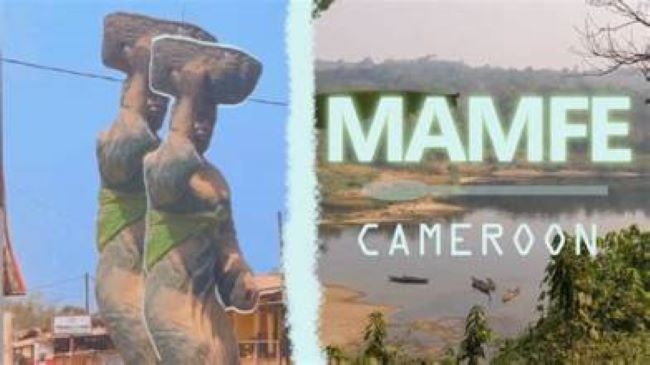
This is not a call to abandon the local leaders in Mamfe, Akwaya, Eyumojock and Upper Banyang nor is it an indictment of everyone who has served in public office from Manyu Division. Many such as E.T.Egbe, Kima, Agbor Tabi, Tanyi Mbianyor and now Victor Mengot have sacrificed, worked hard and contributed meaningfully to Manyu’s development. Their efforts deserve recognition. But it is also true that when a community becomes deeply polarised, sometimes the most effective mediator is someone who stands sufficiently outside the competing camps to be trusted by all of them.
Neutrality matters. Independence matters. Character matters. The ability to listen to those who disagree with you matters even more.
Manyu must begin to understand that unity cannot be manufactured through intimidation, political patronage, public declarations or the artificial appearance of consensus. Real unity is built when people feel heard, respected, included and assured that their future is not being negotiated behind closed doors by a select few.
Manyu traditional rulers, religious leaders, political actors, elites, youth organisations, women, civil society and Diaspora communities must all have a place at the table. But perhaps the time has come for Manyus to identify an individual who can convene that table without being perceived as serving one faction over another. That table should be another Manyu World Conference.
A son or daughter of Manyu working within the World Bank, IMF, African Development Bank, WHO or another respected international institution could potentially offer such a bridge. Not because an international title automatically confers wisdom, patriotism or moral authority, but because professional exposure, a broader worldview and independence from local political entanglements may provide valuable qualities at this critical moment.
Such a person would, of course, need to act in their personal capacity, respect the obligations of their professional institution and be willing to serve without seeking political advantage.
The call is not for someone to return home and impose a solution. It is for someone to help Manyu rediscover itself. Someone who can sit with bitter rivals and remind them that tomorrow they will still share the same villages, the same family ties, the same history, the same land and inevitably the same future. A Manyu citizen who can tell our politicians that political victories are temporary, but the damage inflicted on a community through prolonged division can last for generations! A Manyu citizen who can remind Manyu elites that influence without responsibility is empty and that the true measure of leadership is not how many people applaud you, but how many people can trust you even when they disagree with you. A Manyu man or woman who can encourage young Manyus to refuse inheriting the bitterness of their elders.
The Manyu Diaspora too must look beyond remittances, family obligations and individual success. Manyus abroad have acquired tremendous intellectual, professional and financial capital. But what is the value of all this accumulated success if our homeland continues to struggle with divisions that weaken our collective voice and compromise our common future? The Manyu diaspora cannot keep looking away and then return home only to complain about the state of affairs.
At some point, those who have acquired knowledge, experience, networks and influence beyond our borders must ask themselves what meaningful contribution they can make to the place that shaped them.
This is not about glorifying international institutions or assuming that someone who works in Washington, Geneva, Abidjan, Amsterdam or elsewhere automatically possesses the answers to Manyu’s problems. It is about recognising that sometimes the solutions to local challenges require fresh perspectives, new approaches and the courage to transcend familiar political loyalties.
The search for a unifying figure must not become another popularity contest. Manyus must not replace one divisive personality with another. The person we seek must be humble enough to listen, courageous enough to speak truth to all sides, patient enough to build consensus and principled enough to resist being captured by any faction. And if such a person exists among Manyu sons and daughters serving in international institutions, perhaps Manyu should reach out. Not with entitlement. Not with pressure. Not with political manipulation. But with a genuine appeal to conscience, patriotism, service and the collective good.
Manyu Division is bleeding politically, socially and emotionally. Manyus cannot afford to normalise this condition. Manyus cannot continue to celebrate their divisions as victories for one camp or another while the larger community pays the price. The time for introspection is now. The time for reconciliation is now. The time to search for a bridge-builder is now. Manyu does not merely need another leader. Manyu needs a healer.
And perhaps that healer is somewhere beyond the corridors of our local politics, quietly serving humanity on the international stage, waiting for a moment when home will call—not for power, not for recognition, not for applause—but for the noble task of helping a wounded people find one another again.
The question we must finally dare to ask is this: Among our sons and daughters scattered across the world, who has the courage, credibility, humility and independence to return or lend their voice and help unite Manyu?
May that search begin in earnest! May Manyu find its healing! And may Manyus rediscover, before it is too late, that their greatest strength has always been their ability to stand together.
To this I put my name
Soter Tarh Agbaw-Ebai