
28, November 2018
Mild Fatigue vs Serious illness: Gabon’s Bongo to recuperate and meet presidency officials in Morocco 0
Gabon’s President Ali Bongo is expected to leave Saudi Arabia, where he was hospitalised last month after suffering a stroke, for Morocco on Wednesday, according to his wife.
Bongo has not been seen in public since being admitted to hospital during a conference on Oct. 24. Gabon’s top court ruled earlier this month that the vice president would chair the cabinet in Bongo’s absence.
In a post on her Facebook page, Sylvia Bongo wrote that her husband’s health had improved significantly and that he would travel to Rabat on Wednesday.
“To pursue his recuperation, the president, in concertation with his close family, has decided to accept the proposal of his brother, His Majesty the King of Morocco, Mohammed VI,” she said.
Bongo has asked advisers from the presidency to join him in Rabat to consult on affairs of state, his wife added.
The Bongo family has ruled the oil-producing country for nearly half a century. Bongo has been president since succeeding his father, Omar, who died in 2009.
His re-election in 2016 was marred by claims of fraud and violent protest.
Africa News













28, November 2018
French Cameroun is putting Ambazonia leaders on trial 0
The leaders of Africa’s newest nation, the Federal Republic of Ambazonia extradited from Nigeria earlier in 2018 will face trial next month on terrorism charges, according to one of their lawyers. The ten members of the Southern Cameroons Interim Government including President Sisiku Ayuk Tabe were reportedly charged by judges in the Yaounde Military Tribunal in French Cameroun.
“Ten charges have been brought against them, including terrorism, advocating terrorism, secession, civil war and revolution,” lawyer Christopher Ndong told Reuters after the charges were read out at the Yaounde’s military tribunal on Tuesday. The trial is scheduled to begin on Dec. 6, Ndong added.
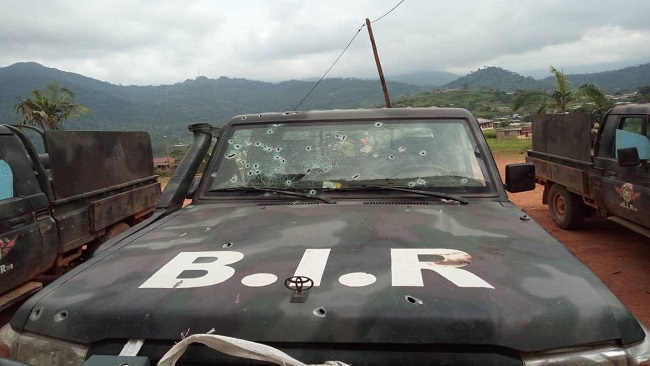
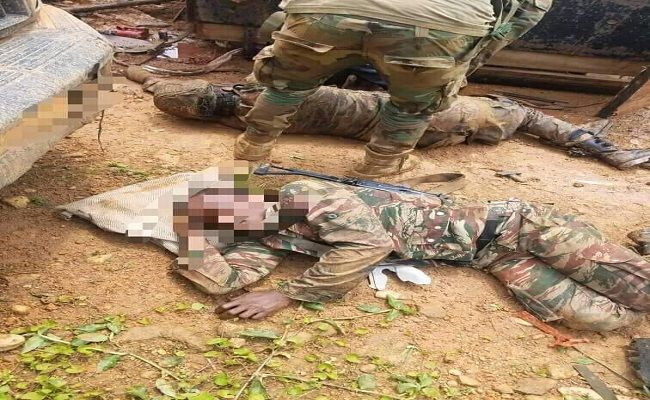
For more than two years, Southern Cameroonians have engaged the government in a tough battle that has resulted in the killing of some 4,000 Cameroonians, including over 1,300 soldiers.
Following a demonstration by teachers and lawyers in 2016, the two English-speaking regions have become ungovernable. The government’s military actions have caused some 200,000 Southern Cameroonians to flee to Nigeria while millions are hiding in the bushes to avoid the government’s indiscriminate killings.
Many children are today seeking refuge in those bushes and many babies have been delivered in the process. The numbers of teenage mothers have increased and this spells another serious problem in the future. The government has not taken any efforts to convince the people for them to return to their homes.
On the contrary, soldiers have been torching many homes and killing any young Southern Cameroonians found in the territory in the hope that they could eliminate any threat Southern Cameroonians pose to the government.
Schools have been closed now for two years in the region and many of the students have simply been co-opted into the armed groups that have emerged. As the government turns down any appeals for inclusive dialogue, so too does the situation deteriorate. Even after solutions to the conflict would have been sought, security issues will linger for a long time. Many young men, who have lost hope in life, will continue to use their weapons as a means of eking out a living.
By Sama Ernest and Kingsley Betek