22, August 2018
Southern Cameroons War: Understanding the school resumption crisis 0
The school boycott adopted in Oct 2016 was a strategy by the Consortium to force the hand of French Cameroun to reverse its policy of assimilation and destruction on the Anglophone Sub System of education. It was a necessary strategy at the time.
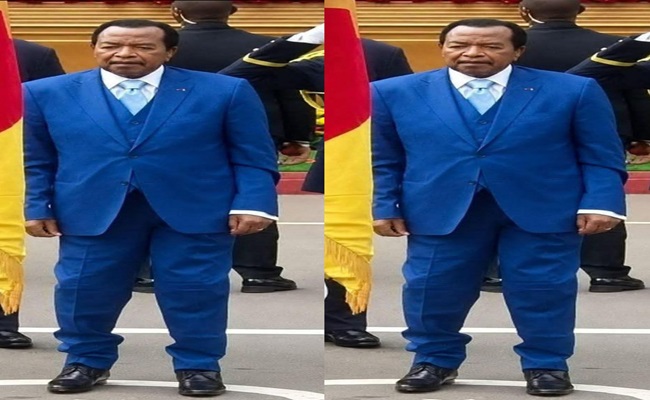
However 2 years on, the Apartheid regime of Paul Biya of French Cameroun has no immediate intention to stop or reverse its Apartheid Policy.
The current crisis in Ambazonia is a political crisis-that of Decolonization and Annexation. Which if French Cameroun had good intentions it would have been resolved at the Negotiations Table not in the bushes with the barrel of the gun.
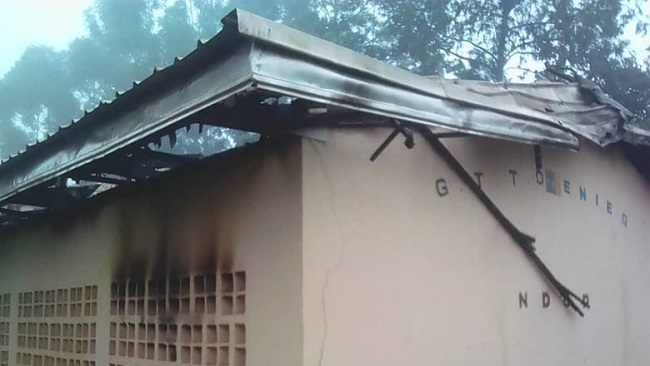
The current war environment makes it very difficult for schools to function normally and effectively. Some whole communities have been deserted. Some destroyed and burnt by Apartheid soldiers of French Cameroun.
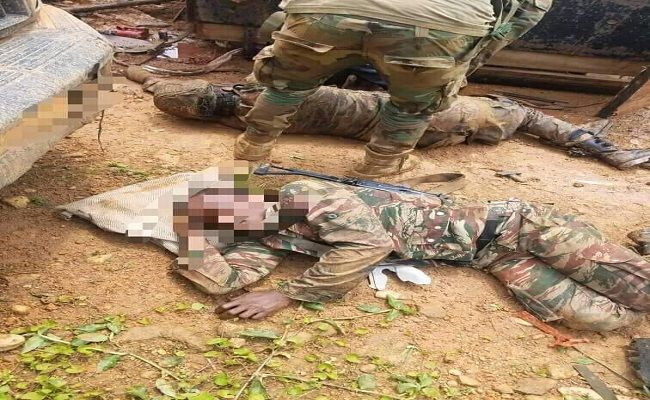
And this has not stopped. We have seen some photos of French Cameroun snipers in Ambazonia. This sets the stage for the killings of innocent school children as they attempt to go to school.
Yes it’s very easy to say children should return to school. How do you guarantee the security of these children in the current war environment? This is the subject we should be discussing including the security of children while they attend their daily school routine.
The security of children is not a subject for emotional minds, but a subject for level headed, pragmatic and rational minds. How will children attend schools in Lebialem, Belo, Kupe, Batibo, etc where bullets are constantly flying in the air.
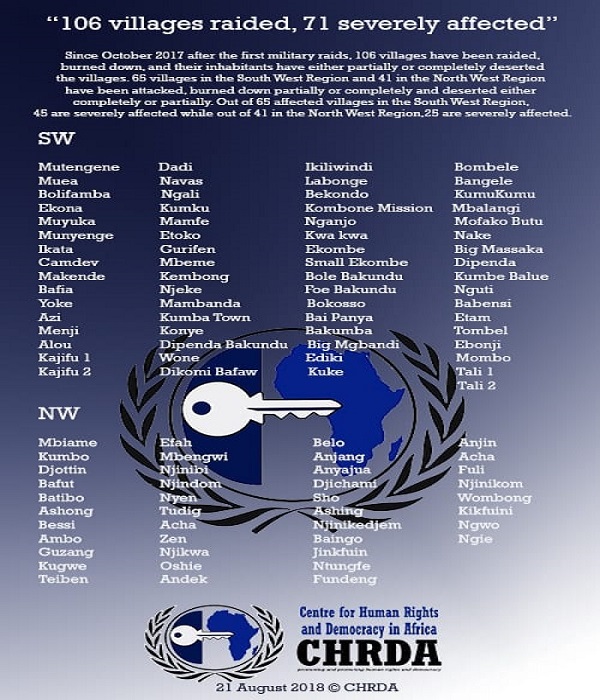
As a parent will you send your child to school in the named LGAs above. That is the challenge we are facing. What about all the villages that have been scorched (As contained in the report by Agbor Balla’s CHRDA – Centre for Human Rights and Development in Africa).
Schools can never resume effectively with bullets flying in the air. Unless there is a cease fire from both sides schools will continuously be disrupted.
I know some will quote Syria, Iraq, and Afghanistan etc. Which also have ongoing wars but yet children are still studying.
So yes schools should carry on, however parents should note the following;
1) The Security risk of sending your child to school each day.
2) The potential of your child being injured or killed while in school or in the process of attending school.
3) The curriculum will only be partially completed due to the disruptive nature of the school environment.
4) Prepare for the trauma which some children will face as a result of the violence that they may experience as result of the war.
These are some of the challenges parents and teachers should brace themselves for.
Both sides – French Cameroun troops and Amba Boys should respect the Geneva Convention as schools should be protected.
But from past and recent experiences we all know who the defaulters of the Geneva Convention are. French Cameroun of course.
My dear Ambazonians, these are the challenges we face as to schools continuity as we continue to fight for the restoration of the autonomy of Southern Cameroons.
By Oswald Tebit

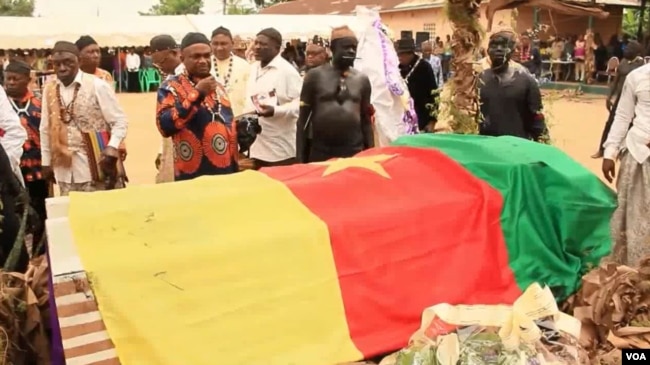
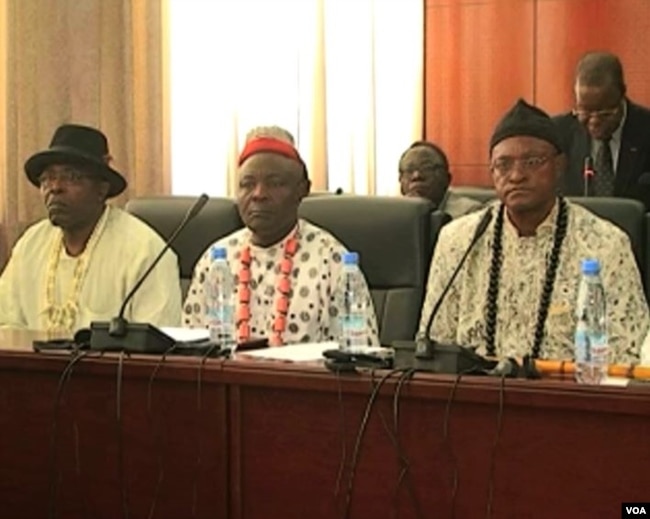

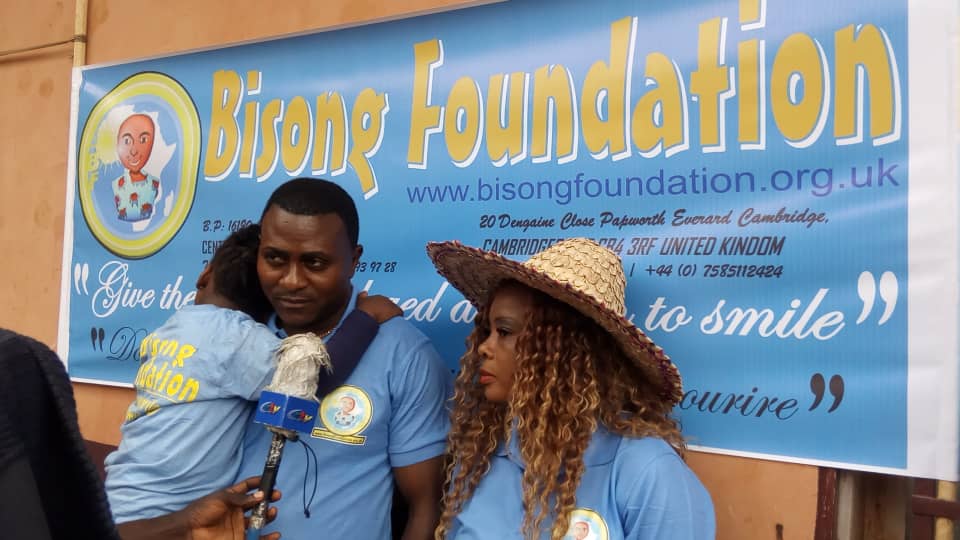
 Though visibly grateful for another day of donations from Bisong Foundation, Thursday, August 16, 2018, the Orphelinat Le Bon Samaritain (Good Samaritan Orphanage) in Babete is, like Oliver Twist, asking for more.









22, August 2018
US: Cohen pleads guilty to campaign violations, implicates President Trump 0
Michael Cohen, Donald Trump’s former personal lawyer, pleaded guilty Tuesday to campaign-finance violations and other charges, saying he and Trump arranged the payment of hush money to a porn star and a former Playboy model to influence the election.
Cohen’s account appears to implicate Trump himself in a crime, though whether or when a president can be prosecuted remains a matter of legal dispute.
The guilty plea was part of a double dose of bad news for Trump: It came at almost the same moment his former campaign chairman Paul Manafort was convicted in Alexandria, Virginia, of eight financial crimes in the first trial to come out of special counsel Robert Mueller’s sprawling Russia investigation.
In a deal reached with federal prosecutors, Cohen, 51, pleaded guilty to eight counts, including tax evasion. He could get about four to five years in prison at sentencing Dec. 12.
In entering the plea, Cohen did not name the two women or even Trump, recounting instead that he worked with an “unnamed candidate.”
But the amounts and the dates all lined up with the $130,000 paid to porn star Stormy Daniels and the $150,000 that went to Playboy Playmate Karen McDougal to buy their silence in the weeks and months leading up to the 2016 White House election. Both women claimed to have had affairs with Trump, which he denies.
Cohen, his voice shaky as he answered questions from a federal judge, said one payment was “in coordination and at the direction of a candidate for federal office,” and the other was made “under direction of the same candidate.”
Daniel Petalas, a former prosecutor in the Justice Department’s public integrity section, said, “This brings President Trump closer into the criminal conduct.”
“The president has certain protections while a sitting president, but if it were true, and he was aware and tried to influence an election, that could be a federal felony offense,” Petalas said. “This strikes close to home.”
‘THIS IS VERY SERIOUS FOR THE PRESIDENT’: FRANCE 24
However, in the charging documents, a news release and comments outside the courthouse, prosecutors did not go as far as Cohen did in open court in pointing the finger at the president. Prosecutors said Cohen acted “in coordination with a candidate or campaign for federal office for purposes of influencing the election.”
As cable networks were showing split-screen coverage of the conviction and plea bargain by two former loyalists, Trump himself boarded Air Force One on his way to a rally in West Virginia and ignored shouted questions about the men.
Trump’s personal lawyer, Rudy Giuliani, noted in a statement that “there is no allegation of any wrongdoing against the president in the government’s charges against Mr. Cohen.”
‘Take a bullet’
After the court hearing, which ended with Cohen released on $500,000 bail, the lawyer wiped away tears as he gazed out a courthouse window. He left the building and headed straight for a black SUV with tinted windows. A couple of people outside chanted, “Lock him up!” as they recorded the scene with their phones.
Under federal law, expenditures to protect a candidate’s political fortunes can be construed as campaign contributions, subject to federal laws that bar donations from corporations and set limits on how much can be given.
“If those payments were a crime for Michael Cohen, then why wouldn’t they be a crime for Donald Trump?” Cohen’s lawyer, Lanny Davis, tweeted.
Cohen’s plea follows months of scrutiny from federal investigations and a falling-out with the president, for whom Cohen once said he would “take a bullet.”
The FBI raided Cohen’s hotel room, home and office in April and seized more than 4 million items. The search sought bank records, communications with Trump’s campaign and information on the payments to the two women.
According to prosecutors, the payment to McDougal was made through the parent company of the National Enquirer. Cohen made the payment to Daniels through his own company and then was reimbursed by Trump, he said.
Trump denied to reporters in April that he knew anything about Cohen’s payments to Daniels, but the explanations from him and Giuliani have shifted multiple times since.
The president has fumed publicly about the raid, branding it “a witch hunt,” an assault on attorney-client privilege and a politically motivated attack by enemies in the FBI. But privately he has worried about what information Cohen may have after working for the Trump Organization for a decade.
“Obviously it’s not good for Trump,” Sol Wisenberg, who conducted grand jury questioning of President Bill Clinton during the Whitewater investigation, said of the plea bargain.
“I’m assuming he’s not going to be indicted because he’s a sitting president, Wisenberg added. “But it leads him closer to ultimate impeachment proceedings, particularly if the Democrats take back the House.”
The Justice Department’s Office of Legal Counsel has held that a president cannot be indicted while in office. Trump’s lawyers have said that Mueller plans to adhere to that guidance, though Mueller’s office has never confirmed that. There would presumably be no bar against charging a president after he leaves the White House.
Daniels ‘vindicated’
Daniels said Tuesday that she and her lawyer, Michael Avenatti, feel vindicated and look forward to apologies “from the people who claimed we were wrong.”
Nothing made public so far indicates Cohen has agreed to cooperate with prosecutors, but Avenatti said he is certain that is happening.
Mueller’s team, which is looking into Russian interference in the presidential election, came across some of the evidence against Cohen in the course of its investigation and referred the matter to federal prosecutors in New York.
Deputy U.S. Attorney Robert Khuzami said that in addition to the campaign finance violations, Cohen failed to report more than $4 million in income between 2012 and 2016, including $1.3 million from his taxi medallion holdings.
Cohen also lied to a financial institution by failing to disclose more than $14 million in debt and obtaining a $500,000 home equity line of credit he wasn’t entitled to, Khuzami said. Cohen used that credit line to fund the Daniels payment, prosecutors said.
After making the hush money payments, Cohen submitted phony invoices to Trump’s company, ostensibly for services rendered in 2017, the prosecutor said.
“Those involves were a sham,” Khuzami said. “He provided no legal services for the year 2017. It was simply a means to obtain reimbursement for the unlawful contributions.”
Before the election, Cohen had been a trusted member of the Trump organization, working out of an office in Trump Tower next to one used by his boss. He raised millions for Trump’s campaign.
The president’s initial support for Cohen after the raid soon degenerated into a public feud, with Cohen hinting he might cut a deal with prosecutors.
When Cohen’s team produced a recording he had made of Trump discussing one of the hush-money payments, Trump tweeted: “What kind of lawyer would tape a client? So sad!”
(AP)