20, May 2018
US and Biya regime at loggerheads over Southern Cameroons 0
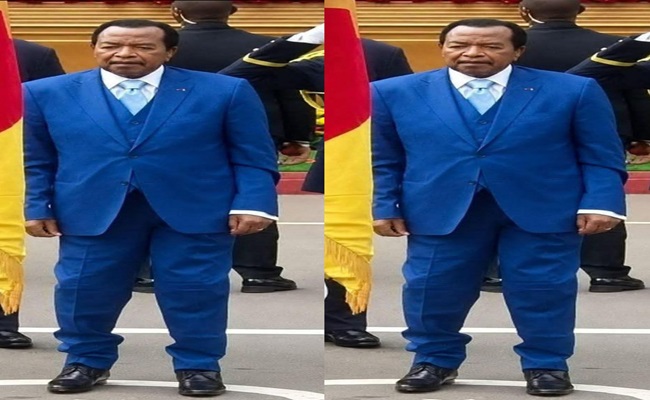
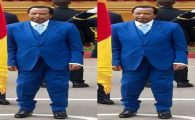
Yaoundé the capital of Cameroon on Saturday denounced the “infantilisation” of the Cameroonian nation following a statement by the United States suggesting to President Paul Biya, who has been in power since 1982, to “reflect on his legacy” and his place in the history book before the presidential elections scheduled at the end of the year.
“We do not accept the infantilisation of the Cameroonian nation. It is with full knowledge of the facts that they (Cameroonians) put their ballot in the ballot box,” said Issa Tchiroma Bakary, spokesman for the Cameroonian government, contacted by telephone from Libreville.
A statement from the US representative in Yaoundé received Friday by AFP said the US ambassador to Cameroon, Peter Henry Barlerin, had “suggested to President Biya that he should reflect on his legacy and how he wants to be remembered in the history books.
“In this regard, I welcomed the recent press communiqué that there would be a full investigation of alleged torture of a prisoner by Cameroonian forces and that the guilty would be punished. A recent UNDP study found that 71 percent of those who said they had joined violent extremist organizations did so because of government action such as the murder of a close relative or friend” he said.
Barlerin added that on the situation in the Northwest and Southwest, the month of April has proven the bloodiest stating that things are not getting better.
“I discussed with the President our view that the two sides in the conflict are simply not listening to each other” he said.
A presidential election is planned this year in Cameroon, to which Paul Biya – 85 years of whom 35 are in power – has not said whether he would run.
Source: Africa News





 Danpullo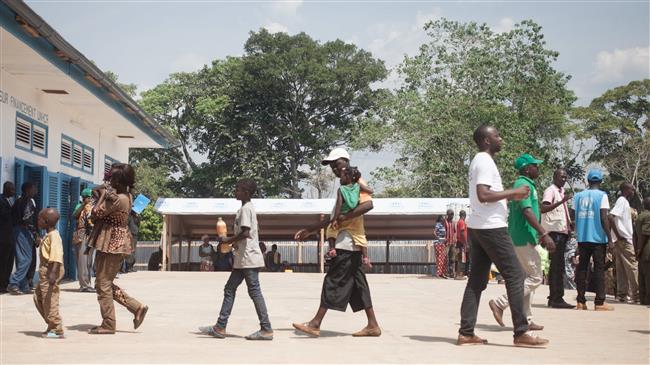












20, May 2018
Tensions Rise in Cameroon 0
Cameroon has again imposed a curfew on its English-speaking regions, where armed separatists vow the country’s national day will not be celebrated May 20.
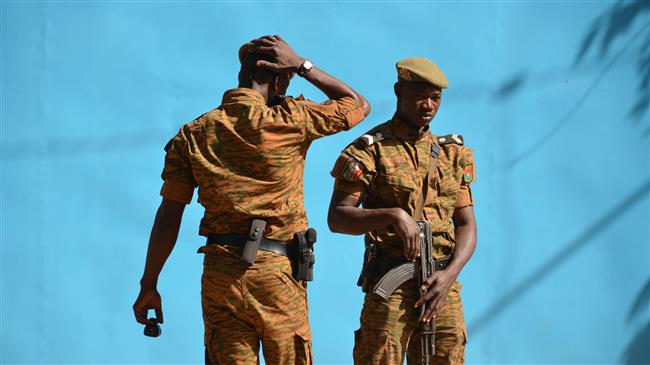
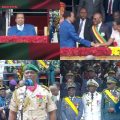
Hundreds of troops deployed from Cameroon’s capital Yaounde carried out parade rehearsals in the southwestern town of Buea, as armed separatists chased out some public officials and closed some schools.
People are scared, says Monjowa Lifaka, Buea-based lawmaker of the ruling CPDM party, because of calls on social media for citizens not to participate in national day activities.
“We should be vigilant,” she said. “The moments are challenging. We should stand up, be one, be each other’s keeper, also to be courageous, to take away fear because with fear, we cannot overcome our difficulties.”
Christians at a church in Buea organized a Saturday service instead of Sunday, for fear they may be attacked by armed separatists who have asked the people to stay in their homes Sunday.
Among the Christians is Rigobert Nde, a night watchman who escaped from Mamfe near the Nigerian border. He says separatists attacked a local school where he worked as the students were preparing to march during May 20 celebrations.
“I heard gunshots nearer my compound, so I left the compound and ran to the farm. I stayed in the bush for some days before I ran to the pastor here,” he said.
Origins in 2016
Unrest in Cameroon began in November 2016, when English-speaking teachers and lawyers in the northwest and southwest regions took to the streets, calling for reforms and greater autonomy. They were frustrated with the dominance of the French language and with what they saw as the marginalization of Cameroon’s Anglophone population.
The protests were followed by a harsh government crackdown, as well as internet shutdowns and arrests.
The crisis intensified when Ayuk Tabe, the man who declared himself president of the English-speaking Republic of Ambazonia, was arrested in December along with 48 others in Nigeria and extradited to Cameroon. They have not been seen in public since.
The separatists have chased away many government workers and forced schools and timber and palm oil processing companies to close. They vowed on social media to paralyze activity until they obtain the release of Ayuk Tabe and his peers, and secure their independence.
Ongoing threats
Bernard Okalia Bilai, governor of the southwest region of Cameroon, says they have maintained a curfew in parts of the region because the terrorists continue to commit atrocities.
“The gunmen are hiding in the bushes, in the forests and usually they would appear on the roads to try to kidnap some passengers,” he said. “Now we always invite the population. They should not fear when they see the forces of law and order [military]. Instead, they should go closer to them and denounce those guys [terrorists]. Those villagers have been terrorized. Some have been killed. Some retired civil servants who are against those terrorists have been killed because those terrorists are accusing them to be informants of the administration.”
The governor has encouraged citizens to openly celebrate their national day, vowing that the military will protect them.
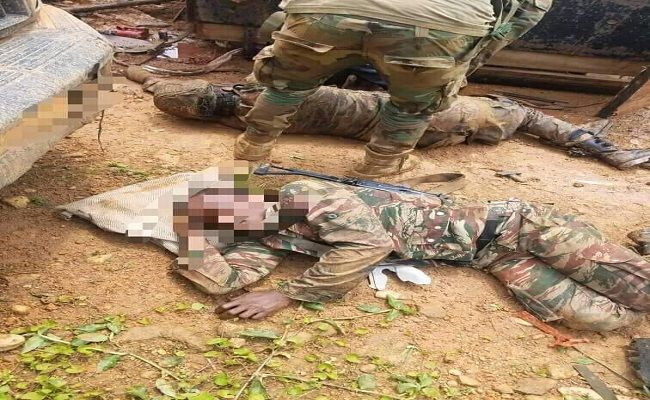
Clashes have led to the deaths of 43 military personnel and hundreds of civilians and armed separatists, according to the government of Cameroon. Sixty villages have been torched and more than 20,000 people have fled to Nigeria, while more than a 100,000 hide in the bushes, according to the United Nations.
Source: VOA