
9, August 2017
Kenya: Opposition claims ‘vote fraud after hack,’ rejects results 0
Kenyan opposition leader Raila Odinga has claimed “massive fraud” in the general elections, rejecting the preliminary results, which have put his longtime rival, incumbent President Uhuru Kenyatta, in the lead.
According to the official website of Kenya’s election commission (IEBC), Kenyatta was holding on to a commanding lead with 54.8 percent, while Odinga has only secured 44.4 percent after nearly 13 million ballots were counted from more than 35,000 of the 40,833 polling stations.
Speaking at a news conference on Wednesday, Odinga claimed that the results of Tuesday’s general elections are not reliable as the election commission’s voting systems had come under cyberattack, leading to “massive and extensive” vote fraud.
“Hackers gained entry into our election database” and “created errors,” Odinga said. “You can only cheat the people for so long,” the opposition leader said. “The 2017 general election was a fraud.”
He called on his supporters to maintain calm, but said “I don’t control the people.” Odinga’s deputy, Kalonzo Muyoka, also made a similar call, adding, however, that the opposition might urge “action” at a later date, without elaborating.
The opposition figure had earlier in the day decried the tallying process as a “sham.” Odinga alleged that the IEBC had not provided documents showing how the tallies were obtained, saying “it is the machine that has voted. These results are wrong.”
The hacking claims prompted Kenya’s election commission to react and counter the allegations, assuring Kenyans that “all is well.” Despite Odinga’s call for calm, a group of his supporters took to the streets to protest the results, chanting “No Raila, no peace.”
The protest, however, turned violent after police forces intervened and fired tear gas at the crowd. At least one protester was killed as riot police opened fire during the clashes in Kisii County, said Leonard Katana, a regional police commander.

Kenyatta, 55-year-old son of Kenya’s first president after independence from British colonial rule, campaigned on a record of key infrastructure projects — many backed by China – while claiming strong economic growth. Odinga, who is also the 72-year-old son of a leader of the independence struggle, presented himself as a champion of the poor as well as a fierce critic of corruption in the country.
Many voters, however, were expected to vote along ethnic lines. Kenyatta is broadly regarded as the candidate of the nation’s largest ethnic group of Kikuyu, while Odinga is affiliated with the Luo voting bloc, which has never won a presidential race.

The top opposition candidate, who is making his fourth presidential run, has further accused his rival of stealing victory from him through rigging both in 2007 and 2013 polls. In 2007, the disputed election led to two months of ethnically-driven political violence that killed nearly 1,100 people and displaced 600,000 others.
The challenged poll in 2013 was referred to the courts, and ended largely peacefully even though Odinga emerged defeated. Tensions have been high leading up to this year’s election since late last month, when Chris Msando, a key administrator of the biometric voting system, was murdered.
“We fear that this is the precise reason why Mr. Chris Msando was assassinated,” Odinga emphasized, pointing to his allegation of fraud. However, IEBC appeared undeterred by Odinga’s statements.
Commissioner Roslyn Akombe said despite a request by an unnamed political party to halt releasing preliminary results the body has decided to “continue to display the results.”
Source: Presstv











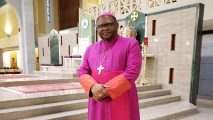



10, August 2017
Indian nun rescues Cameroonian sex slaves from Middle East 0
A celebrated Indian nun who rescues Cameroonian women from slavery in the Middle East has called for greater support for victims to help them recover from the horrors of being drugged, raped and abused. Sister Vanaja Jasphine says she has identified more than 200 women who have been trafficked from the central African nation and enslaved in the Middle East in recent years.
The 39-year-old nun last year helped to bring home 14 trafficking victims, whom she refers to as Cameroon’s “children”. A rising number of African women are heading to the Middle East for domestic work, driven abroad by the lack of jobs at home, rights activists say. Yet many have their passports confiscated and end up trapped in modern-day slavery.
“One woman was thrown from the balcony of a two-storey building by her employer after she accidentally burnt her boss’s shirt whilst ironing,” Jasphine said of a victim in Kuwait. Others are drugged and turned into sex slaves – being raped multiple times a day and even forced to have sex with animals.
“They come home with a lot of trauma,” Jasphine, coordinator of the Justice and Peace Commission of Kumbo, told the Thomson Reuters Foundation in a seminary in the capital Yaounde. “Sometimes, a (woman forced to be a) sex worker can be exploited 15 times a day – physically, mentally, she’s drained … she’s gone,” added the nun, who moved to northwest Cameroon almost a decade ago to work with the country’s poorest.
“In the end, she doesn’t have anything. She comes back in the same dress she left in.” Jasphine was hailed in June as one of eight global heroes in the fight against trafficking at the launch of the United States’ annual Trafficking in Persons (TIP) report, which grades countries on their efforts to stamp out modern-day slavery. But Jasphine has no time for celebrations. She is too busy seeking funding, counselling and support for victims left traumatised by their ordeal abroad.
Jasphine says she identifies trafficking victims by working with activists, community leaders and civil society groups. To raise awareness about their plight, she has helped organise demonstrations, where women have marched with placards reading: ‘Bring back our suffering daughters’. “We got a lot of support from the people,” said Jasphine.
“It touches every heart because they (the people) feel: ‘It’s my own child who is affected, who is exploited’.” She has also lobbied government officials, all the way to the country’s prime minister, to do more to help the women.
Cameroon has made strides towards meeting the U.S. minimum standards to end trafficking, having provided services to some victims and sent a delegation to the Middle East to discuss Cameroonian workers’ rights, the 2017 TIP report said.
Yet the state has not funded repatriation for slavery victims stranded in the Middle East, and continues to rely on civil society groups to bring trafficking cases to its attention and provide most services for victims, the report said.
The government has tried to crack down on Cameroonians travelling to the Middle East, but traffickers have changed tactics, and are instead flying women via Nigeria, Jasphine said. She said the government must now do more to help those coming home.
Although her organisation and other groups try to help victims get back on their feet, take them to hospital and provide counselling, it is simply not enough, the nun warned. “It is very disheartening,” Jasphine said, showing a series of distressed text messages from one of the women she helped to rescue from Kuwait, who is now struggling financially.
“Much more needs to be done.”
Culled from Thomson Reuters Foundation