
25, July 2017
Super Eagles boss determined to leave before match against Cameroon 0
What has been a fine start for the Super Eagles boss has become a tense situation, but he needs to be given room to work. There was fear of the unknown when Gernot Rohr took over as head coach of the Super Eagles, replacing Sunday Oliseh last August, but a six-game unbeaten run, which included wins away at Zambia and at home to Algeria in the 2018 World Cup qualifiers, had seen a renewed believe in the national team.
However, last month’s 2-0 home loss to South Africa in the 2019 Africa Cup of Nations qualifiers was a reality check for the German tactician. Rohr has come under heavy criticism for his team selection in Uyo, and with the Nigeria Football Federation technical committee set to come in between the former Burkina Faso gaffer’s squad selection criteria, reports are circulating that he is ready to quit just before the Super Eagles tackle reigning African champions Cameroon in a crunch double-header next month.
It’s a match that could determine whether the West African giants make it to Russia in good time or not, but again, the fixture is in danger of being overshadowed by uncertainty at the Glass House. Rohr has denied those resignation reports but such shouldn’t be surfacing at a time such as this.
The defeat to Bafana Bafana might have been an eyesore, particularly because it was Bafana Bafana’s first competitive victory over Nigeria, but we need to be reminded that Rohr didn’t have his strongest squad available. There might have been suggestions on whom he should have started instead of the likes of Kelechi Iheanacho, Ogenyi Onazi, Elderson Echiejile, Chidozie Awaziem and Daniel Akpeyi, who were all below par that evening, but only the coach knows his best selection.
Chris Green’s NFF technical committee, football enthusiasts and other stakeholders must ensure they don’t meddle in Rohr’s affairs, especially not at such a critical time. His immediate plan is to get the Super Eagles to the World Cup next year and that’s on the horizon as they top Group B of the qualifiers and lead Cameroon by four points.
Nigerian coaches have always had a history of their operations been interfered by the NFF and this has led to them not staying too long on the job but this shouldn’t be the same for Rohr.
He might have a short-term objective but what he has laid down shows he’s building something for the future. The German has gone for youth and blended them in with some experienced faces, and it’s an approach that could yield results if given time and space. Pressure had been put on Rohr to include some players from the Nigeria Professional Football League in the Super Eagles squad. He has done that, but the truth is NPFL players are not yet ready to be blooded in these high-intensity qualifiers. The African Nations Championship is where that can be achieved.
Rohr already faces a selection dilemma with the Super Eagles, particularly with number one Carl Ikeme diagnosed with acute leukaemia and captain Mikel John Obi still trying to get back to full fitness after many months on the sidelines. What he certainly doesn’t need is outside influence from within the NFF technical committee or anywhere else. If the overall objective of making it to the World Cup isn’t reached, the Franco-German knows he has failed and his time is up. Till then, it’s best he is left alone to do what he was appointed to do.
Source: Goal.com











26, July 2017
Anglophone Crisis: Bishops reject government’s bilingual commission 0
Bishops from Cameroon’s English-speaking regions have said a new government commission to look at the rights of the country’s English-speaking minority is not adequate to resolve what has come to be known as “the Anglophone problem.”
The National Commission for the Promotion of Bilingualism and Multi-culturalism was set up earlier in the year as part of government measures to resolve the long-standing problem of perceived marginalization of the minority Anglophones (who constitute 20% of the population) by the francophone-dominated administration.
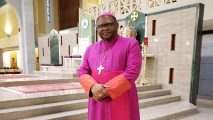
But the bishops are saying the commission is simply fruitless. “A Commission on bilingualism and multi-culturalism cannot resolve the Anglophone Problem,” said the Bishop of Kumbo and Vice President of the National Episcopal Conference, Bishop George Nkuo. “It should have been a commission on Bilingualism and Bi-Culturalism,” he said, noting that such a commission would help protect and preserve Cameroon’s bi-cultural heritage.
Cameroon’s bilingual and bi-cultural status derived from its colonial heritage. Initially administered as a German Protectorate in 1884, Cameroon would later be shared with France and Britain as League of Nations Mandates after Germany was defeated in the First World War. The end of the Second World War and the establishment of the United Nations saw the two parts of Cameroon transition from mandated territories to UN Trust Territories.
In 1960, the northern part of Cameroon administered by France gained its independence. The southern part administered by Britain as part of Nigeria was in 1961 subject to a plebiscite in which they were offered independence by reuniting with their francophone Cameroonian “brothers” or by remaining part of Nigeria. The results showed an overwhelming desire by English-speaking Cameroonians to reunite with the French-speaking part of Cameroon.
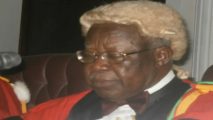
The “marriage” was guaranteed by a Federal Constitution that was ostensibly meant to preserve and protect the minority Anglophones and their colonial heritage. But in 1972 then-President Ahmadou Ahidjo organized a referendum that dissolved the federation in favor of a united republic, thereby removing the protections Anglophones enjoyed. “That marked the start of the ‘Anglophone Problem’,” said Professor Verkijika Fanso of the University of Yaoundé (Seen here on photo with CAMCORDNEWS Chairman) He said the absence of protective guarantees meant that “the values that English-speaking Cameroonians brought into the union were eroded.” Fanso said the minority Anglophones have seen their educational and legal systems systematically chipped away by the Francophone majority.
This has recently led to popular uprisings in the two English-speaking regions. The uprisings were initially sparked by disgruntled lawyers and teachers protesting the use of French in courts using the Anglo-Saxon common law tradition (practiced in the English parts of the country) and in Anglophone schools, and it soon boiled over to the general public, with many Anglophones calling for outright secession. Bishops of the Ecclesiastical Province of Bamenda (their jurisdiction is mostly in the English-speaking parts of Cameroon) have said the problem is a result of the government’s inflexibility.
In a strongly-worded letter addressed to the President of the Republic in December, the Bamenda bishops said that the Anglophone Problem was a result of “the failure of successive governments of Cameroon, since 1961, to respect and implement the articles of the Constitution that uphold and safeguard what British Southern Cameroons brought along to the Union in 1961.” They also condemned what they called “the deliberate and systematic erosion of the West Cameroon cultural identity which the 1961 Constitution sought to preserve and protect by providing for a bi-cultural federation.
In attempts to resolve the crisis, President Paul Biya has set up a Commission for the Promotion of Bilingualism and Multiculturalism. The text creating the Commission states that the Commission shall “be responsible for submitting reports and recommendations on issues relating to the protection of bilingualism and multiculturalism to the President of the Republic and the government, monitoring the implementation of constitutional provisions establishing English and French as two official languages of equal status …, preparing and submitting to the President of the Republic draft instruments on bilingualism and multiculturalism and togetherness, receiving petitions against discriminations arising from non-compliance with the constitutional provisions on bilingualism, multiculturalism, and reporting … to the President of the Republic.”
But the Catholic bishops have dismissed the commission as a missed opportunity. “Why Common Law lawyers were striking is that their legal system was being eroded. It is the same thing with teachers, who saw the Anglo-Saxon educational system they inherited from Britain being eroded. So, the problem is not a problem of multi-cultures, because Cameroonians in their cultural and linguistic diversity have always lived together,” said Archbishop Cornelius Fontem Esua of Bamenda.
In their December letter, the bishops said: “Anglophone Cameroonians are slowly being asphyxiated as every element of their culture is systematically targeted and absorbed into the Francophone Cameroon culture and way of doing things. These include the language, the educational system, the system of administration and governance, the legal system, and a transparent democratic process where elected leaders are answerable to the electorate who put them there in the first place.”
The bishops are now calling for genuine dialogue between the government and Anglophone Cameroonians as the only way forward. But the call comes at a time when thousands of Anglophone Cameroonians are already calling for a return to a federal system of government, or even secession.
Culled from Cruxnow.com