
1, March 2017
Anglophone Crisis: North American Lawyers calls for immediate and unconditional release of Barrister Agbor Balla 0
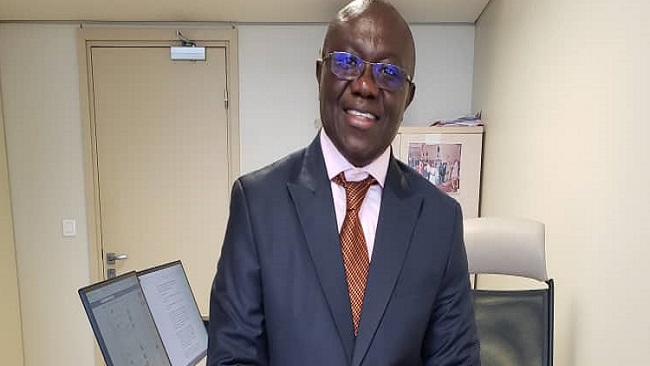
The Professional Association of North American Lawyers has called on the Biya Francophone dominated regime to respect its obligations under international human rights law and release with immediate effect the leaders of the Cameroon Anglophone Civil Society Consortium. The North American group known as the Law Society of Upper Canada made public a press release dated February 24 in which the body observed that the North American lawyers were “very concerned” by the arrest of Barrister Agbor Nkongho Felix.
The release also stated that “lawyers, like other citizens, must enjoy freedom of expression, belief, association and assembly. In particular they have the right to take part in public discussion on the law, administration of justice and the promotion and protection of human rights and to join local, national or international organization, or to constitute and to attend their meetings”.
While the so-called Francophone trial of the leaders of the Cameroon Anglophone Civil Society Consortium detained since January 17 will enter its second hearing on March 23, the Law Society of Upper Canada says Yaoundé should “immediately and unconditionally release Felix Agbor Balla; guarantee in all circumstances the physical and psychological integrity of Felix Agbor Balla; ensure that all proceedings against Felix Agbor Balla are carried out in full respect of his right to a fair trial in accordance with international law; put an end to all acts of harassment against Felix Agbor Balla and all other human rights lawyers and advocates in Cameroon; and to ensure respect for fundamental human rights and freedoms in all circumstances in accordance with international human rights standards and international instruments “.
Barrister Nkongho Felix Agbor Balla and Dr. Fontem Neba were arrested in the Buea province of Southern Cameroons and the Cameroon Anglophone Civil Society Consortium declared illegal by the Francophone regime. Both West Cameroonian leaders are tried for acts of terrorism, hostility against La Republique du Cameroun, secession, revolution, insurrection, outrage to the President of the Republic, constituted bodies and civil servants, group rebellion, civil war and propagation of false news and crimes.
By Chi Prudence Asong











1, March 2017
Francophone political party leaders call on Biya to reject federalism 2
Several Francophone opposition political parties that attended the 6th Ordinary Congress of the National Union for Democracy and Progress (UNDP) on February the 25th, 2017 in Yaoundé have rejected the idea of federalism currently being championed by some Southern Cameroonians including the leadership of the Social Democratic Front, SDF. The parties currently in the government under an obscure organization known as the Presidential Majority made a mockery of the Anglophone problem and echoed their opposition to federalism.
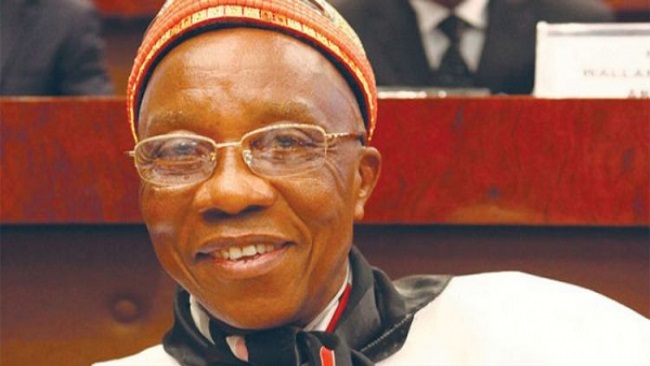
The Secretary General of the Union des Populations du Cameroon (UPC), Basile Louka, opined that there was need for Cameroon to remain united, democratic, decentralized through dialogue. For his part, Henri Hogbe Nlend, Chairman of the General Council of the same party and a former cabinet minister of the Biya regime painted federalism as divisive. He observed that: “We have not fought for Cameroon to be united and to come now and be fighting for it to be disunited.” Both UPC leaders had in the 1990s condemned the modus operandi of the unitary state, when the party’s Secretary General Augustine Federick Kodock singlehandedly dismissed six parliamentarians from the National Assembly and from the party.
The position of the Progressive Movement was also identical to that of the UPC. According to its coordinator, Jean Jacques Ekindi, “the unitary form of government remains the only tool capable of saving Cameroon.” Another speaker was the leader of the Front for the National Salvation of Cameroon (FSNC), Issa Tchiroma Bakary, who also moonlights as Minister of Communication and government spokesman. He failed to state the position of his party but urged “the President of the Republic not to shrink from any difficulty in his search for solutions to the problems threatening Cameroon. The UNDP leader, Maigari Bello Bouba in his speech also pointed out that federalism was not the solution to the problem.
By Rita Akana