15, November 2021
Southern Cameroons: IG voices concern over health of detainees in French Cameroun jails 0
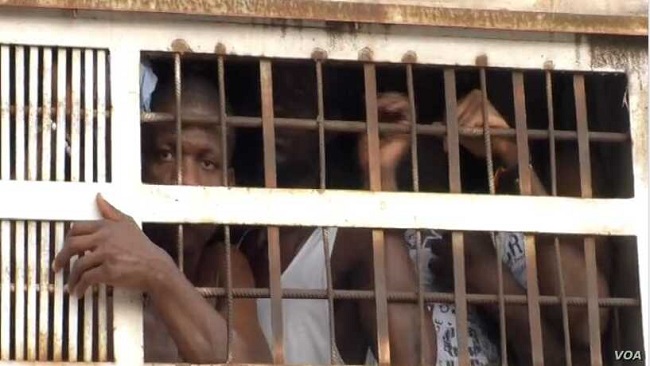
The Ambazonia Interim Government, (IG) has voiced concern over the fate of Southern Cameroons detainees in French Cameroun jails including New Bell and Kondengui as seriously ill prisoners are being denied essential and adequate medical treatment.
In a statement today, Vice President Dabney Yerima reaffirmed the Ambazonia Interim Government’s call for the immediate release of all Southern Cameroons detainees including President Sisiku Ayuk Tabe and his top aides in the notorious Kondengui and New Bell prisons.
The statement came as pro English speaking independent newspapers in Yaoundé and Douala uncovered that many Southern Cameroons detainees lack proper medical treatment.
Vice President Dabney Yerima also urged international rights groups to visit the notorious New Bell and Kondengui prisons and inspect the conditions of detention for the forgotten Southern Cameroons detainees.
Since the Southern Cameroons crisis hit the global stage some five years ago, some 10,000 Cameroonians have been killed, with army soldiers accounting for close to 35% of the deaths.
Thousands of civilians and soldiers have been maimed and scarred for life in a conflict that could have been addressed through negotiations and genuine dialogue.
By Isong Asu











15, November 2021
“It is time to let our Southern Cameroons children go back to school” 0
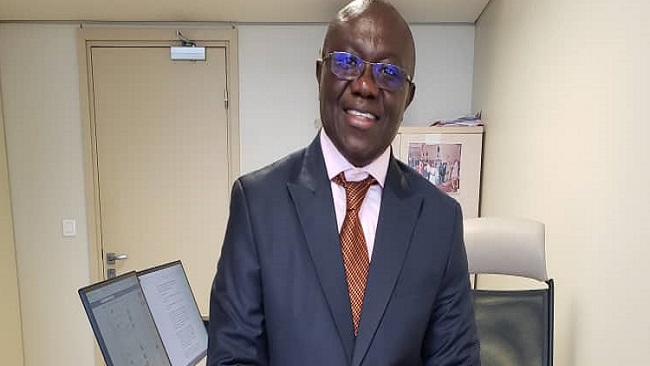
Dr. Joachim Arrey, the executive director of the Global Think Tank for Africa, a not-for-profit public relations firm has reacted to the current situation affecting schools in English speaking Cameroon.
In his bid to ensure that Southern Cameroonian children return to school, Dr. Joachim Arrey, the son of a headmaster, has been calling for children to return to school so that the future of both French and English speaking Cameroon can be guaranteed. Our chief political man, Soter Tarh Agbaw-Ebai talked to him and he regretted what was happening to rural kids in Southern Cameroons.
Cameroon Concord News: You seem to make education a key component of life. Why?
Dr. Joachim Arrey: My father, Mr. Michael Arrey, was a teacher who always underscored the importance of education and he told my siblings and me that only education could enable us walk away from poverty and fear and he has never been wrong. That is why throughout the crisis in Southern Cameroons, I have been urging the factions involved to let our children go back to school. It is already more than five years since the conflict began and the rural child is not yet back to school. That is a long time and it is, indeed, inhuman. This is breaking my heart. My father of blessed memory instilled the love of education in me and he always encouraged me to support educational endeavors which could help other children face the future with confidence and happiness. When we rob our kids of education, we rob them of their confidence and future. We must learn to decouple our children’s education from the struggle. Those who control the fighters on the ground should push for school resumption and teachers and students should be protected by the fighters. It is time for our children to go back to school. No nation ever develops without a soundly educated population.
Cameroon Concord News: You seem to have good information on things in rural Southern Cameroons, what is your source of information?
Dr. Joachim Arrey: While my body is out of Cameroon, my soul is in Cameroon. I am in touch with my family members in Mamfe and the picture they paint to me regarding the daily struggles of our people and children’s struggle for education has shattered my mind and heart. Children in rural Mamfe are out of school and those whose parents have relatives in Mamfe town have sent their children there for them to have whatever education they can have. Many government primary schools in Mamfe town are not yet open and some unregulated community schools have emerged with no defined curriculum. Those teaching in these schools have no training and the class sizes are unfortunately not the best. A family member whom I had sent to study the situation of things in those community schools has intimidated that there could be as many as 90 students in each class in those make-shift structures which are unfortunately bereft of good sanitation and ventilation. It breaks my heart that so many years are going by and the children in rural areas of Southern Cameroons are not being given the education that can enable them walk away from ‘perpetual darkness’. It is painful to see six-year-old kids being separated from their parents just because they have to go to school in town. These parents do not even have the means to support themselves because of the war, how can they support their children in town?
I think those living abroad are not aware of the magnitude of the issues facing these rural children. Even those who go to towns to school have to deal with sexual and physical violence. There is nobody to actually supervise and protect these children and unwanted pregnancies are popping up all over the two English-speaking regions of the country, as girls become both financially and physically helpless. Something needs to be done to save the rural child in Southern Cameroons. If violence is on the rise today in that part of the country just after five years, what will it be after ten years? Keeping our children at home is one mistake that will come back to haunt all of us. Those who thought that using children as a bargain chip in the dispute against the government never new they were manufacturing a bomb which will hurt so many people once it goes off. There is a need for a rethink of strategy. What is happening in rural Mamfe is exactly what obtains in the entire Southern Cameroons.
Cameroon Concord News: So what needs to be done?
Dr. Joachim Arrey: Like I have said above, there is a need for a rethink of the war strategy. The government like the fighters have to take a look at their strategies to ensure that those children do not get left in the darkness of ignorance because of a conflict they know nothing about. Our children’s education should be decoupled from the struggle to enable our children return to school. Keeping these children at home for a long time only robs them of their future and confidence. I am also urging people of good will to send as much material support as possible to those community schools which are seeking to impart some knowledge to our children. Those schools are not properly equipped to deal with many educational challenges. They need financial support to help the students. Any assistance in this regard will be appreciated. For my part, I am in touch with some education authorities in Mamfe, and my organization, the Global Think Tank for Africa, will be offering books and other supplies worth CFAF 500,000 over the next three months to students in various schools in Mamfe town. My organization will also be granting scholarships to young girls in Manyu Division to enable them get an education. The modalities for the scholarships will be released in the days ahead. We need to do things differently if the future has to be bright for many of our children. It is education that opened many huge doors for me and I want other children to enjoy the fruits of a sound education.
Cameroon Concord News: Do you think your plea will be heard by the government and the fighters?
Dr. Joachim Arrey: I don’t think the government and the fighters will forever be deaf and dumb. The government is aware of the storm that is building as a result of millions of children sitting at home instead of being in school. The fighters, for their part, understand that keeping children at home is not a genuine bargaining chip. After five years, they should understand that the children should be in school and not at home. Some of the fighters have children. What will become of those children if the school boycott remains in place. While I agree that the government has allowed a small disagreement to snowball, I would also like to point out that those who engineered the revolution did not have a long term view of things. It is preposterous to shoot yourself in the foot. Keeping our children at home is like shooting ourselves in the foot.
However, all is not lost. Now that some of the factions have begun talking to each other, we can assume that there is hope in the offing. The Toronto Retreat, which will be followed by many others, holds out a lot of hope. Talking is a very important first step and I am urging the secessionists, the federalists, and the government to walk away from their positions so that a middle ground can be established. While the talks may be holding, the various factions should come out forcefully to underscore their commitment to the education of our children. The government can start putting in place confidence-building measures like granting a general amnesty to all those who have been directly or indirectly involved in the struggle. It can also use diplomatic channels to engage the various factions as a means of facilitating the talks and negotiations. There is a lot to be done, but we have to start somewhere. No war has ever ended without the various factions talking to each other. That is, of course, the best way to ensure that errors of the past do not rear their ugly heads in the future.
Cameroon Concord News: Thank you, Dr. Joachim Arrey, for your insightful thoughts.
Dr. Joachim Arrey: It is always a pleasure to share my thoughts with your readers