
19, April 2020
No trace of disappeared Cameroonians, five years on 0
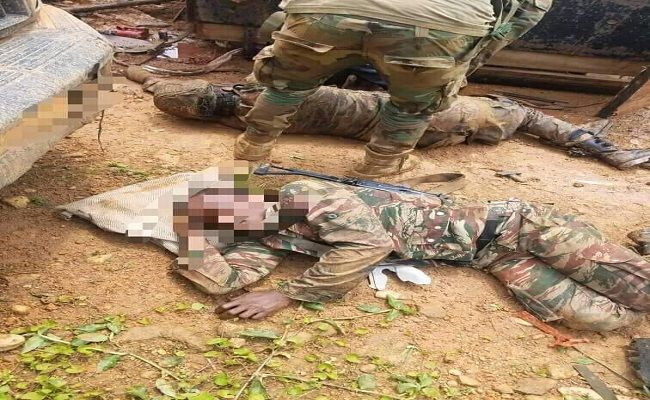
Human rights groups fear the worst for 130 Cameroonian civilians that remain missing following their arrest five years ago by the army on suspicion of belonging to the Boko Haram .
The individuals were arrested in the Far North as the Nigerian terror group launched its first attack on Cameroonian soil.
The boys and men aged between 12 and 60 years old were arrested in the villages of Doublé and Magdémé, which were the epicentre of attacks by the Islamist sect.
Army personnel initially arrested 200 individuals. After some time denying the arrests, the government in 2016 acknowledged the crackdown.
It disclosed that at least 25 men died in custody on the evening of their arrest. Identities of the deceased or burial places were not revealed.
The government also acknowledged that 45 other men were taken to and registered at Maroua prison. Three of them died in detention.
“All the others remain unaccounted for,” said a spokesperson of the human rights group, Amnesty International.
The organisation maintained doubts on the whereabouts of those that have not been accounted for.
It demanded that the government of President Paul Biya ensured justice for the victims and their families.
In 2015, Biya dismissed Colonel Charles Zé Onguéné, who headed the anti-terror operation at the time of the arrests.
He was charged with “negligence and breach of custody law.”
Source: CAJ News


















19, April 2020
COVID-19: Douala traders facing an economic onslaught 0
An economic onslaught is staring at the face of traders in the Central African country of Cameroon, which is one of the most affected countries by the coronavirus or COVID-19 pandemic in the continent.
The country, known for its varied terrain and wildlife has so far reported 1,017 positive cases, with 22 deaths, according to data compiled by the U.S.-based John Hopkins Coronavirus Resource Centre.
“The virus has slowed down my work. I have to go out and sell few things, even though I do not earn much,” said Adams Patrice, who deals with secondhand goods. He used to have a roaring business on weekends when people on the outings throng to markets selling cheap goods.
“Everything has changed. The customers are afraid. They pass by wearing their protective masks and do not talk to us. They barely stop to look at the merchandise. There is a drought in the market,” he said.
Like Patrice, an electronic retailer Fabrice Fondjeu, has also lost most of his clientele.
“I receive less than five customers a day compared to more than 40 before the pandemic. It has dipped my savings,” he said. He is counting that the government may announce some sops to stabilize the situation.
Although governments worldwide are encouraging digital connectivity as an alternative to physical connectivity, Tamo Christian, a cyber cafe manager, has few customers. He is still relying on the government’s push for digital education, expecting that students who do not have computers and internet connection at home will use his services. He has also cut his daily expenses considerably.
The restrictions on travel have also led to a steep decline in the online sale of tickets, said Geraldine Nbebi, sales administrator of an online ticketing startup. He, however, appreciates the fact that because of social distancing, people are increasingly getting used to digital technology.
Food chain affected
Speaking to Anadolu Agency, Ebouki Lea, a food vendor, said she has been going through difficult times since restrictions on movements. She used to bring goods from villages and then sell them in cities. Regular customers have even abandoned her. Even farmers have limited production in the villages.
The secondhand goods dealer Patrice had thought of going digital, opening an online store, where he would share pictures of goods and receive orders through social networking sites. But he laments that he is on the other side of the digital divide and also does not have funds to open an e-shop.
Even as the Cameroonian government has taken measures for businesses, the fear that economic slowdown will stay for a long time to come is palpable. President Paul Biya had asked the trade ministry to ensure stability in prices and availability of consumer goods. He had also asked officials to come out with plans to regulate the flow of people in markets.
Acknowledging that it was a difficult time for traders, Minister of Trade Luc-Magloire Mbarga Atangana told a local radio station that there was no possibility of a shortage of goods. “The country should be able to rely on its national production and food reserves and count on sea shipments. The country is prepared for any eventuality,“ he said.
Source: Anadolu Agency