
5, February 2020
Ultra-secure phones of Africa’s presidents: Biya can almost never be reached on his mobile phones 0
Well aware of the surveillance capabilities of major companies in the sector, Africa’s heads of state try to make their phones as secure as Fort Knox. Every leader is geared up and takes extra precautions to prevent the ever-looming risk of being tapped. We take a look at the phones used by Africa’s presidents and politicians’ practices.
In West Africa, some leaders have been won over by French technologies.
French presidents Jacques Chirac, Nicolas Sarkozy and François Hollande used a Teorem, an ultra-secure clamshell phone with physical buttons created by Thales. However, using it requires a certain amount of patience, and Sarkozy hated it for that reason.
Recently, the French company acquired Ercom and added another jewel to its collection: CryptoSmart technology, developed in partnership with Samsung, which protects communications and mobile data. Emmanuel Macron uses the system, a fact that Ercom’s marketing department has not let go unnoticed. The France’s President has a Samsung Galaxy S7 with a touch screen, equipped with a tamper-proof encryption key and a data protection chip. Orange Cyberdéfense is behind this black box-like system, whose data can be destroyed remotely if the phone is lost or stolen.
Other political figures prefer to use cheaper alternatives such as Hoox, a phone developed by the French company Bull and later acquired by Atos (priced at around €2,000 [$2,200]), Sectera Edge from US-based General Dynamics (priced at under €3,000), BlackPhone, designed by US-based Silent Circle (priced at around €550) and GranitePhone by Archos (priced at around €800).
From texts to Telegram
BlackBerry products have also been a big hit in Africa, with Rwanda’s President Paul Kagame and Senegal’s President Macky Sall reportedly loyal users of the brand, just like Togo’s Faure Gnassingbé, who was one of the first presidents in French-speaking Africa to communicate via text messaging some 15 years ago.
While Guinea’s Alpha Condé, who never leaves the house without his three or four phones, made the switch from classic text messaging to WhatsApp and eventually to Telegram without a hitch, other heads of state from the pre-independence generation have opted for more “radical” solutions.
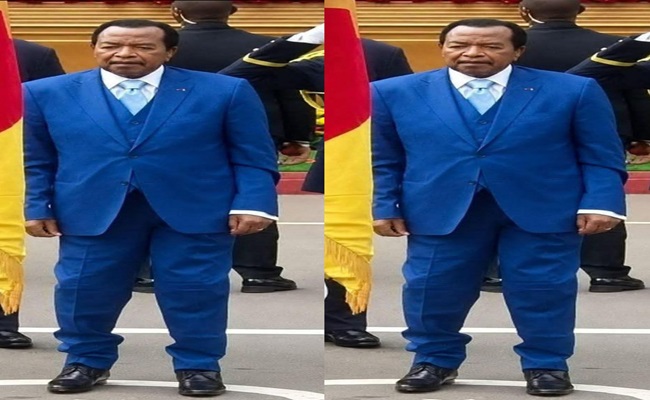
Cameroon’s Paul Biya, the Republic of Congo’s Denis Sassou-Nguesso, Mali’s Ibrahim Boubacar Keïta and Djibouti’s Ismaïl Omar Guelleh can almost never be reached on their mobile phones, which they use very selectively.
Côte d’Ivoire’s Alassane Ouattara puts his complete trust in an old Nokia model while also keeping an additional phone by his side. One of his close allies and former counterparts, Sarkozy, did the same during his presidential campaigns. Or maybe it was his alias, Paul Bismuth. . .
Backdoors
Just like these heads of state, most of the continent’s political figures have had to switch from one technology to another to shield themselves against prying ears. Over the past few years, conversations starting with “Hello, can we talk?” and ending with “Yes, of course, but not on this line” have become extremely common in the African political scene.
Opposition members, thinking rightly or wrongly that their local phones are being tapped, have been using WhatsApp for a long time now. “It’s for security reasons,” said one of them.
However, an expert we consulted smiled as he told us that this sense of security is an “illusion. Most governments have acquired technologies that are able to circumvent the app’s security protocols (Facebook bought it in 2014). It’s more complicated than retrieving a traditional text message, but it’s doable. There are backdoor points of entry into the system.”
More cunning than the others, a (very) senior official in Central Africa divulged his secret to us: he has switched to Telegram.
Created by Russian developers and today based out of Berlin, the app built its reputation around strict data encryption. As a result, quite a few political figures prefer it over WhatsApp. “That’s bogus,” said our expert, amused. “Both apps have the notorious backdoors.”
The alternative: Signal
Nevertheless, the most knowledgeable experts, i.e., those familiar with the security sector and spy games of every sort, are increasingly using Signal. Brought into the spotlight by the famous American whistle-blower Edward Snowden, the app was developed by Open Whisper Systems, a company from San Francisco which is entirely funded by donations and supported by the Signal Foundation, a non-profit organisation.
As our expert put it rather vividly: “WhatsApp and Telegram are like locked cars on the side of the road, whereas Signal is like an armoured car inside of a tunnel. Hackers can still get in, but it’s going to cost them a lot.”
Culled from The Africa Report











5, February 2020
Biya among world’s longest ruling leaders? 0
Some world leaders serve a set term and others go on to rule for decades.
Here is a list of current world leaders who have held onto power the longest. The list excludes monarchs.
Equatorial Guinea
Teodoro Obiang Nguema Mbasogo, 77, has been president of the central African nation for some 40 years after toppling his uncle in a 1979 coup. He tops the list of the world’s current longest-ruling leader.
His government has been besieged by allegations of corruption and mismanagement.
The President of Equatorial Guinea, Teodoro Obiang Nguema meets with Prime Minister of Ethiopia Hailemariam Desalegn (not seen) at Addis Ababa Bole International Airport in Addis Ababa, Ethiopia on February 21, 2018. (Photo by Minasse Wondimu Hailu/Anadolu Agency/Getty Images)
His son, Teodoro Nguema Obiang Mangue, is also the country’s vice president. In 2016, his collection of 25 exotic cars were seized during a corruption investigation and sold at a charity in Switzerland for over $27 million.
Cameroon
Paul Biya, 86, took office in 1982 after a seven-year stint as prime minister. His presidency has faced threats from opposition parties and increased violence in the north and west portions of the country, where separatists have fought for a separate independent state.
President of Cameroon Paul Biya with Chinese President Xi Jinping (not pictured) attend a signing ceremony at The Great Hall Of The People on March 22, 2018 in Beijing, China. (Photo by Lintao Zhang/Getty Images)
Cameroon also faces threats from Boko Haram militants across the border in Nigeria.
Cambodia
Cambodia’s Prime Minister Hun Sen began his fifth term in 2018, cementing his status among the world’s longest rulers. The 67-year-old has been in power for 34 years, strong-arming his way through his country’s political system.
He fled to Vietnam during the regime of Pol Pot, when an estimated two million Cambodians were killed. He returned in 1979, eventually becoming prime minister in 1985 in a Vietnamese-backed single-party communist government and led Cambodia through a civil war against the radical communist Khmer Rouge.
Cambodia’s Prime Minister Hun Sen adjusts his glasses during the 25th International Conference on The Future of Asia on May 30, 2019 in Tokyo, Japan. (Photo by Tomohiro Ohsumi/Getty Images)
He cracked down on critics and opponents after the 2013 general election showed declining support for his ruling party.
Uganda
Longtime President Yoweri Museveni is expected to return as leader for his sixth term after a court endorsed a law removing an age limit for the country’s president.
Prime Minister Theresa May meets President Yoweri Museveni of Uganda during the London Conference on Somalia at Lancaster House on May 11, 2017 in London. (Photo by Hannah McKay – WPA Pool/Getty Images)
Museveni, 75, took power by force in 1986 and declared himself president. He’s been re-elected several times since, though international observers have noted issues with the polling process in several elections.
Iran
Iran’s second Supreme Leader Ayatollah Ali Khamenei wields exceptional power over the country. Before taking the position in 1989, he served as the president, a largely ceremonial role.
In this photo released by an official website of the office of the Iranian supreme leader, Supreme Leader Ayatollah Ali Khamenei attends a meeting with Iranian officials, participants of the 31st International Islamic Unity Conference and ambassadors from Islamic countries, in Tehran, Iran, Wednesday, Dec. 6, 2017. Khamenei condemned President Donald Trump’s imminent recognition of Jerusalem as the capital of Israel. (Office of the Iranian Supreme Leader via AP)
Khamenei, 80, is considered Iran’s most powerful figure and has control over its branches of government, military and the media. He is the second-longest serving autocrat in the Middle East and the second-longest serving leader in Iran in the last century, after the Shah Mohammed Reza Pahlavi.
Other mentions:
Deceased North Korean founder Kim Il-sung ruled his rouge state for 46 years before dying in 1994 while in office.
Albania’s Enver Hoxha remained in power for four decades before his 1985 death, and Fidel Castro came to power in the 1959 Cuban revolution. The deceased leader handed the presidency to his brother Raul in 2008.
Source: Fox News