
21, October 2019
Canada elects new parliament after tight race 0
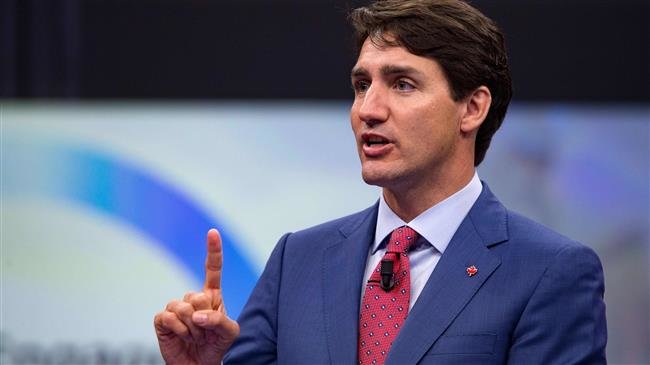
Canadians are electing a new Parliament on Monday after a tight election campaign that has raised the threat of Prime Minister Justin Trudeau being knocked from power after just one term.
The 47-year-old Trudeau channelled the star power of his father, the liberal icon and late Prime Minister Pierre Trudeau, when he won in 2015 but a combination of scandal and high expectations have damaged his prospects.
The Liberals and Tories went into the home stretch in a dead heat, each with about 31-32 percent support after 40 days of mudslinging.
Pollsters are predicting a minority government will result from Monday’s vote – led either by the Liberals or the Conservatives – as the smaller New Democratic Party (NDP), Green Party and Bloc Québécois have continued to chip away at the frontrunners’ leads.
Not in 84 years has a first-term Canadian prime minister with a parliamentary majority lost a bid for re-election.ADVERTISING
Trudeau reasserted liberalism in 2015 after almost 10 years of Conservative Party government in Canada, but he is one of the few remaining progressive leaders in the world. He has been viewed as a beacon for liberals south of the border in the Donald Trump era, even appearing on the cover of Rolling Stone magazine under the headline “Why Can’t He Be Our President?”

I was proud to work with Justin Trudeau as President. He’s a hard-working, effective leader who takes on big issues like climate change. The world needs his progressive leadership now, and I hope our neighbors to the north support him for another term.
Perhaps sensing Trudeau is in trouble, Barack Obama last week made an unprecedented endorsement by a former US president in urging Canadians to re-elect Trudeau, calling him an “effective leader who takes on big issues like climate change”.
“The world needs his progressive leadership now,” Obama tweeted Wednesday.
Lapses
Plagued by a blackface scandal and accused of ethics lapses in the handling of the bribery prosecution of an engineering giant, Trudeau has seen his star dim, his judgment questioned and his personal popularity slip over the past year.
He was hurt by the scandal that erupted earlier this year when his former attorney general said he pressured her to halt the prosecution of a Quebec company. Trudeau has said he was standing up for jobs, but the damage gave a boost to the Conservative Party led by Andrew Scheer.

A little rain can’t stop us! Port Moody’s ready to #ChooseForward.
No party is expected to get a majority of Parliament’s 338 seats, so a shaky alliance may be needed to pass legislation.
If it is the Conservatives who win the most seats – but not a majority – they will probably try to form a government with the backing of Quebec’s separatist Bloc Québécois. In contrast, Trudeau’s Liberals would likely rely on the NDP to stay in power.
Attack machine
Scheer, meanwhile, has struggled to convince voters to look past his dull, minivan-driving dad persona and the party’s minimalist platform to give the rookie leader a chance to govern.
Throughout the campaign, the devout Catholic father-of-five faced criticism for padding his resume and over his personal opposition to abortion and gay marriage.
A career politician who served as Canada’s youngest Speaker of the House of Commons, Scheer is described by those in his own party as bland, a possible antidote for those tired of Trudeau’s flash. The 40-year-old fiscal and moral conservative calls Trudeau a phony who can’t even recall how many times he has worn blackface.

Justin Trudeau will pay any price to stay in power and he will use your money to do it.
A Trudeau-NDP coalition is a coalition you can’t afford.
I’ve spent the last 39 days talking about my plan to help you get ahead, and a Conservative government will do just that.
Conservative Jason Kenney, Alberta’s premier and a close friend of Scheer, calls the party leader “an extremely normal Canadian” who is so nice he “can’t fake being mean”.
Scheer, however, has so relentlessly attacked Trudeau that Nik Nanos, a Canadian pollster, said he hasn’t been himself.
“Scheer has been hostage to the message,” Nanos said. “His campaign has made him into an attack machine.”
Conservative supporters chanted “Lock him up! Lock him up!” at a rally Saturday after Scheer said he would investigate Trudeau’s attorney general scandal – mirroring the Hillary Clinton “Lock her up!” chant popular at Trump rallies. Scheer moved to calm the crowd and changed the chant to “Vote him out”.
Hugging refugees
Trudeau embraced immigration at a time when the US and other countries were closing their doors, even personally welcoming Syrian refugees to Canada with a hug and a gift of a parka. More than 45,000 Syrians were resettled in the country during his first term in office.
Under Trudeau’s leadership, Canada became only the second nation to legalise cannabis, held a public inquiry into missing and murdered indigenous women, and passed legislation permitting medically assisted suicide.
His also negotiated a new free trade deal for Canada with the US and Mexico amid threats by President Donald Trump to scrap it.
But Trudeau’s efforts to strike a balance on the environment and the economy have been criticised by both the right and left. He brought in a carbon tax to fight climate change but rescued a stalled pipeline expansion project to get Alberta’s oil to international markets.
Scheer, for his part, is promising to end the carbon tax and cut government spending, including foreign aid, by 25 percent.
“That money belongs to you, not to them,” Scheer said.
Battleground push
Their voices hoarse, the frontrunning rivals made last, desperate pitches to undecided voters over the weekend in the key battleground provinces of British Columbia, Ontario and Quebec.
“We need a strong, progressive government that will unite Canadians and fight climate change, not a progressive opposition,” Trudeau told a rally in a suburb of Vancouver after whistle-stops in Ontario, Manitoba and Alberta.
“We need to unite as citizens. We need to unite as a planet,” the Liberal leader said.
Scheer, also crisscrossing the country over the weekend, accused the Liberals of being spendthrift, saying on Sunday in Vancouver: “The choice tomorrow is between a Liberal-NDP coalition that will run massive deficits and leave less money in your pocket or a Conservative government that will get back to balanced budgets and make life more affordable.”
“Trudeau would pay any price to stay in power and he’d use your money to do it,” he continued. “We want Canadians to send Conservative MPs to Ottawa to undo the damage that Justin Trudeau has caused.”
(FRANCE 24 with AP and AFP)












21, October 2019
Pride of Africa: Stable Botswana to vote in rare cliffhanger 0
Botswana votes on Wednesday in the most closely fought general election in the history of the southern African country, long known as one of the continent’s most stable democracies.
Former president Ian Khama has shaken up the country’s traditionally calm politics by dramatically renouncing his hand-picked successor Mokgweetsi Masisi.
Khama left the ruling Botswana Democratic Party (BDP) in May, accusing President Masisi — who had been his deputy until last year — of autocracy.
The bitter feud has threatened to fracture the BDP, which has governed the diamond-rich country since it gained independence from Britain in 1966.
The split came after the ruling party saw its share of the vote fall below 50 percent for the first time in the last elections in 2014.
It has faced an increasing challenge from a coalition of opposition parties, the Umbrella for Democratic Change (UDC), which has added another group to its ranks since the last election.
“It’s the most contested election we have seen, and genuinely the outcome is in doubt to some extent,” said Botswana economic analyst Keith Jefferies.
“It’s possible that the BDP could be unseated.”
The UDC has received a boost from an unlikely source: Khama.
The opposition group was his fiercest critic when he was president, but Khama has urged voters in many regions to cast their ballots for the UDC in a bid to oust Masisi and the BDP.
Khama’s father co-founded the BDP and served as the country’s first president. He retains plenty of influence, particularly in the central region — a BDP stronghold — where he is a traditional chief.
– Khama ‘the wild card’ –
The rift between the president and his predecessor started last year, when Khama resigned near the end of his constitutional limit of two five-year terms.
Khama handed the reins to Masisi in April 2018, 18 months ahead of the next election, as part of the BDP’s carefully crafted process for transferring power.
But Masisi quickly started reversing several of Khama’s key policies, including lifting his ban on elephant trophy hunting, infuriating his predecessor.
Peter Fabricius, an analyst at the Pretoria-based think tank Institute of Security Studies, said “Khama is the wild card”.
“This is quite a close election and it could go either way,” he added.
Masisi told AFP that Khama’s policies had hurt the ruling party.
The BDP is “definitely going to perform far better” without Khama, Masisi said, predicting an “overwhelming victory, landslide”.
UDC leader Duma Boko was also confident, telling AFP: “I think we will win this election and we should”.
Voter Alice said: “It’s time for a new government, enough of the BDP”.
“Things are not right in our government… the corruption is just too much,” she told AFP, asking to be identified only by her first name to protect her job.
– ‘We are never going to fight’ –
The unprecedented political drama has raised fears that Khama’s defection could unsettle Botswana after more than five decades of peace and stability.
But Masisi ruled out any such scenario, urging everyone to “accept the results” of the vote.
“I have already accepted the results whatever might come,” he told AFP.
“Botswana is never going to be in crisis if one person wins or the other doesn’t win, there will be another opportunity.”
“We are never going to fight,” Masisi said, adding that stability is in the DNA of Botswana’s people.
But past elections have never been this close. If the opposition wins, the country’s democratic credentials and reputation for good governance will face a new test — a peaceful transfer of power.
Analysts said a BDP loss would be unlikely to send people into the streets. However, they did warn that an unexpected landslide for the ruling party could spark opposition protests claiming the election was rigged.
Duma said at the weekend that the vote would not be free and fair because of unbalanced media coverage by the public broadcaster.
Nearly half of Botswana’s 2.2 million people are expected to cast their ballots in the parliamentary and local elections.
The BDP, UDC and two smaller parties will vie for 57 parliamentary seats. The party with the most seats chooses the president.
Thanks to Botswana’s diamond-spurred wealth it is ranked as an upper-middle-income country, but it has one of the world’s highest rates of income inequality.
Source: AFP