
28, November 2018
Statement on worsening situation in Cameroon two years on – Mo Ibrahim Foundation 0
For the past two years, the Mo Ibrahim Foundation has continued to monitor and follow the governance challenges being faced by the Government of Cameroon. This renewed focus was due to the November 2016 peaceful strike of lawyers, teachers and other professionals that escalated into violence, drawing out ethnic and religious tensions, and impacting on the stability and peace that the country had enjoyed for some decades.
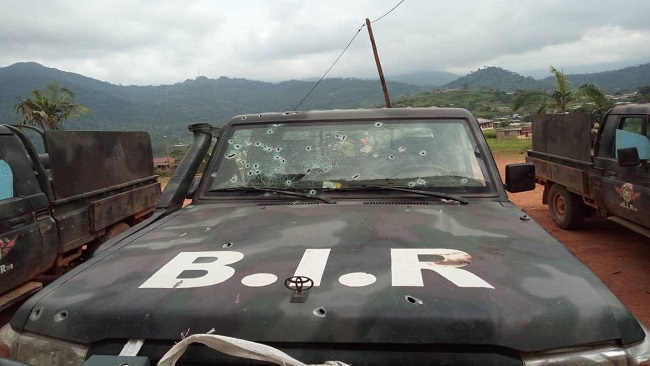
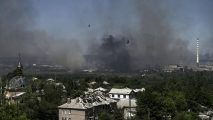
Today, the confrontation between Cameroon’s Government and separatists continues to escalate resulting in casualties of civilians and state security officers. The scenes we see today of this continuing confrontation bear no resemblance to the peaceful strike that began two years ago.
A peaceful Cameroon is vital not only for the region but for the wider continent. Often described as ‘Africa in miniature’, Cameroon reflects the cultural, ethnic and geographic diversity of the continent. This young nation also follows the wider trends of Africa’s growing youth demographic, with 15-34-year olds constituting over 77% of the population in the country.
The 2018 Ibrahim Index of African Governance, published a few weeks ago, highlights the ongoing Governance challenges in Cameroon and captures worrisome deteriorating trends. The Overall Governance measure continue to show decline particularly in the last five years. This decline is manifested notably in the category of Safety & Rule of Law as measured mainly by the unsatisfactory performance relating to the Absence of Government Involvement in Armed Conflict, Absence of Government Violence against Civilians, National Security, Absence of Domestic Armed Conflict or Risk of Conflict and the Reliability of Police Services.
Performance in the category of Participation & Human Rights has shown no noted improvement and has been negatively impacted by the recent Presidential elections where voter turnout in Anglophone regions was reportedly very low.
The Foundation continues to be gravely concerned over this ongoing crisis in Cameroon and urges all parties to come together to promote ethnic and religious understanding and engage in meaningful dialogue to find a nonviolent solution. We encourage the country’s leadership to connect more with its young population and intensify efforts to increase safety and bring peace and opportunity to all its citizens.
Source: Mareeg.com
















28, November 2018
Brexit deal to make Scotland ‘poorer’ 0
Scottish First Minister Nicola Sturgeon has denounced as “unacceptable” the UK government’s draft Brexit deal, warning that divorce from the European Union will make Scotland “poorer.”
During a news conference in Edinburgh on Tuesday, the Scottish leader outlined her government’s opposition to the Brexit deal negotiated by British Prime Minister Theresa May and said no Scottish government could possibly accept a deal which left the country poorer.
Referring to a new report from the Scottish government, Sturgeon warned that the draft deal to leave the 28-member bloc could result in “loss equivalent to £1,610 per person in Scotland compared to EU membership by 2030.”
Investment in Scotland could be 7.7 percent lower by that date compared to if the UK stayed in the EU, according to the report.
“The analysis shows why the deal agreed by the Prime Minister is unacceptable to the Scottish Government and damaging to the people of Scotland,” Sturgeon said.
“No government of Scotland with the interests of this and future generations at heart could possibly accept it,” she added.
The Scottish leader also said the “special deal” being put in place to prevent the return to a hard border in Ireland would leave Scotland at a “serious competitive disadvantage” to Northern Ireland, and that, “In short, it will make us poorer.”
Sturgeon added that the Scottish government would support a second Brexit referendum with the option of remaining in the EU when the time is “right for the people of Scotland.”
Scots supporting independence from Britain failed to emerge victorious from a referendum in 2014 in which some 55 percent of the voters voted for the region to remain in the UK. However, they launched a fresh call for secession after a Brexit referendum in June 2016 in which Britons voted 52 to 48 to leave the EU.
The pro-independence camp in Scotland defies London’s assertion that the region, which is one of the UK’s four nations, should abide by the results of the Brexit referendum. They insist that some 62 of the voters in Scotland voted for continued EU membership.
May ‘governing by threat’ on Brexit deal
Meanwhile, Sturgeon criticized the British premier and said May is “governing by threat,” as she has been seeking to impose the Brexit deal on Scotland.
“The Prime Minister has made it clear at every turn that she is not interested in compromise; in fact she seems to have given up any attempt at governing by consensus and is now governing by threat,” the Scottish leader said.
Sturgeon stressed that the draft agreement was “a bad deal,” which Westminster was “seeking to impose on the people of Scotland regardless of the damage it will cause.”
The First Minister said, “It will not end uncertainty. It will extend it. We are being asked to accept a blindfold Brexit with all the difficult decisions kicked down the road.”
The draft agreement was signed with the EU on Sunday and will need to be approved by UK lawmakers next month.
May faces a daunting task of gaining the approval of the parliament for her Brexit deal as many from both the opposition and her own Conservative Party have vowed to reject it on December 12, when the House convenes to vote on the agreement.
The Brexit deal, comprised of two separate agreements on departure and future relations, has sparked widespread concerns in Britain.
The pro-EU camp believes the deal will deprive the UK of normal privileges of membership while offering almost nothing in return. The anti-EU camp says it will make Britain a colony of the EU and London would have no right to challenge the EU’s decisions, including those affecting its province of Northern Ireland, for many years to come.
There is a high chance that Britain would be forced to leave the EU on March 29, 2019, without an agreement if the parliament rejects May’s Brexit deal.
Source: Presstv