
30, September 2018
The world’s major powers must not ignore Cameroon’s Anglophone crisis 0
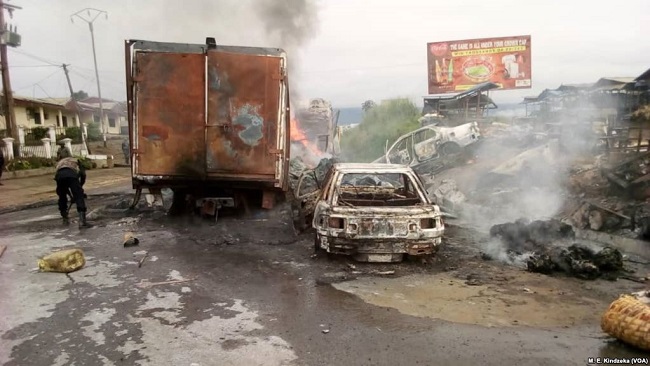
Cameroon’s Anglophone region is rapidly becoming a no-go zone. Thousands of residents fled to the country’s French speaking cities of Douala, Yaoundé, and Bafoussam, during August and September, anticipating more blood shed before the country’s October presidential elections.
English-speaking Cameroon makes up roughly 20% of the country’s 24.8 million people. It has been nearly three years since the Anglophone crisis began. It started when English-speaking teachers and lawyers went on strike demanding fair working conditions. They and other Anglophone residents complain that their language and culture are marginalised by Cameroon’s French-speaking government and legislators.
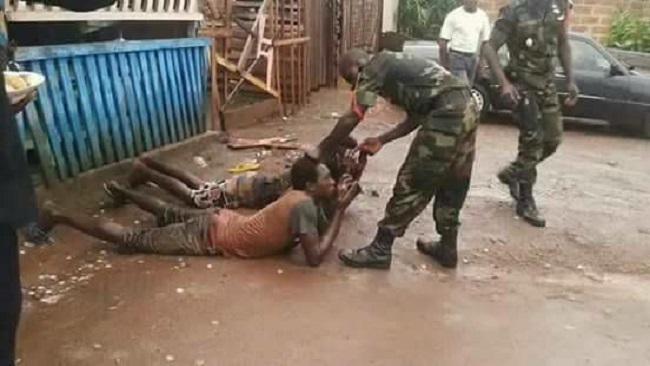
The government responded with force. The conflict that followed has been vicious; unprecedented in the nation’s history. It’s a reminder of older, brutal wars elsewhere in Africa: in Sierra Leone, Liberia and Rwanda.
Lip service is not enough. It’s time for these major powers to act. Great nation status comes with great responsibilities, and particularly in an interconnected global environment there must be a moral imperative in the conduct of foreign policy. These powers must also recognise that Cameroon’s ongoing crisis threatens the wider West African region’s long and short term stability.
Business as usual
There’s no doubt that global powers know exactly what’s happening in Cameroon. In June 2018, the US Subcommittee on Africa, Global Health, Global Human Rights, and International Organisations in Washington D.C heard witness testimonies about the graphic nature of hostilities in Cameroon.
And yet, as a cursory glance at the US embassy website in Yaoundé reveals, it’s mostly business as usual for the two countries. American citizens are warned to avoid travelling to Cameroon’s English speaking regions – but that’s the extent of it.
On its official embassy website, meanwhile, France refers to Cameroon as a “friend” and a “partner”. It calls for “restraint.” Considering how vital the country is to its strategic interests in the West African region, one might expect France to say – or do – more.
 Cameroon is in crisis. It needs an intervention. Shutterstock
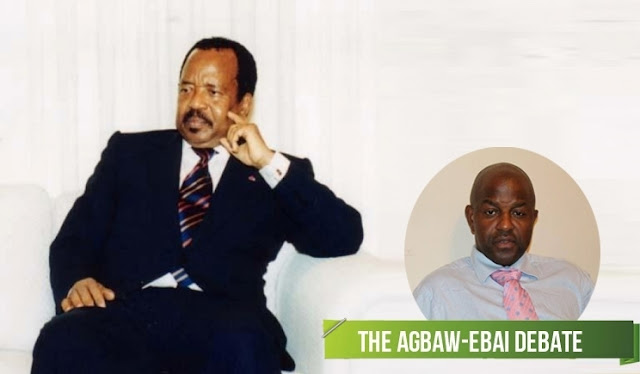
China’s actions in this saga have also been extremely frustrating. At the recent Forum of China-African Cooperation in Beijing, President Paul Biya was given the red carpet treatment. No Chinese leaders, and none from the rest of Africa, made any public statements about the Anglophone crisis.
Strategic importance
All of this is extremely vexing given Cameroon’s strategic importance. For many years the US monitored its interest in Equatorial Guinea from Yaoundé. Cameroon and the US are partners in coordinating efforts against Boko Haram and other global terrorist groups.
Cameroon is vital to France’s interest in the West African region. The Anglophone crisis could destabilise the region by snowballing into neighbouring countries. And other former French colonies will be watching with interest, noting the European power’s hands off approach.
China’s policy of non-intervention in another country’s domestic affairs has only strengthened the resolve of tyrants like Biya. He remains one of China’s key allies in the region. Publicly, China’s Premier Li Keqiang has said little about the ongoing Anglophone Crisis. Instead he’s given more money to Biya’s government and enjoys cordial relations with the long time leader.
Perhaps as long as the crisis doesn’t interfere with China’s receipt of timber, rubber and other raw materials from Cameroon, there won’t be a shift in Beijing’s attitude any time soon.
Agitating for change
It seems unlikely, though, that the world’s major powers will totally change their approach to what are viewed as sovereign issues.
But there are things that can be done, and some are quite basic. Biya can be forced to do the right thing. For instance, he spends a significant amount of vacation time in Switzerland.
There is absolutely no reason why European nations and journalists shouldn’t speak out about the leader’s spending of his country’s resources in Switzerland, France, and other places.
Emmanuel Macron, France’s president, must turn his verbal threats into actions. Sanctions, for instance, will force Cameroon to address the Anglophone problem. France could also stop the supply of military hardware and intelligence to Biya’s regime.
China can also do more. Its policy of non-intervention doesn’t apply when its interests are threatened: it intervened in Zambia’s elections to safeguard its interests there.
Finally, the African Union has a role to play while it awaits more concerted efforts from European powers. For instance, the continental body could threaten to withdraw the hosting of next year’s African Nations Cup if Biya doesn’t offer a clear timeline for solving the Anglophone crisis. This threat to a major money spinner and point of prestige could shock Biya into action.
Source: News 24










30, September 2018
Yaounde holds its breath as Ambazonian anniversary looms 0
Cameroon is nervously awaiting the first anniversary on Monday of a declaration of independence by its English-speaking minority less than a week before the country plunges into presidential elections.
Attacks are occurring daily in the two regions that are home to this French-speaking country’s anglophones, and many say they are afraid.
In the worst-affected areas, some people have fled with whatever possessions they can carry. Others say they rarely venture out of their homes, fearing separatists as well as the security forces.
On October 1 2017, radicals declared the creation of the “Republic of Ambazonia,” covering two English-speaking regions incorporated into francophone Cameroon in 1961.
The declaration went largely unnoticed outside Cameroon, and “Ambazonia” — named after a bay at the mouth of the Douala River — has been recognised by no-one.
But the move marked the start of a crisis that has cast a shadow over the October 7 elections, in which 85-year-old president Paul Biya, who has ruled the country for 35 years, is seeking a seventh straight term in office.
“The army killed lots of people on October 1,” Monsignor Emmanuel Bushu, bishop of the Buea, capital of Southwest Region, said at the time.
“For nearly two weeks, they shot at people like you shoot at birds.”
Mounting toll
Biya’s crackdown coincided with a surge of bloody attacks by the separatists, gunning down troops and police and burning schools and other perceived symbols of the Cameroonian state.
At least 400 civilians have been killed this year, according to the International Crisis Group think-tank. The government says 109 members of the security forces have been killed since the end of 2017.
Atrocities have been committed on both sides, according to watchdogs.
“The brutal attacks against ordinary people and security forces are further proof of the horrific escalation of violence,” Amnesty International said on September 19.
According to UN figures, 246,000 people in the Southwest Region have fled their homes, and 25,000 have sought shelter in neighbouring Nigeria, many of them living from hand-to-mouth in the forests.
Estimates of displaced people in the neighbouring Northwest Region — the other restive anglophone region — are not available.
The government has imposed tight controls, including over the mainstream media, and both sides are fighting for public opinion in the domain of social media.
The economic damage, too, has been severe. The state-run palm oil company Pamol has deserted some of its plantations, and cocoa and coffee production has stopped because villages have abandoned their crops, the Cameroon NGO Human Is Right said in July.
The government has set up an emergency aid fund for the two regions, to which many Cameroonians have given generously.
Legacy of history
Around a fifth of Cameroon’s 22 million people are English-speaking. The legacy dates back to the colonial period.
Cameroon, once a German colony, was divided between Britain and France after World War I. The French colony gained independence in 1960, becoming Cameroon. The following year, the British-ruled Southern Cameroons was amalgamated into it, giving rise to the Northwest and Southwest regions.
But resentment at perceived discrimination at the hands of the francophone majority, especially in education and the judiciary, began to build.
Demands for greater autonomy grew but were always rebuffed by Biya, culminating in the October 1 declaration.
Shadow over elections
The upcoming elections, a symbol of national sovereignty, have placed the separatists and the authorities in a toe-to-toe fight over who controls the two restive regions.
Attacks on schools rose in September after the return of classes following the summer break. A 12-hour night-time curfew has been declared in the Northwest Region.
The separatists — known as the “Ambazonians” or “Amba Boys” — have vowed to prevent the elections from taking place.
“I’m afraid. I won’t turn out to vote,” said Elizabeth, who lives in the holiday resort of Limbe in the Southwest Region, speaking on condition of anonymity.
“I’m afraid of the Ambazonians but also of the police and military who kill… things could go very badly on polling day.”
Another voter, who gave her name as Ruth, said, “I won’t vote, and many people I know won’t be voting either, because of the threats of the Ambazonians.”
The government has declared that the poll will take place in all of the country’s 360 districts, although some ballot stations will be “relocated” to reduce the risk of attacks.
“I’m sure the elections will go ahead… but the turnout is likely to be low,” said a worker with an NGO which will be monitoring the ballot.
Culled from ModernGhana.Com