
10, August 2018
Zimbabwe opposition leader charged over post-election violence 0
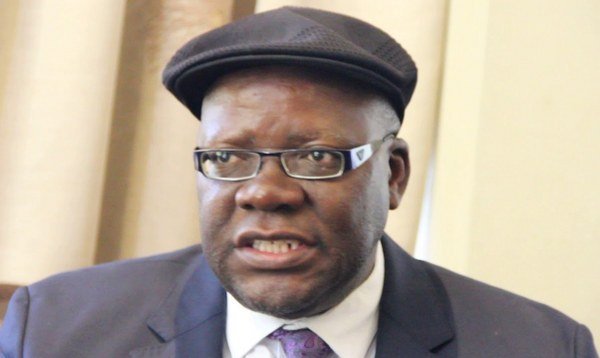
Zimbabwe’s former finance minister and opposition leader Tendai Biti appeared in court on Thursday to be charged with stoking post-election violence in a case watched around the world as a test of President Emmerson Mnangagwa’s treatment of opponents.
Biti, whose People’s Democratic Party had formed an election alliance with Nelson Chamisa’s Movement for Democratic Change (MDC), sought asylum in neighboring Zambia on Wednesday but was deported back to Zimbabwe in a move condemned by the United States.
He was also charged with falsely and unlawfully announcing results of the July 30 election, which Chamisa rejected as fraudulent and is set to challenge in the Constitutional Court on Friday.
If found guilty, Biti could face up to 10 years in jail, a cash fine or both. He was released on bail and will appear in court again on Friday.
“It’s been an ordeal, but we survive. We live to fight another day, I am glad to be home,” Biti told reporters soon after his release.
The United Nations refugee agency, the UNHCR, said it would be a serious violation of international law if Zambian authorities had handed Biti over despite a court order to the contrary, which his lawyer said had indeed been issued by the Zambian High Court.
The European Union, Australia and Canada also said they were “deeply disturbed by continuing reports that opposition supporters are being targeted by members of the Zimbabwean security forces”.
Biti had been in hiding since last week, when six people were killed in a widely condemned army crackdown on protests over the declaration of victory by Mnangagwa’s ruling ZANU-PF party.
State prosecutors did not oppose bail for Biti, which was set at $5,000. He was ordered to surrender his passport and title deeds to his house, and banned from addressing political rallies or news conferences until the case is over.
Mnangagwa said he had intervened to ensure Biti was released, but also said that Biti faced serious charges and that the legal process should be allowed to take its course.
“At such a crucial time in the history of the new Zimbabwe, nothing is more important than unity, peace and dialogue. I call on all parties to immediately cease from all forms of incitement to violence,” Mnangagwa wrote on his official Twitter page.
Some fear the post-election turmoil will derail the chances of mending an economy facing acute shortages of cash and desperate for foreign investment.
(Source: Reuters)
















11, August 2018
Southern Cameroons Crisis: Community radio destroyed in alleged arson attack 0
Cameroonian authorities should speedily investigate an alleged arson attack on community radio station Sky FM in the volatile Northwest region and ensure those responsible are prosecuted, the Committee to Protect Journalists said today.
Unknown persons on August 3 set fire to the station, destroying the building and equipment, according to the station owner Abdou Borno, an article on Sky FM’s official Facebook page, Cameroonian journalist Ndi Eugene Ndi, and two local website reports. The equipment included two transmitters, computers, four recorders, a video camera, a mixer, decoder, television set, and office furniture, according to Borno.
The radio station is based in the town of Ndu, about 124 km (77 miles) from Bamenda, the capital of the Northwest region–one of two regions where Anglophone separatists have been waging an armed struggle for an independent state called Ambazonia against the predominately French-speaking government of President Paul Biya, according to news reports. A recent Human Rights Watch report blamed both sides for grave abuses against civilians, including killings.
“All parties to the conflict in Cameroon, whether government forces or Ambazonians, should stop targeting journalists and media organizations and allow them to operate safely and without fear of reprisal,” said Angela Quintal, CPJ Africa Program Coordinator. “The media is not the enemy. Journalists are simply trying to do their jobs by ensuring that citizens are armed with useful information in what has become an increasingly bloody phase in Cameroon’s history.”
Borno told CPJ that he learned of the fire the morning of August 4 when the manager of the nearby Summit Hotel, Nformi Victor, called him to tell him that the radio station had burned down. According to Borno, Victor told him that a hotel receptionist heard a noise at about 11 p.m. the night before; she did not investigate further since she did not hear the noise again and because it was windy.
Sky FM’s station manager, Bernard Tata Gibip, found a cutlass, gasoline container, and a box of matches near the radio station after he too was alerted by Victor, Borno told CPJ.
The station broadcasts in English and “all other local languages including Limbum and Mbororo,” on topics including culture, health, and the economy, according to Borno, who is a local official of Biya’s ruling Cameroon People’s Democratic Movement party. The station also broadcasts BBC programs and national broadcasts in French.
Borno told CPJ on August 7 that he believed his radio station was targeted because of its “Back to School” campaign, which began last year encouraging students to return to school. The new school year starts in September, and a school boycott has been in place since November 2016 when lawyers and teachers in both the Anglophone Northwest and Southwest regions began protesting the alleged marginalization of English by Biya’s central government in Yaounde, according to news reports. The grassroots protest was then taken over by separatist factions as the conflict escalated with Amnesty International and Human Rights Watch accusing them of violently enforcing the boycott, according to the independent humanitarian news website, IRIN.
The station has been off air since May 19 after its two transmitters were damaged in a lightening strike; they were planning to relaunch the week of August 8, according to Borno.
Borno told CPJ that because the new school year starts next month, the “separatist activists know very well our stand so they decided to burn the entire radio house with all equipment.”
In a detailed emailed statement to CPJ, a spokesperson for the separatists’ Self Defense Council of the Ambazonian Interim Government (ASC), A.J.N. Mbiydzenyuy, said it controlled about 98 percent of the “restoration forces”– who are the self-defense units of the separatist Ambazonia movement– in the Northwest and Southwest regions and that there was no evidence that they were responsible for the arson attack.
“The ASC leadership has never approved [an] arson attack, the restoration forces council in Nkambe is unaware of any involvement of their forces…and the field commanders of our forces in Ndu declined responsibility of the FM radio station arson attack,” he said.
CPJ could not verify independently the alleged motive or whether separatists were responsible for the alleged arson.
Ndi, the publisher and editor-in-chief of the weekly NewsWatch, told CPJ that both the government and separatists were targeting journalists. “Separatists are threatening us with messages that we are siding with government in our reports as we try to stay neutral or objective in the crisis. On the other hand, any report that seems to be propagating the agenda of the separatists is tantamount to the crime of ‘apologies de terrorisme’ punishable under the anti-terrorism law by the government,” he said.
Borno said he employed four staff members to report and produce programs. He said that the station, which he established in 2013, was not a profit-making enterprise, nor was it subsidized by the government.
Communications Minister Issa Tchiroma Bakary, who also serves as a government spokesperson, did not respond to CPJ’s request via Whatsapp for comment. The Northwest Governor Adolphe Lele Lafrique had not replied to CPJ’s request for comment at the time of publication.
In a Cameroon special report about the abuse of anti-terror laws against journalists published last year, CPJ spoke to journalists who said they were increasingly caught between the Cameroonian government and separatists.
Source:CPJ