
9, June 2018
South Africa elected to UN Security Council 0
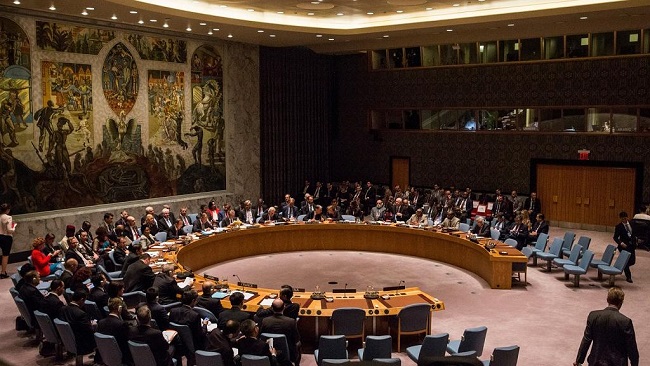
South Africa has been voted onto the United Nations Security Council as a non-permanent member. Its candidature to represent the East and Southern African group was endorsed by Southern Africa last year and the African Union in January.
The United Nations General Assembly on Friday voted to elect Germany, Belgium, South Africa, the Dominican Republic and Indonesia for a two-year term on the Security Council starting on Jan. 1, 2019.
Our tenure in the Security Council will be dedicated to the legacy of President Nelson Mandela and his commitment to peace. In marking his centenary this year, a Summit on Peace will be held on the eve of the 73rd Session of the UN General Assembly in September.
Indonesia drew more votes than the Maldives in the only contested election; the other four candidates ran unopposed.
Uncontested candidates still need to win more than two-thirds of the overall General Assembly vote to be elected.
The council is the only U.N. body that can make legally binding decisions and has the power to impose sanctions and authorise the use of force.
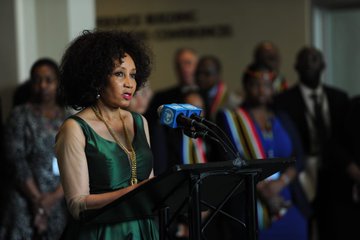
South Africa’s Department of International Relations and Cooperation said it is honoured and humbled by this gesture of confidence.
This will be South Africa’s third term on the UN Security Council, having previously served in 2007-2008 and 2011-2012.
“Our tenure in the Security Council will be dedicated to the legacy of President Nelson Mandela and his commitment to peace. In marking his centenary this year, a Summit on Peace will be held on the eve of the 73rd Session of the UN General Assembly in September,” the statement reads.
The Department says it will use its tenure in the Security Council to promote the maintenance of international peace and security through advocating for the peaceful settlement of disputes and inclusive dialogue.
“We will continue to enhance close cooperation between the UN Security Council and other regional and sub-regional organisations.”
During the two previous tenures, South Africa advocated for closer cooperation between the UN Security Council and the African Union Security Council (AUPC), which culminated in the adoption of the landmark Resolution in 2012 on strengthening cooperation between the two bodies.
Agencies
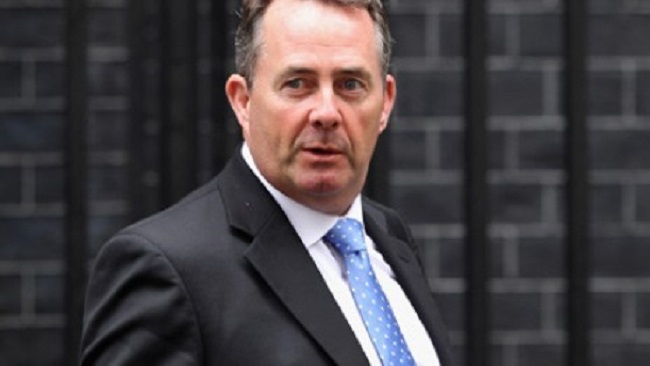
 TRADE Secretary Liam Fox has announced the UK has secured a £1.5billion trade deal and signed off £75million in other trade agreements in a major boost for the UK economy after Brexit.


















10, June 2018
Biya regime begins operations to clear boat wrecks off Douala port 0
The port of Douala, the largest in Central Africa, this week launched an operation to remove wrecks of old boats which hamper its functionality and competitiveness.
“At the operational level, the impacts are even heavier because we are losing docks that should bring us money. It is on the dock that the boat comes to dock to allow exchanges,” said Georges Menye the project manager.
This operation is the first “in 33 years”, according to Cyrus Ngo’o, general manager of the autonomous port of Douala. “The port, the Wouri River is full of a hundred wrecks and we have decided to start with the most dangerous. The first twenty-five wrecks that impede the operation of the port are those that constitute this phase of the project,“ said Mr. Ngo’o.
Fear of pollution
Most of the boats whose frames have been abandoned in the port of Douala are over half a century old and are feared to contain asbestos.
“The majority of these boats are over 50 years old. However, nearly 20 years ago, the construction of boats with asbestos was stopped. Asbestos that has become toxic to humans,” worried Mr. Georges Menye, the project manager.
This contract for the withdrawal of abandoned boats was awarded to an Italian company, Bonifacio, for a sum of 4.7 billion CFA francs (just over 7 million euros).
Work to remove the first 25 wrecks will take eight months.
The main outlet for landlocked Central African countries such as Chad and the Central African Republic, the port of Douala is characterised by its dilapidated infrastructure, congestion, corruption and administrative hassles.
More than 95% of Cameroon’s port traffic passes through Douala.
In February, the French tropical timber trader Rougier designated the “chronic congestion” of the port of Douala as one of the causes of its bankruptcy.
“The bankruptcy of the Rougier group could not be the responsibility of the port of Douala, where the logistics operations of foreign trade are carried out normally”, then reacted Cyrus Ngo’o.
Source: Africa News