
6, July 2026
Gov’t upgrades Ndop rice facilities to support import substitution 0
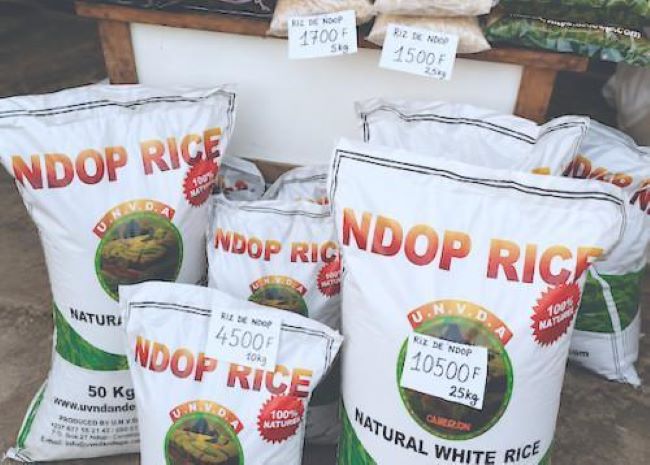
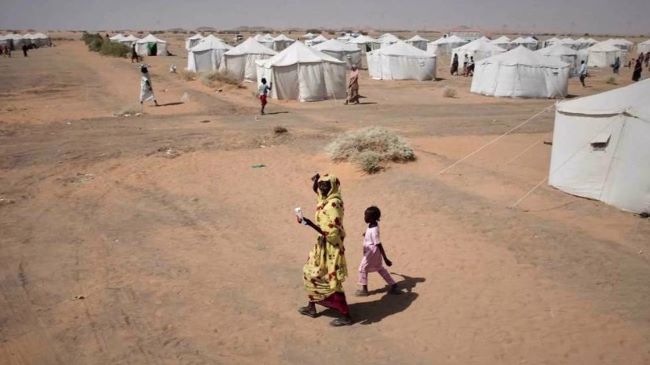
Cameroon is counting on Ndop to become one of the country’s leading rice-producing areas after investing more than CFA4 billion to modernize production and processing facilities at the Upper Noun Valley Development Authority (UNVDA).
Agriculture and Rural Development Minister Gabriel Mbairobe inspected the new equipment on July 2 alongside North West Regional Council President Prof. Fru Angwafo III.
The government hopes the investment will increase UNVDA’s annual rice production from 21,000 tons to 100,000 tons, nearly a fivefold increase.
Achieving that goal, however, will require far more than new processing equipment. Expanding cultivated land, improving irrigation, ensuring access to seeds and fertilizer, strengthening farmer support, and increasing UNVDA’s capacity to purchase, process, and market paddy rice will all be critical.
Modern facilities, but production must follow
The newly installed equipment can process up to 20 tons of paddy rice per hour, replacing aging machinery that had long limited the authority’s operations. The upgrade should reduce processing bottlenecks, improve rice quality, and allow larger volumes of paddy to be handled.
But higher milling capacity does not automatically translate into higher agricultural output. UNVDA still faces challenges related to land development, irrigation, and farm productivity. Although the Ndop plains offer significant agricultural potential, only part of the available land has been developed for rice cultivation.
Unless irrigation systems, rural roads, improved seeds, fertilizers, and extension services expand alongside the processing facilities, the new plant could operate well below capacity. The government’s own assessment of the rice sector highlights these constraints. The Ministry of Agriculture cites post-harvest losses, insufficient milling capacity, outdated storage infrastructure, high input costs, shortages of improved seed varieties, limited mechanization, and inadequate irrigation among the industry’s biggest obstacles.
The Ndop investment addresses one of those challenges, but not all of them.
Reducing dependence on imported rice
The project is part of Cameroon’s broader effort to reduce its dependence on imported food. According to the National Institute of Statistics (INS), cereal imports totaled CFA466.9 billion in 2025, down 14.1% from the previous year but still accounting for 8.9% of the country’s total import bill.
Rice remained the largest imported cereal, with purchases valued at CFA268.7 billion, or 5.1% of total imports, despite declining 15.6% from 2024.
By increasing UNVDA’s processing capacity, the government hopes to expand domestic rice production, gradually replace imports, and create more value within local farming communities.
The initiative fits into Cameroon’s import substitution strategy, which aims to increase the productivity, output, and competitiveness of domestic agriculture.
Still, local rice will need to compete with lower-cost imports, particularly from Asia. That means producing enough rice of consistent quality, packaging it effectively, and keeping prices affordable for consumers.
More than equipment will determine success
Farmers have welcomed the arrival of the new facilities, saying they should shorten processing times, improve access to milling services, and increase the value of their harvests. However, producer prices, access to fertilizer and improved seeds, farm machinery, better roads, and UNVDA’s ability to purchase paddy on time will remain critical to the project’s success.
Security also remains a concern. UNVDA operates in Cameroon’s North West Region, which has been affected by the Anglophone crisis since 2017. Although the Ndop plains retain strong agricultural potential, insecurity continues to affect access to farms, the movement of farmers and inputs, and the transport of rice to markets.
Against that backdrop, the presence of the regional council president alongside the agriculture minister underscored the government’s intention to anchor the project within the region’s broader development strategy.
Ultimately, however, the success of the investment will depend less on political support than on whether it can secure the entire production chain.
The CFA4 billion investment marks an important step in modernizing UNVDA and strengthening Cameroon’s ambition to expand domestic rice production. But increasing annual output from 21,000 tons to 100,000 tons will require much more than new machinery. It will depend on whether higher processing capacity is matched by sustained gains in agricultural production and a more competitive local rice industry.
Source: Business in Cameroon
























6, July 2026
Jeff Osife Mokube Affair: Audit Committee alleges mismanagement. What role did Ben Ntamack play? 0
The AUDIT COMMITTEE that was created in the city of Leicester in England with the mandate to examine the financial management of the funeral funds of the late Tata Jeff Osife Mokube and report its findings to the donors and the wider community has released a report alleging mismanagement and repeated possible violations of Cameroonian community norms by Ben Ntamack.
The report, made public July 05, found that the finances for the late Jeff Osife Mokube funeral went into private pockets.
The Audit Committee Report disclosed that the late man’s mother received a miserable forty thousand FCFA while his dad had no idea that the Cameroonian community in Leicester had provided funds for Tata Jeff Osife’s home-going.
Officials of the audit committee could not be reached for comment.
Financial records throughout the funeral process revealed concerns, according to the Audit Committee Report, including irregular fund movements, cost allocation errors, compliance failures and weaknesses in financial controls.
A senior Cameroonian elite in Leicester who spoke to this reporter but sued for anonymity said the full scope of the financial problems will never become clear if Ben Ntamack is left to go scot-free.
“A lawsuit will be filed by the Cameroonian community in Leicester against Ben Ntamack” he quipped.
The Audit Committee other findings include serious deliberate errors in the cost of repatriation, wake keep allocation and funeral rites including systemic mismanagement and negligence which resulted in catastrophic and increased funeral bills both in Leicester and back home in Cameroon.
The Audit Committee Report also describes a pattern of broader calculated failures, including improper use of the funds raised by the Cameroonian community.
According to the Audit Committee Report, Cameroonians with a history of offenses such as theft and embezzlement should never be allowed to champion bereavement fund drives.
The Audit Committee attributed many of the issues outlined in the report — including the poor financial engineering of the funeral to the nasty environment within the group that was headed by Ben Ntamack.
A member of the Audit Committee was heard murmuring privately at the Clock Tower in Leicester City Centre that “everything about Ben Ntamack came across wrong, and all of the people we talked to just basically had nothing good to say about him and his integrity.”
The Leicester Audit Committee is not just acknowledging a Cameroonian problem, but it is solving it.
By Soter Tarh Agbaw-Ebai