
7, July 2022
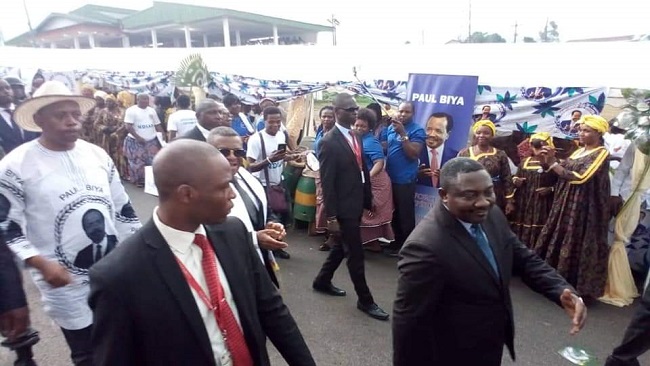
Who could succeed Paul Biya in Etoudi? 0
In some African countries that are striving to move forward, their constitutions are very strong and their leaders weak. In Francophone Africa, Cameroon included, leaders are very strong and constitutions are very weak.
It is common knowledge that the one important job of a constitution is to limit the power of the leader. However, this is not the case with all the countries in Africa where French is the official language.
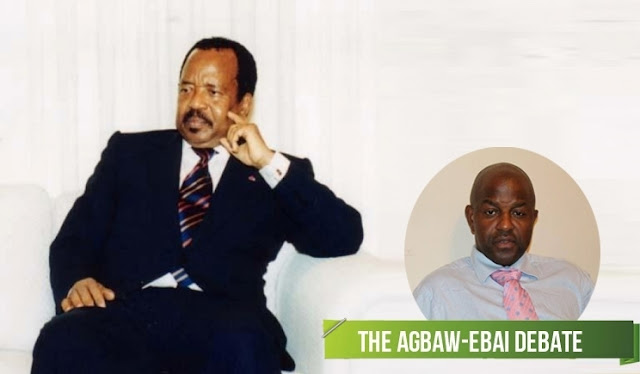
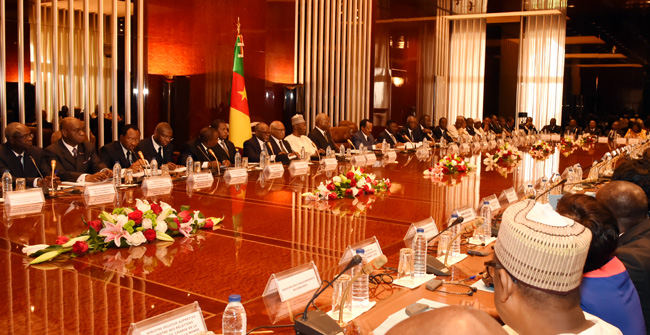
President Paul Biya’s days as head of state now looks numbered after a sea of health issues. But while several possible successors including his eldest son Franck Biya have been suggested, there is no clear favourite.
Once Biya goes, the whole CPDM regime will fall, up to and including those in the so-called Senate and National Assembly and for genuine leadership to emerge, the politically docile French speaking Cameroonians would require a revolution that can lead people to the sunlight uplands.
Frankly speaking, nothing will change after Biya if French Cameroonians particularly those in the military and the gendarmerie turn a blind eye and do nothing in Yaoundé. What those currently in Etoudi are planning is simply one yellow cake replacing another yellow cake. They all are criminals with blood on their hands.
Biya should never have gotten in and as we wait in joyful hope for his departure, his acolytes, his Beti Ewondo kinsmen and women who are only there to continue collecting bribes and putting one tribe against the other while destroying the economy will surely face the long arm of the law.
Unfortunately, anyone from the ruling CPDM consortium of criminal syndicates who replaces Biya will be no different. The agenda as teleguided in Paris is to destroy the Anglophones and guarantee France complete and total access to Cameroon’s mineral wealth. This agenda will not change. So, in the one and indivisible Cameroon, Southern Cameroonians and French Camerounians are just “allies”, not family.
By Soter Tarh Agbaw-Ebai











7, July 2022
UN Security Council to vote on extending Syria cross-border aid 0
The United Nations Security Council votes Thursday on extending its authorization of aid transfers across Syria’s border without approval from Damascus, with Russia seeking a six-month prolongation while Western nations want a full year.
The UN resolution permitting aid deliveries across the Syrian-Turkish border at Bab al-Hawa has been in effect since 2014, but is set to expire on Sunday.
Norway and Ireland, two non-permanent members of the 15-country Security Council, have drafted a resolution that would extend the authorization until July 10, 2023.
Nearly 10,000 trucks loaded with humanitarian aid passed through Bab al-Hawa last year, bound for the rebel-held Idlib region in northwestern Syria. It is the only crossing through which aid can be brought into Idlib without navigating areas controlled by Syrian government forces.
The resolution, which was obtained by AFP, calls on “all parties to ensure full, safe and unhindered access by all modalities, including cross-line, for deliveries of humanitarian assistance to all parts of Syria.”
Russia, a veto-holding Security Council member and ally of Damascus, has hinted in recent months that it would oppose an extension, having already forced a reduction in the number of allowed border crossings on the grounds that it violates Syria’s sovereignty.
According to diplomats, Russia ultimately put its own draft resolution on the table, which includes an extension of six months.
In an attempt to persuade Moscow, Norway and Ireland have inserted several amendments touching on the transparency of humanitarian shipments, possible contributions to Syria’s reconstruction, and on the need to develop aid deliveries via government-controlled territory.
Russia has long called for the West to participate in Syria’s reconstruction, but some council members, most vocally France, have refused until political reforms have been enacted.
However, during a Security Council meeting in June, a majority of countries — including the United States — offered support for financing so-called “early recovery projects” in Syria.
In this vein, the resolution by Norway and Ireland calls for “further international initiatives to broaden the humanitarian activities in Syria, including water, sanitation, health, education, and shelter early recovery projects.”
By Wednesday evening, few diplomats dared to predict whether the additions would be enough to convince Russia to agree to a full-year extension.
But some told AFP that a last-minute compromise was possible, by making the six-month extension renewable for an additional six months practically by default.
Source: AFP