

23, March 2022
Southern Cameroons Crisis: What has the government learned? 0
The Southern Cameroons crisis which started with protests by lawyers and teachers in the country’s two English-speaking regions has not only crippled the country financially. It has also created a strange strain of distrust towards the government and this distrust will have dire consequences for the government which has a huge burden of proving that it is capable of leading the country in an objective, serious and honest manner.
Southern Cameroonians in particular and Cameroonians in general do not trust the government because of its constant use of brutality as its weapon of choice for the resolution of issues which could be addressed around a negotiating table.
The government’s excessive use of brutality throughout the Southern Cameroons crisis has sent more than ten thousand Cameroonians to an early grave, hundreds of thousands have been displaced, and thousands are now living with disabilities which will be reminders of the mistakes that were made because of a huge dependence on violence as a tool of choice for conflict resolution.
Today, things are improving in the country’s two English-speaking regions, though small crooks and criminals are still on the prowl for possible victims. The two regions are awash with light weapons which made their way into the country through the border with Nigeria, and trigger-happy young men are using these weapons to harass innocent people, kidnap those they suspect of having money and even settling scores with those they disagree with.
This has left many people in fear, though the killings, especially government-sponsored killings, are dwindling. This is giving many people in the two English-speaking regions some hope that someday, things will return to normal. They are looking forward to the day when their children will be able to go to school without anybody harassing them. They are longing for the day they will be able to travel without the little criminals who pass off as fighters will not block the road and make their lives miserable.
In many parts of the two English-speaking regions of the country, civilians are coming together to fight those fake fighters who have made the lives of many Southern Cameroonians a living hell. The crooks are there for their own interest and have nothing to do with the liberation of Southern Cameroons. The people had supported the struggle in the beginning because they thought it would enable them walk away from the Francophone majority whose goal was to subjugate the English-speaking minority.
But their support for the fighters started dwindling when so-called leaders abroad started embezzling money meant for the war and the desperate fighters started using kidnapping and intimidation as a means of raising money to prosecute the war. In any situation where there is a total breakdown in law and order, criminals can easily make hay while the sun shines and that is what armed criminals have been doing to line their pockets.
Many people have been killed not by soldiers or real fighters but by criminals who are taking advantage of the chaos that the government has created and sustained for years. The seeds of oppression sown by the government have produced some of the worst ferocious violence and brutality in the two English-speaking regions of the country and this unfortunate situation will linger for a very long time, especially as unemployment remains a millstone around the necks of many young men.
As the fighting is burning out, many observers are asking if the government has learned any lessons, especially from its own mistakes. The fighting itself could have been avoided if the government had used well-known conflict resolution mechanisms. Dialogue, not arms, will deliver more meaningful results in any conflict situation and the government should be aware of this.
The government’s refusal to sincerely dialogue with Southern Cameroonian leaders when the conflict just started is to blame for the thousands of deaths on both sides. Many young men have been killed in a conflict which does not make sense to many people. Thousands of soldiers have been sent to an early grave and thousands of children will never have the opportunity of seeing their fathers because of the government’s wrong decisions.
Repression will never address the country’s issues and the government seems to have learned that but only after many lives have been cut short and development resources wasted in the purchase of arms that were unnecessary. The country’s economy has taken a beating and it will take time for an economy that has been on life support for decades to recover from another unnecessary shock like the war that is still raging on in Southern Cameroons.
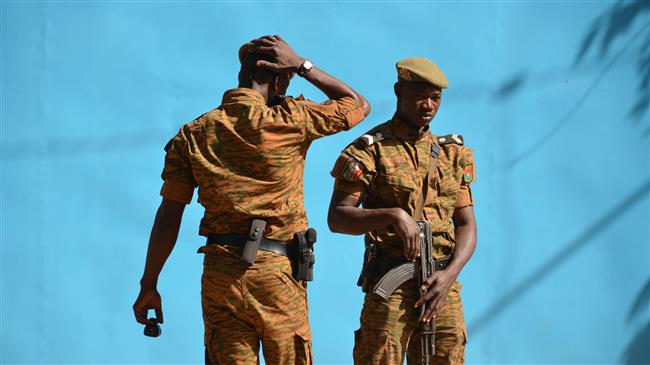
The violence started dying down once the government advised the military against killing civilians just to prove a point. Many Southern Cameroonians killed by the military were innocent civilians. They were not fighters. Fighters do not live in towns and cities. They seek refuge in bushes where they can plan their war strategy without fear. Many civilians were killed either in their homes or at city centers and they were not armed. Those killings only triggered a wave of revenge, and this unfortunate situation only created a large pool of fighters who were dead serious about revenging the death of their loved ones.
Today, Cameroonians know how to build IEDs. Those IEDs have wreaked havoc on the military, with thousands sent to an early grave and expensive military equipment destroyed. The massive human cost and huge economic and military consequences should call the government to reason.
Calling off unnecessary military killings of civilians has helped to reduce the tension and pressure that were hanging over many towns and cities in Southern Cameroons. The government should understand that its faulty policies are to blame for the conflict and a reversal of some of those policies could restore peace and security in the two English-speaking regions.
The current systems are not working and a persistence to use them may only push the country into a downward spiral that might trigger serious adverse consequences for the country. Cameroon needs peace and without peace, meaningful economic and social development will remain a distant tomorrow affair. The government seems to have understood this and the current conflict with teachers speaks to the government’s understanding and vulnerability.
By opting for a speedy processing of teachers’ salaries and benefits, as well as avoiding any physical confrontation with thousands of teachers who have vowed not to return to school until their demands are met, the government has demonstrated that a non-military approach is the best when it comes to dealing with conflict. If this approach can be maintained, many issues will be dealt with, and Cameroon will regain its status as an oasis of peace in a desert of chaos.
By Soter Tarh Agbaw-Ebai


















23, March 2022
Southern Cameroons Crisis will not be resolved in Yaoundé and risks creating a generation of disenfranchised, displaced people nursing a grievance 0
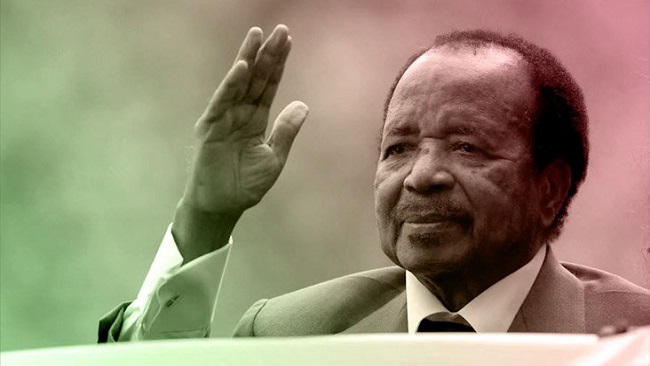
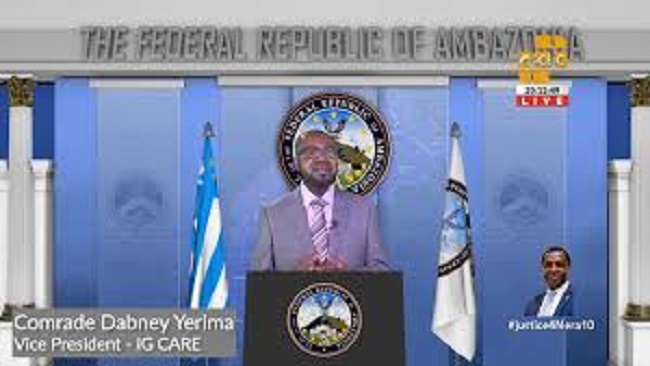
Cameroon is an amalgamation of former French and British territories combined into a single country in 1961. The North-West and South-West Regions (NWSW) of Cameroon are home to most of the country’s English-speaking population (Anglophones), roughly 20% of the total population. The Anglophone Conflict stems from 2016 when Anglophone teachers and lawyers mounted protests demanding better representation in Cameroon’s legal and educational systems. What started as peaceful protests quickly turned violent as demonstrators clashed with security personnel. Cameroon President Paul Biya’s response included deploying U.S. trained special forces[2], curfews, and implementing regional communications blackouts. In 2017, Anglophone protestors switched tactics from wanting increased representation to demanding an independent state. On October 1, 2017, Anglophone separationists unilaterally claimed independence from Cameroon creating the Federal Republic of Ambazonia which would be led by an interim government.
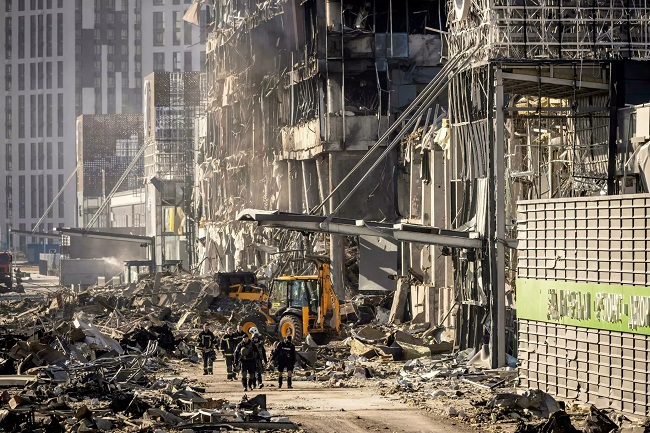
Ambazonia is now in quasi-civil war albeit with limited recognition from President Biya in Cameroon’s capital Yaoundé. He maintains that the conflict is a terrorist/criminal issue, which he promises to resolve through bureaucratic maneuvering and force[3]. The struggle continues to grow deadlier, with more improvised explosive device attacks taking place in the first five months of 2021 than all other years of the conflict combined[4]. The situation continues to deteriorate with separatists beginning kidnap for ransom operations and the Cameroonian state conducting cross border operations of questionable legality into Nigeria. The Cameroonian government’s harsh tactics against its citizenry prompted allegations of human rights abuses.
The magnitude of the crisis and numerous filmed events obtained by international aid organizations lends strong credence to the allegations. As a result of the abuses, the U.S. cut military aid to Cameroon in 2019[5]. The U.S. is in a difficult position as Cameroon is a key ally against Islamist terrorism in the region, through their contribution to the Multi-national Joint Task Force and allowing U.S. forces to operate from bases in the country[6].
Little is likely to be resolved in the immediate future. The government is unable to claim victory, and the separatists have not gained and held ground, leading to in-fighting[7]. The separatists seek to change their fortunes through an alliance with Nigerian separatists and the purchase of weapons from foreign powers[8]. Another element to consider is President Biya. At 89, Biya is the oldest elected official on the continent and the second longest serving. Many, if not most, Cameroonians do not know life without Biya. He has no intention of ceding power, and more importantly does not have any clear succession plans. Disorganization from Biya’s hospitalization, death, or cessation of power may give Amabazonia the relief it needs to find better footing.
For a country battling Islamist terrorists in the north and separatists in the south, the death of an autocrat may be the final straw. The U.S. would be well advised to consider response options to the Anglophone crisis beyond advocating for human rights. If the U.S. continues to ignore the Anglophone crisis and does not develop solid response options, it risks ceding regional leadership and allowing the problem to spiral. Considering the NWSW regions’ coastline and other natural resources, the area will draw international attention for cocoa, oil, or an Atlantic Port. In 2019, China wrote off a substantial portion of Cameroon’s debt[9], and is building the region’s largest deep-water port[10]. China is presumably ready to and willing to fill any partnership void caused by U.S. inaction.
There are several possible outcomes. The first, already underway, is the continued stagnation of the crisis. With neither side moving towards peace and conflict increasing, the growth of criminal activity, extremism, and continued human rights abuses is likely. Combined with other regional instability and increased piracy in the Gulf of Guinea, the equivalent of a West coast Somalia is an unattractive prospect.
Second, should the crisis escalate, and Cameroon prove ineffective at containing the situation, say in the case of Biya’s death, would regional intervention be justified? Is the U.S. prepared or able to, with Leahy Law requirements, support regional action to stabilize the area? How would the U.S. react to Nigeria retaking the Bakassi peninsula under the premise of a responsibility to protect intervention?
Given the vast uncertainty facing Cameroon post-Biya, the U.S. and international community should not be shocked by renewed claims of Ambazonian independence. Should Anglophone Cameroonians coalesce, they may prove more capable at maintaining security in the region than Yaoundé. The Anglophone Cameroonians would then have a solid footing for seeking recognition, which could prompt additional calls for succession from groups like the Movement for Emancipation of the Niger Delta in neighboring Nigeria. As evidenced by recent events, a country seeking de jure recognition has the potential to disrupt the international order, in this case that could occur in an already unstable region which could prove disastrous for U.S. regional efforts.
The current situation is the culmination of bad international politics in the 1960’s which amalgamated peoples regardless of their language and culture. The crisis will not be resolved as is and risks creating a generation of disenfranchised, displaced people nursing a grievance.
Culled from realcleardefense