

11, August 2022
Football: Real Madrid beat Eintracht Frankfurt to win fifth UEFA Super Cup 0
Goals from David Alaba and Karim Benzema gave Real Madrid a 2-0 victory over Eintracht Frankfurt and a fifth UEFA Super Cup on Wednesday.
While Frankfurt were dangerous, particularly in the first half, Madrid’s experience and individual quality saw them through, as it did so often in their victorious 2021-22 Champions League campaign.
Frankfurt had the best of the early stages, with Madrid keeper Thibaut Courtois forced into a stunning anticipation save when one-on-one with Daichi Kamada in the 14th minute.
Madrid almost got there first, when Benzema released Vinicius to curl past Kevin Trapp in the penalty box, only for Tuta to clear the ball off the line.
With Madrid dominating possession, Frankfurt mounted several counter-attacks until Madrid launched a counter of their own in the 37th minute.
A diving Trapp got his fingertips to a goal-bound shot by Vinicius, pushing the ball out for a corner.
From the ensuing play, Benzema linked with Casemiro just next to the right post.
The Brazilian sucked in several Frankfurt defenders and a diving Trapp, before heading back to an unmarked Alaba who scored from close range.
After the goal, Madrid stepped it up a gear and should have gone 2-0 up, with Benzema uncharacteristically dragging the ball wide with the goal begging in the 41st minute.
Vinicius, Benzema connect
Madrid’s quality became more obvious in the second half, with Trapp saving a deflected Vinicius shot in the 54th minute and Casemiro hitting the crossbar with 61 minutes gone.
Borussia Dortmund loanee Ansgar Knauff had a chance saved just minutes later, before Vinicius and Benzema combined to put Madrid 2-0 up.
Vinicius skated down the left before slicing the ball back seemingly unsighted for the Frenchman to hammer home from the edge of the box.
Frankfurt fought hard in the closing stages but Madrid were able to dominate the game to win their fifth Super Cup from eight attempts.
The clash, in Helsinki’s Olympic Stadium, was the first time these two sides had met in a European decider since 1960, when Madrid dismantled Frankfurt 7-3 through four goals to Ferenc Puskas and three to Alfredo di Stefano in the European Cup final.
The match also highlighted the growing gap between the Champions League and Europa League competitions, with Madrid being the ninth Champions League team to win the competition in the past 10 years.
Only city rivals Atletico Madrid have won the Super Cup when qualifying via a Europa League win in the past decade, having done so by beating Real in the 2018 edition.
In the 10 years before, Champions League and Europa League participants won five Super Cups each.
Frankfurt joined Hamburg (1977 and 1983), Dortmund (1997) and Bremen (1992) as losing Super Cup finalists from Germany, with only Bayern Munich (2013 and 2020) having won the showpiece event.
Source: AFP









11, August 2022
Southern Cameroons Crisis: Francophone soldiers killed 10, burned 12 homes and looted health facilities 0
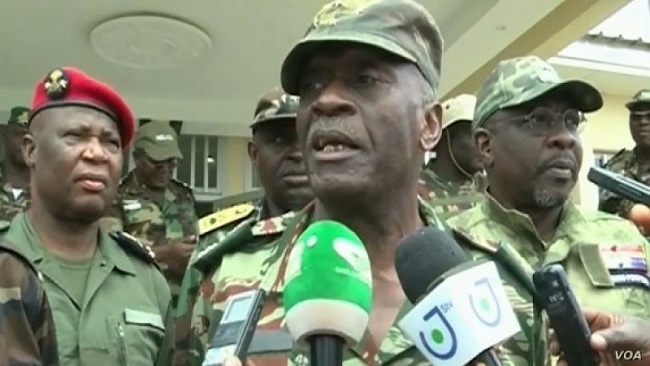
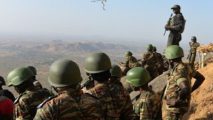
Cameroonian soldiers summarily killed at least 10 people and carried out a series of other abuses between April 24 and June 12, during counter-insurgency operations in the North-West region, Human Rights Watch said today. The troops also burned 12 homes, destroyed, and looted health facilities, arbitrarily detained at least 26 people, and are presumed to have forcibly disappeared up to 17 others.
“Instead of protecting the population from threats posed by armed groups, the Cameroonian security forces have committed serious violations against civilians, causing many to flee their homes,” said Ilaria Allegrozzi, senior central Africa researcher at Human Rights Watch. “Cameroonian authorities should conduct credible and impartial investigations into these serious abuses and hold the abusers accountable.”
Between June 3 and July 21, Human Rights Watch interviewed by telephone 35 people with knowledge of 4 incidents in which the security forces allegedly committed serious abuses. Interviewees included 16 witnesses, 8 family members of victims, a community leader, 3 journalists, 5 members of civil society organizations, and 2 human rights lawyers. The incidents took place in and around the towns and villages of Belo, Chomba, Missong, and Ndop. Human Rights Watch also reviewed 53 photographs and 16 videos, shared directly with researchers, showing evidence of the military violations.
The violations were committed during military operations against armed separatist groups seeking independence for the two English-speaking regions of Cameroon, North-West and South-West. Human Rights Watch has also documented serious abuses by separatist fighters during the same period, including the killings and kidnapping of civilians, and attacks on students, teachers, and schools.
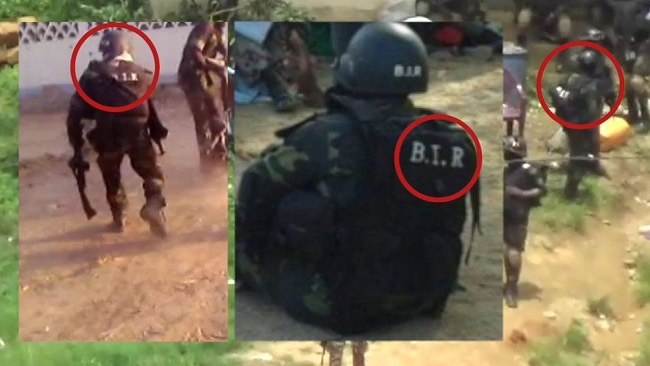
Witnesses said that on April 24, soldiers from the Rapid Intervention Battalion (Bataillon d’intervention rapide, BIR) outside of Ndop, stopped, severely beat, and then detained between 30 and 40 motorbike riders who were part of a funeral convoy, allegedly because the soldiers suspected them of being separatist fighters. Up to 17 of those detained are presumed forcibly disappeared, as their whereabouts is unknown, but they were last seen in military custody.
“The soldiers selected those among us who had dreadlocks,” a bike rider who was later released told Human Rights Watch. “For them this is an indication that you are an amba boy [separatist fighter]. They forced us to undress and beat us savagely with an iron hammer and with their belts.”
On June 1, soldiers from the 53rd Motorized Infantry Battalion (Bataillon d’infanterie motorisée, BIM) killed nine people, including four women and an 18-month-old girl, in Missong village, in a reprisal operation against a community suspected of harboring separatist fighters.
On June 8, soldiers conducted an abusive military operation in Chomba, burning a home and looting the local health center. They also arrested a woman along with her 11-year-old foster child and held them for 24 days at the BIR barracks in Bafut, North-West region. Human Rights Watch has documented other cases of civilians detained on military bases, in violation of Cameroonian law.
From June 9 to 11, in Belo, security forces summarily killed one man, injured another, burned at least 12 homes, destroyed a community health center, and looted at least 10 shops.
Human Rights Watch, Amnesty International, and other organizations have also documented a longstanding pattern of unlawful and incommunicado detention and torture in custody in Cameroon.
On July 28, Human Rights Watch sent an email to the Cameroon army spokesperson, Colonel Cyrille Serge Atonfack Guemo, detailing the alleged abuses and requesting answers to specific questions. Atonfack did not reply.
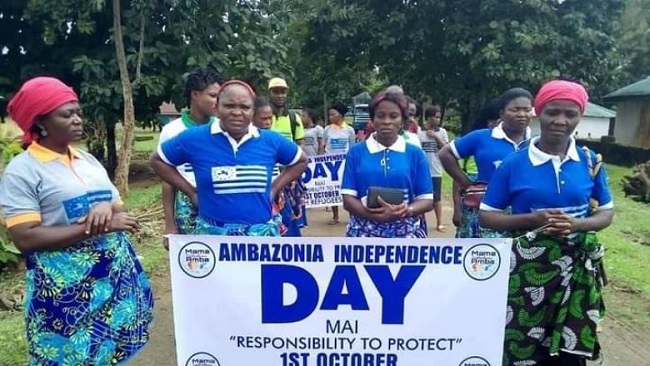
Since 2016, Cameroon’s English-speaking regions have been in the throes of a political and security crisis between armed separatist groups seeking independence for their self-proclaimed state of Ambazonia, comprising the North-West and South-West regions, and the Cameroonian security forces. The violence has caused about 6,000 deaths and a major humanitarian crisis, with almost 600,000 people internally displaced within the Anglophone and neighboring regions, and over 77,000 forced to become refugees in Nigeria.
Both Cameroonian security forces and armed separatist groups have committed serious human rights abuses but have faced limited or no consequences. Impunity remains a key driver of the crisis, emboldening abusers, and fueling further harm and violence.
On July 19, speaking from Bamenda, the capital of the North-West region, while appointing new generals to command troops fighting separatists, Joseph Beti Assomo, Cameroon’s defense minister, said that the military should take all necessary precautions to prevent human rights violations during operations and hold those responsible for abuses accountable.
In a June 7 news release, Atonfack, the army spokesman, acknowledged military responsibility for the killings in Missong village and announced that an investigation had been opened. Promising to investigate violations is a positive step, but the Cameroonian government has failed to make good on previous such commitments, Human Rights Watch said.
More than two years after the massacre of 21 civilians, including 13 children, in Ngarbuh, North-West region, by Cameroonian soldiers, and the government’s acknowledgement of military responsibility, the trial of those accused of involvement in the killings has dragged on. This slow pace raises concerns about the justice system’s efficiency and ability to deliver justice to the victims and fight impunity.
The crisis in the Anglophone regions has received little media and international attention and has been considered one of the most neglected worldwide. In her June 8 briefing to the United Nations Security Council on the situation in the central African region, Assistant Secretary-General for Africa Martha Pobee urged “the international community to step up support to national efforts toward a peaceful resolution” of the Anglophone crisis. On July 25 and 26, French President Emmanuel Macron visited Cameroon, and met with his counterpart Paul Biya. Macron did not publicly address crucial human rights issues, including human rights abuses committed by both security forces and separatist groups in the Anglophone regions.
“Cameroon’s international partners, including the African Union and United Nations, should insist that there can be no peace in the Anglophone regions without justice,” Allegrozzi said. “Cameroon’s bilateral partners should send a strong and clear message to the Cameroonian government that engaging in atrocities with impunity has consequences.”
Culled from Human Rights Watch