
16, April 2026
Pope Leo XIV continues Cameroon visit as tight security, traffic restrictions hit Douala 0
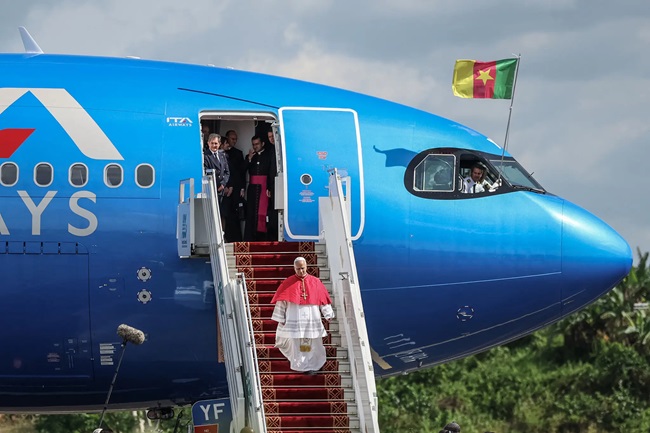
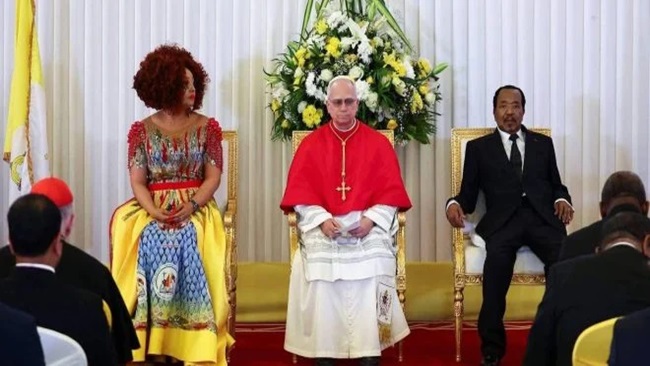
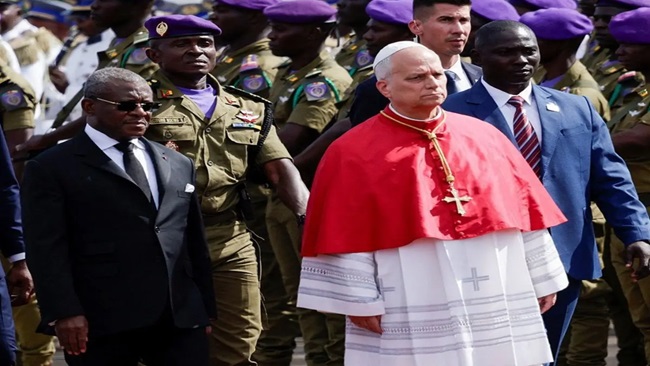
Pope Leo XIV is continuing his official visit to Cameroon after arriving in Yaounde on April 15, 2026, as part of an African tour that began in Algeria. He is expected in Douala on Friday, April 17.
The visit has prompted extensive security and logistical measures, particularly affecting traffic. In a radio statement issued on April 14, the governor of the Littoral region, Samuel Dieudonne Ivaha Diboua, outlined arrangements in the economic capital. The pope’s programme includes a mass at the Japoma Sports Complex, followed by a private visit to Saint Paul Catholic Hospital.
A special traffic plan will be in place from 7 a.m. to 3 p.m. to ensure security and facilitate movements. It will mainly cover the route from Douala International Airport to the Japoma complex, then to Saint Paul Hospital, before returning to the airport.
Significant restrictions are expected, with diversions and route changes. Drivers travelling to and from Edea must use the Dibamba–Japoma–Nkolmbong–Nyalla-Rails corridor, with options via Total Logbaba or PK 12.
For drivers from Bonaberi, alternative routes include the Deido roundabout, either through Ndokoti and Nyalla or via Bonamoussadi, Logpom and Logbessou. Residents of Douala’s 1st, 2nd and 3rd districts are also advised to use these bypass routes.
Authorities have designated crossing points at key locations, including the Nelson Mandela interchange and intersections at Billes, Ndogpassi and Yassa, to reduce disruption. Some areas will be completely closed to traffic to secure the papal motorcade. Traffic may also be temporarily halted during the mass before gradually returning to normal after the pope’s departure.
In Yaounde, where the pope began his visit, authorities also implemented a traffic plan. According to the national police, the measures aim to maintain order, security and smooth traffic flow. Some main routes have been restricted or temporarily closed, and residents were advised to avoid affected areas.
These measures are already affecting residents, who must contend with detours and disruptions. Despite this, the visit has raised strong interest among the faithful. For Cameroon, it carries religious, symbolic and diplomatic significance.
Source: Business in Cameroon




















16, April 2026
World Bank Group launches initiative to improve water security for 1 billion people 0
The World Bank Group, in partnership with multilateral development banks, development finance institutions and key partners, today launched Water Forward, a global platform to help improve water security for 1 billion people by 2030. The platform will align policy reforms, financing, and partnerships to expand reliable water services and strengthen systems against droughts and floods—essential conditions for job creation.
Water underpins health, food systems, energy, and an estimated 1.7 billion jobs worldwide; yet 4 billion people experience water scarcity. In many countries, unclear policies, weak regulations, and financially unsustainable utilities have slowed progress and deterred investment in the sector. Water Forward aims to address these challenges by helping developing countries build stronger, more reliable water systems that can unlock productivity, support livelihoods, and enable private investment. The initiative will support reforms to strengthen institutions, improve financial performance, and develop investment-ready projects.
“Water is foundational to how economies function. When water systems work, farmers produce, businesses operate, and cities attract investment. Our task now is to align reform, financing, and partnerships to deliver reliable water services at scale,” said Ajay Banga, President of the World Bank Group.
At the core of the initiative are country-led water compacts, through which governments define reform priorities, commit to strengthening institutions, and establish investment pathways for their water sectors. Today, 14 countries announced their national water compact under the Water Forward initiative, and many more are underway.
Multilateral development banks, governments, philanthropies, and private sector actors are aligning financing and expertise to speed investment and implementation of projects that will boost reliable access to water. The World Bank Group is committed to delivering water security to 400 million by 2030. With its additional partner commitments, Water Forward expects to reach more than 1 billion people.
With more than 1.2 billion young people entering the workforce in developing countries over the next 10 to 15 years, reliable water will be critical. Strong water systems are foundational to healthy economies that can attract private investment and create jobs.
Multilateral development banks and development finance institutions that have committed to specific beneficiary targets for 2030 include the:
Asian Development Bank,
Asian Infrastructure Investment Bank,
Council of Europe Development Bank,
European Bank for Reconstruction and Development,
European Investment Bank,
Inter-American Development Bank,
Islamic Development Bank
New Development Bank,
OPEC Fund for Intranational Development; and the
International Fund for Agricultural Development.