

22, November 2020
Paul Biya is offering Cameroon’s Anglophones too little, too late 0
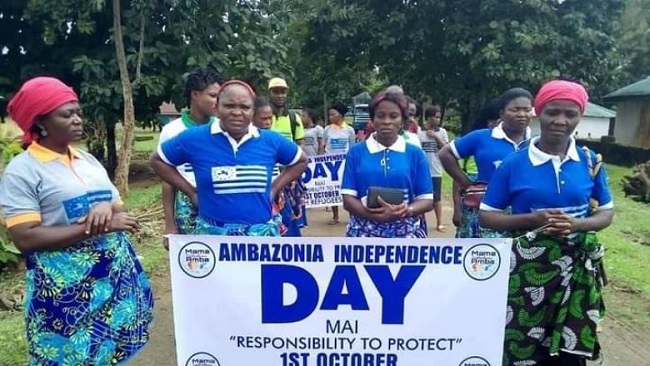
The announcement of the elections and the implementation measures comes as Cameroon is embroiled by a conflict in which separatist fighters in the Anglophone Northwest and Southwest regions seek to create an independent state called Ambazonia. This conflict stems from the systematic marginalization of Anglophones, who comprise nearly 20 percent of the country’s population, but was sparked by the repression of demonstrations of teachers and lawyers in the fall of 2016 who demanded linguistic autonomy within their respective institutions.
Now, four years after these demonstrations and in the midst of a war of secession that has killed thousands of people and displaced hundreds of thousands, Biya’s government—which has consistently been ranked as one of the most corrupt and authoritarian in Africa—is seeking to enact decentralization measures. While enacting such reforms at the outset of the crisis may have addressed some of the demands of the demonstrators, doing so now is simply another effort of the Cameroonian government to present the image that it is responding to the crisis and grievances of the Anglophone population without engaging in any meaningful dialogue or negotiations with civil society or separatist leaders.
The regional elections, which are slated to occur on Dec. 6, will elect a total of 90 councilors to each of the regional bodies—70 divisional delegates and 20 traditional rulers. The traditional leaders will be selected by regional chieftaincy bodies, the majority of which are dominated by supporters of Biya’s Cameroon People’s Democratic Movement (CPDM) and have backed the party in previous elections.
The Regional Councils have their origins in a 1996 law that amended Cameroon’s 1972 constitution. This constitution was Cameroon’s second following the abolition of a federal form of government by the country’s first president, Ahmadou Ahidjo. Federalism had existed since the former British colony of Southern Cameroons merged with the former French colony of Cameroon in 1961. The constitutional reform of 1996 was announced with the intent of quelling dissent from ethnic and linguistic groups that had been excluded during the first decade of Biya’s government as well as that of his predecessor. The groups that suffered from such marginalization included those from the West and Far North regions, although the predominant group was the Anglophone minority of the Northwest and Southwest regions.
Many years ago, the Cameroonian government agreed to constitutional reforms that had the potential to lead to a devolution of governance to the regional level but refused to implement them.
The discontent that the Anglophone minority felt was compounded by the first multiparty elections held in 1992, during which John Fru Ndi of the Social Democratic Front (SDF) came in second with 36 percent of the vote while Biya won 40 percent. Allegations of electoral irregularities led to a prolonged period of unrest and a deep sense of marginalization within the Anglophone population.
In response, leaders from Anglophone Cameroon convened the All Anglophone Conference in 1993 that resulted in the Buea Declaration, which called for a return to the federated government that existed prior to 1971. In 1994, the second All Anglophone Conference convened and issued the Bamenda Declaration, stating that if Cameroon did not return to a federal form of government, the Anglophone regions of Cameroon would demand independence.
It was largely in response to these growing demands from Cameroon’s Anglophone community that the National Assembly of Cameroon adopted constitutional reform measures to create a more decentralized state. At the time, the National Assembly was dominated by the ruling CPDM party, and the reform measures were backed by Biya and the government. The amendment stated that regions would be given jurisdiction over land management, budgeting, education, and other areas of governance. It also promised that the main organ responsible for overseeing the decentralized form of governance would be the Regional Councils that were established in the amendment. In addition to regional decentralization, the amendment also made the Cameroonian legislature bicameral by creating the Senate, which comprises 100 members; 30 of the senators are appointed directly by the president with the other 70 being selected by municipal councils across Cameroon.
Despite the fact that the constitutional reforms were approved by the National Assembly, the power to convene elections for both the Senate and Regional Councils that the amendment created was given solely to the president. And although nationwide elections occurred for both the presidency and Parliament the year after the amendment was enacted, Biya did not call elections for the Regional Councils or the Senate, meaning that the new bodies were never created.
Culled from Foreign Policy








22, November 2020
Biya and the rule of law in the two Cameroons 0
Many Cameroon political commentators including the renowned Prof PLO Lumumba have described President Paul Biya as a prominent and successful failure. To be sure, Biya has spent all his adult life chasing monetary deals, young Cameroonian and Ghanaian women and hiding from the media both at home and abroad. Biya has never sat in any library in Buea nor in Yaoundé pondering the nuances of Cameroon’s geopolitical structure and constitutional order.
Correspondingly, we of the Cameroon Concord News Group believe that for the past 38 years, when it comes to governing the two Cameroons, Biya simply does not know the rules as laid down by the founding fathers. Take his declaration over the killing of four gendarmes in the Manyu County upon his arrival from the Ivory Coast which was complete and total and which eventually started the war in Southern Cameroons. Biya is like the child on the back of an adult crossing a river and each time the adult smashes a fish, the child arrogantly claims he is the one who has killed the fish.
This is not to say Biya is unfamiliar with the French teleguided legal system running the two Cameroons. To the contrary, he and his family have invested in companies in the two Cameroons that have been the subject of extensive litigation! They include among others CDC, Beauty Voyage, Sitabac, Fokou, Nextel, Groupe Fotso, Camair-Co that have all gone bankrupt numerous times.
One of his first acts as head of state was to organize a fake coup that was poorly staged; seeking to prevent the Grand Nord of the late President Ahmadou Ahidjo to continue to dominate the politics of the two Cameroons. After widespread outrage and internal protest within the National Gendarmerie – Biya abruptly divided the Grand Nord into North and Far North and the Fulanis and their crowned prince Minister Amadou Ali became the revised version of neo colonial forces.
The United Republic of Cameroon was downhill from there. The two Cameroons have since been mired in one crisis after another, including Lake Nyos, Stolen Victory, Ghost Town, Nsam Fire Disaster, Eseka Train, National Assembly Fire, numerous indictments of Biya cabinet officials, the convictions of Biya’s Prime Minister Chief Inoni, Minister Secretary General at the Presidency, Jean Atangana Mebara and longtime political acolyte Edzoa Titus, Defense Minister Mebo Ngo’o – to name a few.
The 87 year old President Biya has for 38 years cast aside basic norms governing the greatest bilingual nation in Africa about social, economic, religious and legal matters. For example, Biya now uses Twitter to address very sensitive issues in a country that millions cannot access the internet, makes baseless accusations on Ambazonia Restoration Forces fighting for the independence of Southern Cameroons and prosecuting his political rivals.
This bellicosity has confirmed the narrative that Biya is not just a primitive and lawless frog, but a tactless and reckless leader who has destroyed the United Republic of Cameroon. Biya is indeed a French Cameroun Monarch and only his will goes. Biya has turned the two Cameroons into a concentration camp and there’s nothing left. And today, Biya’s Minister of the Interior is an ex-convict-Paul Atanga Nji.
All the judges from the divisional and regional level including the Supreme Court are Biya appointees and none can rule against him. Biya and his Francophone Beti Ewondo regime have destroyed the healthcare system, shattered the National Assembly, the police force and the army and the entire Cameroon public service machinery must bend to Biya’s will. By some strange happenstance, Biya’s claim of total authority over the nation is more evident regarding the Covid-19 pandemic. This is why Cameroon Radio and Television’s senior political man George Ewane regularly opines that Biya is the Living Christ and the Messiah!!
Yes Dr. Ewane, Biya is indeed the best and greatest dictator in the world backed by the French that has successfully consolidated power and effectively craft and exploited the rule of law to advance his family and tribal ambitions.
Yes, Paul Biya is a real dictator transforming the two Cameroons to his advantage and that of his young family and his kinsmen. He is a corrupt leader who – while Dr. George Ewane and the world watches – fails to understand what it means to lead a nation.
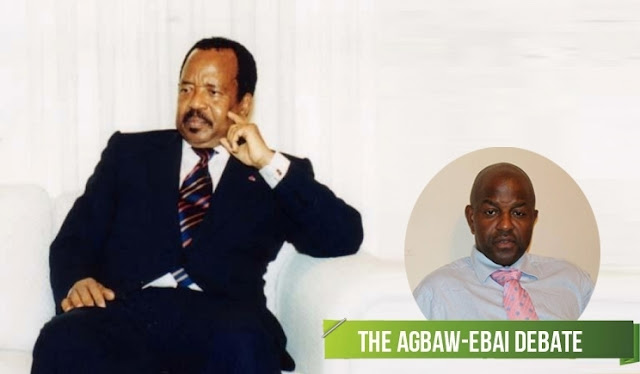
By Soter Tarh Agbaw-Ebai