
15, January 2020
African Bar Association weighs in on the Ambazonia Crisis 0
The President of the African Bar Association, AFBA, Hannibal Uwaifo, has, in a correspondence to the Prime Minister of Great Britain, Boris Johnson, suggested that an imposed solution to the Anglophone Crisis in Cameroon, either through conquest or from a third party, will only mean more wars.
The AFBA President, thus, suggested a United Nations organised and supervised referendum for Southern Cameroonians to decide their fate. In the letter dated January 10, Hannibal Uwaifo bemoaned that the indifference of the international community and silence of major powers, has encouraged untold suffering and human rights violations to go on unabated in the North West and South West Regions of Cameroon.
“Trenches have been dug and the Government of Cameroun has been encouraged to kill and imprison more as the United Nations, the Commonwealth of Nations and great countries like Great Britain, which handed the Southern Cameroon to Francophone Cameroun, have refused to speak decisively and hold the Cameroun Government accountable for crimes committed against defenceless citizens of Southern Cameroon,” the letter stated.
Asserting that there is no end in sight to the violence in the affected Regions, the African Bar President outlined that the Swiss-led dialogue process, encouraged by the international community, has, so far, been embraced only, by the “so-called Separatists.”
He went further to remark that the Cameroun Government has, so far, not made known its stance on the Swiss-led mediation process. In his correspondence to the British Prime Minister, AFBA’s Hannibal Uwaifo also detailed the historical background of the conflict. He cited various highpoints in the history of the two Cameroons, the decolonisation process, the referendums, the terms of the proposed union between the two States and other relevant high points.
On the way forward, the African Bar President, speaking on behalf of the Executive Councils of the African Bar Association, proposed a referendum for Southern Cameroonians to decide their fate. He wrote: “Given all these considerations, the African Bar Association is of the strong opinion that, rather than third party suggesting solutions for a problem which they are not suffering, the best and most transparent and democratic solution would be a UN-organised referendum in the British Southern Cameroons, for its people to pronounce themselves on whether they wish to continue to live under Cameroon; to form some kind of association with Cameroon, documented by treaty, or to govern themselves within their own internationally defined territory.
Citing practical examples, AFBA’s President further stated: “Scotland, Quebec, New Caledonia, Bougainville, the UK itself within the European Union, South Sudan and many other countries, have resorted to referenda to settle such supreme matters of interest to their people. There is no reason to deny the people of Southern Cameroons a similar opportunity for this supreme matter. We firmly believe that the people should be given a chance to speak for themselves. This will automatically lead to a ceasefire. The conditions for such a referendum can be worked out to ensure transparency and fairness.”
On the second option, Hannibal Uwaifo, on behalf of African lawyers, suggested that, if any of the parties to the conflict is uncomfortable with the referendum option, the second best option will be for the matter to be settled at the International Court of Justice, ICJ. Here, he said, the ICJ will decide on; “… whether the territory of the Southern Cameroons belongs to the Republic of Cameroon or the people of the British Southern Cameroons.”
Source: Cameroon Info.Net



















15, January 2020
Yaounde Clears Security Checks after Truckers Protests 0
Cameroon has bowed to pressure from truckers and is dismantling illegal roadblocks and check points from the country’s port city of Douala to the Chadian capital of N’Djamena. For more than a week, truckers refused to drive the route because of extortion at the checkpoints. Drivers have resumed full activity now that officials are listening to their complaints.
Cameroonian truck driver Ngaibai Bassirou drives his semi-trailer carrying building material out of the Ngaoundere truck stop in northern Cameroon on his way to the Chadian capital.
Ngaibai said after grounding his truck for 10 days he and 90 other truck drivers decided to resume deliveries because authorities in Cameroon are dismantling some of the illegal check points that extort money from him and his peers.
He said what made them very angry and stop transporting only basic goods like food and medication to Ndjamena was that they were spending up to $500 to pay their way through the many Illegal check points between Douala and Ndjamena and a similar amount on their way back.
Bassirou said truckers were surprised that after complaining to the government several times last year, the number of check points increased, and the money collected from truckers skyrocketed.
The truckers began their protest on January 2.
Aashir Issa, vice president of Chad’s National Trade Union of Truck Drivers, said Cameroon should not only dismantle the illegal check posts but should also make sure people who create such posts are punished.
He said the government should make sure the police, gendarmes and customs officers who mounted the illegal check points answer charges in courts of law. He said the dismantling of 15 unauthorized control posts in a distance of 70 kilometers within 12 hours indicates how truck drivers were severely exploited and that they are ready to indicate to the governor so many other illegal check points where transporters are harassed to give money without receipts.
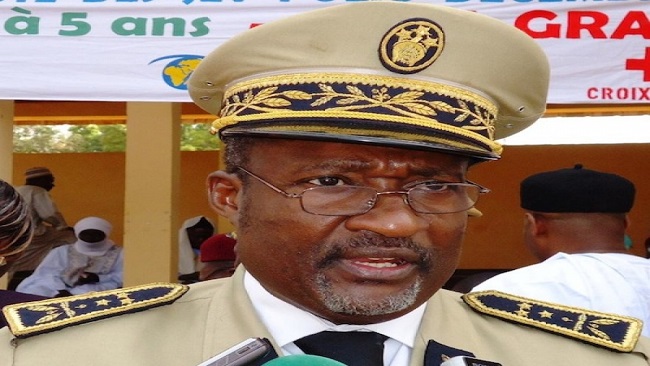
Kildadi Tagueke Boukar, governor of Cameroon’s Adamawa region, where Ngaoundere is found, supervised the clearing of the check points. He said some of them were created by Cameroon security services for what they described as strategic reasons, but that such reasons cannot undermine a decision taken by Cameroon and Chad to regulate transport between the two countries.
In January of last year, Chad and the Central African Republic dispatched senior customs officials to Cameroon to look into the problem of the illegal checkpoints.
Chad and C.A.R. businesses threatened to start importing and exporting goods through Cotonou in Benin, although Douala is the nearest ocean gateway for the landlocked countries.
In March 2019, the transport ministers of Cameroon and Chad signed an agreement recognizing only one security check point on the road between Douala and Ndjamena.
Cameroon’s ministry of transport said it has reduced the number of check points along the road by 75 percent, and officials have promised to dismantle the rest.
Source: VOA