
6, November 2025
Goodbye National Episcopal Conference of Cameroon 0
The Episcopal Conference of the Democratic Republic of Congo and the National Episcopal Conference of Cameroon (NECC) are the national assemblies of Catholic bishops in the Democratic Republic of Congo and the Republic of Cameroon, charged with providing collective guidance on issues of faith, morals, social justice and public life. The similarities end there.
While the Episcopal Conference of the Democratic Republic of the Congo successfully got the Congolese dictator President Kabila out of power in Kinshasa, our NECC has only been issuing press releases, pastoral letters and holding seminars with a convoy of Prado jeeps parked outside without ever examining the Roman Catholic Church’s engagement with the Cameroonian society.
Like in the Democratic Republic of Congo and neighboring Nigeria where the Holy Roman Catholic Church remains a powerful moral voice, influencing society and the political and economic environment, the National Episcopal Conference of Cameroon has been acting like an institution trapped in economic and social stagnation.
Cameroonian bishops have described corruption as a “persistent cancer”, and deplored weak public infrastructure despite large budget allocations. But they have avoided naming and shaming the predominant Roman Catholic government running the crime syndicate in Yaoundé. None of their pastoral letters have ever commented on the huge number of Roman Catholic Cameroon government ministers and general managers of state-owned companies jailed for corruption.
The crisis in Anglophone Cameroon has made matters worse and has significantly strained the Roman Catholic Church’s pastoral, humanitarian and moral engagement.
Roman Catholic government officials in Cameroon have been criticized by NECC for issues such as vote-buying. But these same government ministers continue to receive Holy Communion from the hands of Bishops. The Bishops need to sit and think and rethink things.
Regularly, NECC issues powerful statements but the translation into concrete change ranges from plain fiction to the most absurd. For example, despite repeated warnings about corruption orchestrated by a Roman Catholic-led Biya administration, the situation remains largely unchanged.
On the electoral front, NECC remains a prominent and successful failure with its pastoral letters coming out as vague and only relying on moral exhortation rather than concrete proposals.
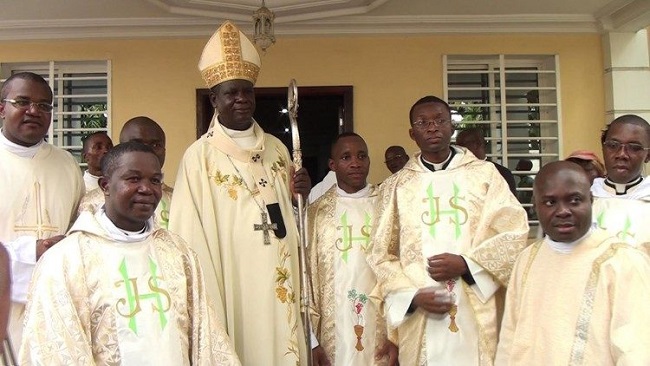
For those who do not know, for any institution to be influential, public credibility and clarity matters. Recent statements by the Archbishop of Douala, the Bishop of Bafoussam and lately the Bishop of Bafang, shows internal governance weaknesses in NECC and a sharp decline in NECC’s moral authority.
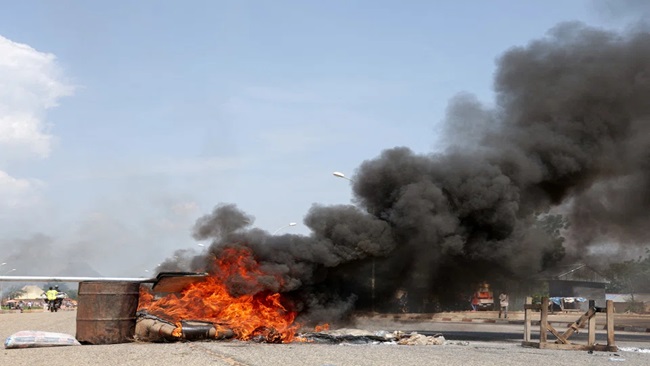
Now that all the Roman Catholic Bishops are saying their own things on the post election violence, the NECC simply has no place and faithful and citizens are becoming disengaged. This begs the question: where is the President of the National Episcopal Conference of Cameroon?
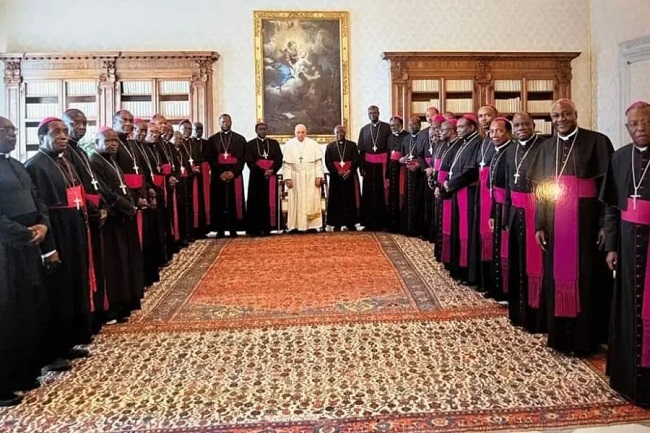
Given the severe post election crisis, was there a need for His Grace Archbishop Andrew Nkea, President of the National Episcopal Conference to make the pilgrimage trip to Rome?
Other actors such as civil society and international organizations are slowly but surely filling the advocacy and monitoring gap and correspondingly, they are diminishing the Roman Catholic Church’s unique position in the Republic of Cameroon.
A stitch in time saves nine
By Soter Tarh Agbaw-Ebai


















6, November 2025
The delusion of democracy in Cameroon 0
Throughout history, great thinkers and psychologists have wondered why people prefer to live with illusions rather than confront painful realities. In A Theory of Cognitive Dissonance, Leon Festinger observed that when our beliefs or actions clash with reality, we experience deep psychological discomfort. To avoid this discomfort, humans often distort facts because fabrications offer emotional comfort. As long as the truth threatens one’s character and outlook, illusion will always remain a harmless shelter.
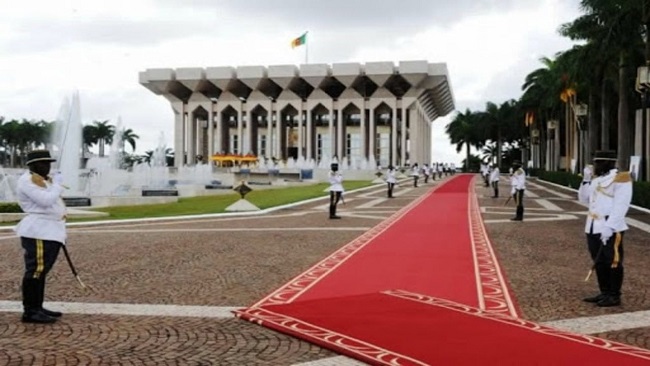
Nowhere are a people more tied in collective delusion than in Cameroon, where many citizens honestly believe they live in a democracy. This delusion has been evident since 92-year-old Paul Biya was declared the victor in last month’s presidential election. Earlier today, 6th November 2025, Mr Biya was inaugurated to serve seven more years as president of the republic. A term he will complete at 99. During the ceremony, the nonagenarian was being instructed by one of his caregivers on what to do because Mr Biya evidently was unaware of what was happening around him- a shocking, pathetic and sorry indictment of all Cameroonians.
Since the election, many have taken to social media to voice their anger and disappointment at ELECAM for rigging the election. These petitions sound like noble calls for transparency in a democratic society. However, truth be told, Cameroon is far from a democracy, and pretending otherwise is the height of delusion and naivety. The inaugural charade of a care-home resident as president of the country proves my point about this collective naivety and delusion. To add insult to injury, the inauguration ceremony took place in absolute peace, with no protests whatsoever.
Cameroon possesses, on paper, some practices of democracy like regular elections and multiple political parties. These trappings have deceived many into believing the country’s political system is a democracy. Any serious student of politics knows that elections alone do not make a democracy; they are merely one of its instruments. Since 1990, the ruling CPDM party has vigorously promoted the image of democracy through its state-controlled media. As the old saying goes, a lie told repeatedly enough becomes the truth.
In reality, Cameroon’s so-called democracy is a façade designed to appease the international community and pacify citizens who still cling to the illusion. By most comparative political standards, Cameroon is an electoral authoritarian regime. The system blends the institutions of democracy on paper with the practices of dictatorship in practice. In such regimes, elections are manipulated, opposition is allowed but ostracized, the media is censored, and establishments like the judiciary and ELECAM lack independence.
ELECAM is not an autonomous electoral body. It is an extension of the ruling party’s machinery. Expecting transparency from it is like asking a mirror to reflect anything other than your own image. There are credible reports that ELECAM paid CFA Frs 300,000 ($550) “bonuses” to its low-ranking employees and much more money to senior employees shortly before last month’s elections. Cameroonians must stop legitimizing empty institutions like ELECAM by expecting them to act against their nature. Cameroon needs an awakening, and the time has come to tear off the mask.
What the CPDM syndicate is operating is deception, not democracy. Cameroon is a tragedy and a nation living in denial. Only when Cameroonians summon the courage to confront this truth and reject the comforting lie that they live in a democratic state will the possibility of real democracy become a reality. Change in Cameroon will not come through the ballot box because Cameroon is not a democracy. This collective democracy delusion must stop.
By Isong Asu