
13, January 2020
Queen gathers royals for crisis meeting with Prince Harry 0
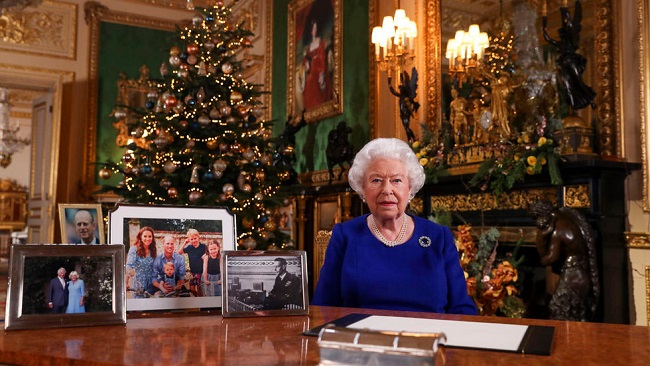
Queen Elizabeth II and other senior British royals were gathering for a meeting Monday with Prince Harry in an attempt to solve the crisis triggered by his bombshell announcement that he and wife Meghan were stepping back from the royal frontline.
Harry’s father Prince Charles and brother Prince William, with whom he has strained relations, will join the monarch at her private Sandringham estate in eastern England, according to British media.
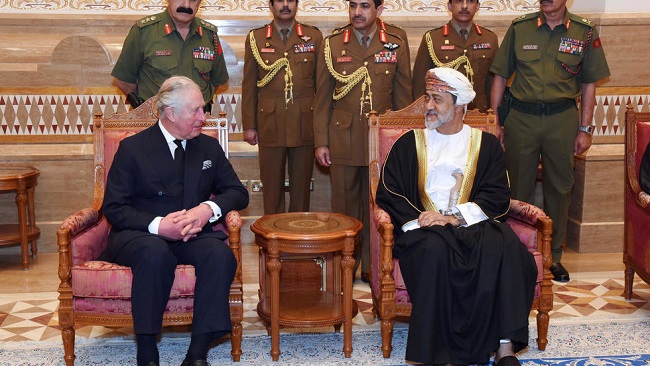
Charles just flew back from Oman, where he attended a condolence ceremony following the death of Sultan Qaboos.
Meghan is expected to join the meeting via conference call from Canada as they attempt to work out the “next steps” towards a compromise and nip the growing crisis in the bud.
Issues up for debate include how much money the couple will still receive from Charles’s estate, their royal titles and what commercial deals they can strike, according to the Sunday Times.
The newspaper reported that William believes he and Harry are now “separate entities”, breaking the bonds forged following their mother’s tragic death.
“I’ve put my arm around my brother all our lives and I can’t do that any more; we’re separate entities,” the Times reported he told a friend.
The queen attended church at Sandringham on Sunday where supporters expressed sympathy for her, with some members of the public saying Harry and Meghan should not receive any more taxpayer money if they step back from the royal family.
The 93-year-old monarch on Thursday demanded that staff work with the couple to find urgently a “workable solution” that would take into account their demands for more freedom.
Harry, Meghan and son Archie spent Christmas in Canada, with the American former actress returning there this week.
Several Canadian media reported Meghan had returned to Vancouver Island off the country’s Pacific coast, where the family spent the year-end holidays and where baby Archie had remained with his nanny.
Senior royals were caught off guard by Wednesday’s announcement that the Duke and Duchess of Sussex wanted to seek a “progressive new role” and divide their time between Britain and North America.
– ‘Complicated issues’ –
The queen’s office issued a terse statement the same evening, saying there were “complicated issues that will take time to work through”.
Harry and Meghan said they intended to continue to “fully support” the queen and “collaborate” with senior royals.
They also want to keep their home on the queen’s Windsor Castle estate as their British base, while aiming to become financially independent.
Media reports said Harry and Meghan could conduct a potentially damaging television interview if they are unhappy with the outcome of Sunday’s meeting.
Writing for The Sunday Times, broadcaster Tom Bradby, a friend of Harry and William, said: “I have some idea of what might be aired in a full, no-holds-barred, sit-down interview and I don’t think it would be pretty.”
The younger prince, who has struggled with his role, last year revealed he has been growing apart from his brother, who as second in line to the throne is increasingly pursuing a different path.
Harry has been open about his mental health issues, and he and Meghan last year admitted to struggling with the spotlight following their wedding at Windsor Castle in May 2018 and Archie’s birth a year later.
The couple have also lashed out at negative news coverage — some of which Harry says was racist — in light of Meghan’s biracial heritage.
The British public currently appears to be siding with the family, with a Daily Mail poll showing that a majority believe Harry should give up his right to the throne and be stripped of cash support from the royals or taxpayers.
Source: AFP











13, January 2020
President Macron meets with African leaders to boost fight against jihadists in Sahel 0
French President Emmanuel Macron will on Monday host counterparts from five Sahel countries seeking more backing in the fight against a murderous jihadist uprising even as France’s military role is being questioned.
Recent tensions between France and Sahel governments could make for a tricky exchange at the six-way talks in the southwestern city of Pau, to be attended also by the heads of the UN, African Union, and EU Council.
Macron insists his counterparts from Mali, Burkina Faso, Niger, Mauritania and Chad must use the occasion to express public support for France’s military presence — by far the largest foreign contribution to the fight against African jihadists aligned to Al Qaeda and the Islamic State group.
Visiting the region last month, the French president complained of a lack of “clear political condemnation of anti-French feelings” on the ground.
“I see opposition movements, groups, who denounce the French presence as a neo-colonial, imperialist,” Macron said in Niamey, adding he was loath to send soldiers to countries where their presence was not “clearly wanted”.
Jihadist fighters have recently stepped up their campaign against military and civilian targets, and earlier this month, UN chief Antonio Guterres warned that “terrorist groups are gaining ground.”
France has 4,500 soldiers stationed in the Europe-sized region as part of Operation Barkhane, supporting poorly-equipped, impoverished local armies that in 2017 launched a joint anti-jihadist G5 Sahel force.
‘Down with France’
On Friday, hundreds of people gathered in the Malian capital Bamako to protest the presence of foreign troops, carrying posters reading: “Down with France, Barkhane must leave” and “France is a brake on our development.”
Despite the French presence and a 13,000-strong UN peacekeeping force dubbed MINUSMA in Mali, the conflict that erupted in the north of that country in 2012 has since spread to its neighbours, especially Burkina Faso and Niger.
Thousands of civilians have been killed and more than a million displaced, with hundreds of troops dead, including dozens of French ones.
On Monday, Macron will gather Mali’s Ibrahim Boubacar Keita, Burkina Faso’s Roch Marc Christian Kabore, Niger’s Mahamadou Issoufou, Mauritania’s Mohamed Ould Ghazouani and Chad’s Idriss Deby.
They will lay a wreath and observe a minute of silence for seven soldiers from Pau who died in action in Mali — among 13 French troops killed in a helicopter crash while hunting jihadists last November.
The presidents will then gather for the summit Macron has said must clarify the “political and strategic framework” of the Sahel military campaign.
After the talks, for which three hours have been set aside, the leaders will regroup for a working dinner where they will be joined by Guterres, European Council President Charles Michel and African Union Commission President Moussa Faki.
‘Remobilise’
Mali’s Keita has said the summit will be “decisive” and “will allow us to put on the table all the questions, all the grievances, all the solutions”.
But he insisted the G5 leaders would demand a “respectable and respectful relationship” with France. Kabore of Burkina Faso has described Macron’s recent insistences as “lacking in tact”.
Issifou said the summit would “launch an appeal for international solidarity so that the Sahel and France are not alone in this fight”.
The Pau meeting was postponed from December after a jihadist attack claimed the lives of 71 Niger soldiers. And last Thursday another attack by jihadists left 89 Niger soldiers dead.
On Friday, French Foreign Minister Jean-Yves Le Drian said the summit would serve “to remobilise and adapt ourselves to the new reality” of the jihadist onslaught, which analysts say appears to have become bolder, more complex, and better armed.
Paris will also use the occasion to repeat its call on other Western nations to help step up the fight.
Last year, only $300 million of $400 million pledged by the international community in cash and material support to the Sahel was delivered, according to the French presidency.
NGOs on Friday urged that civilians caught in the crossfire not be forgotten at Monday’s talks.
“The military response in the Sahel is part of the problem,” said Maureen Magee of the Norwegian Refugee Council.
“Last year, military operations in Mali have pushed more than 80,000 people to flee. Engagement in the Sahel must put the protection of the populations at the heart of the response.”
(AFP)