14, June 2022
Mamfe hospital disaster triggers fear and inflation! 0
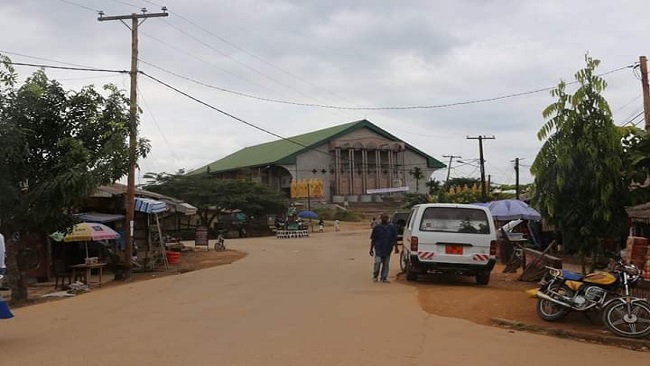
It never rains but it pours. This is an apt description of what is happening in Mamfe following the violent fire that consumed seven of the nine wards which made up the Mamfe General Hospital.
While the population is still struggling to accept that the only hospital that they have in the Division has been razed by some criminal elements, food prices have kept moving up as fear that Amba Fighters will soon raze the town’s central market.
Amba boys have issued many audio messages trying to distance themselves from the fire which has attracted condemnation from far and wide, but their threats have continued and this time, they are targeting the market. By threatening to burn down the market, the fighters have made themselves very unpopular in the town. The people who once professed to be the protectors of their people have morphed into a disaster to the same people.
Illiterates have become judges and lawyers in rural parts of the Division and the fines they impose on their people are mind-blowing. You pay CFAF 100,000 for having a round of sex with somebody’s wife. Sex has never been this expensive in Manyu! Many young men have simply escaped from their villages just because they have been suspected of having sex with women who are not their wives. An Islamic state is gradually playing out in many villages in Manyu.
Residents of the Division hold that Amba fighters have made it hard for their children to go to school for more than five years and this act of irresponsibility is breeding a generation of frustrated and criminal elements who will grow up to become millstones around the necks of their parents.
Their threat to burn down the market implies that they are willing to destroy everything in Mamfe in particular and Manyu in general. Many girls are already pregnant and there are many fatherless children running around, with no hope on the horizon. Threatening to burn down the market implies that they do not even want parents to put food on their tables. The population is bitter and confused, and does not know what to do to check these criminals who are making life unbearable for the population.
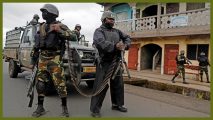
Speaking to some residents of Mamfe, the Cameroon Concord News Group’s special reporter to Mamfe, Fon Lawrence who has left the town via Nigeria, has said that there is a lot of tension in Mamfe. There are no lights and no water, and with the hospital gone, the population’s desperation has increased, and many people do not know where to turn to, as the government cannot even help them. Mamfe town is also not safe, as gun-toting Amba boys keep an eye on everybody, while soldiers make things worse by harassing ordinary citizens, especially those who may be new in town.
“We are frustrated. We don’t feel safe in our own land. Our grandparents never witnessed what we are witnessing. How can our own children be burning our own infrastructure? They have burnt the motor park. The hospital has gone up in smoke and food prices are on the rise as traders close their shops in order not to incur the wrath of the trigger-happy Amba fighters who have clearly demonstrated their determination to ruin everything in their path. What are we supposed to be doing now? Soldiers kill our children. Amba boys kidnap our brothers, and they are now threatening to burn down the market. How do we survive?” the angry resident of Mamfe who elected anonymity said.
“In less than four days, food prices have risen, and these escalating prices are hurting us. Not many people are heading to Nigeria to buy goods that might not be sold because of the fear that the Amba fighters will burn down the market. In less than twenty-four hours, the prices of garri, palm oil, rice, and other necessities have risen. How are we going to live? Mamfe is a small town with very few businesses and almost no financial institutions which can grant us credit. BICEC, the only bank that used to operate here, has shut down operations and its staff hurriedly left town, fearing that both Amba fighters and army soldiers could become a threat to them,” the frustrated resident lamented.
“We are already living in Hell. Escalating food prices simply imply many people will not be able to feed their families. It is like the Amba fighters have put us on a diet of hunger. Before long, many of us will be losing weight and we are not even big. Many elderly people will surely die if they cannot have their daily food rations. The war itself has already destabilized many, but this unannounced dry fasting will surely send many of them to an early grave. No food, no water, no electricity. We have simply been rolled back into the dark ages,” the resident said.
The days ahead are bleak. Residents of Mamfe are looking for hope even in the wrong places. Churches are full of new Christians, but many do not have money for tithes, and this makes them unwelcome. Personal homes have been converted into churches just to give the depressed an opportunity to find hope and solace.
The announcement that the Minister of Special Duties at the Presidency of the Republic will be in town on Saturday, June 18, 2022, and information that the Diaspora is raising funds to rebuild the hospital is giving the people some hope.
“We are calling on our brothers abroad not to abandon us. We are aware that there are efforts underway for the mobilization of money to help us. I was told that our brothers in Toronto, Canada, are already making giant strides to raise money, and this has gladdened my heart. I think many others will emulate the example of our people in Canada. We are counting on them, and we are looking forward to hearing more good news,” a teacher at Grammar School Mamfe said.
“I hear the drive is championed by Dr. Joachim Arrey. He is very credible person. I hear he is leading an institution which has been providing books to displaced children here in Mamfe. We should pray that things work so that much money can be raised. Back home, I hear Minister Mengot is also leading his own efforts to bring some relief to the people. Let other Manyu sons and daughters support any initiative that will lead to the rebuilding of our hospital. Diseases do not know if you are a federalist or a separatist. We will all perish if something is not done. This is not the time for politics. We must work together to restore hope,” the teacher stressed.
According to Fon Lawrence, the Cameroon Concord News Group’s reporter who has fled to Nigeria, something needs to be done. Before leaving the town, he visited the town’s Preventive hospital which will now serve as a full-fledge hospital, and he reports that the Preventive Hospital itself is small and run-down. It needs to be upgraded if it must play its new role.
“There are no beds for hospitalization and no medications for the critically ill. The structure is begging for an upgrade and the staff are not very hopeful. The facility has been neglected for years and it is now being converted into a hospital. It will be a real miracle if things really work out, but from the look of things, Mamfe is in the grip of a massive health storm,” Fon Lawrence who is currently in Nigeria said over the phone.
Meanwhile some of the patients who had been ordered out by the criminals who burned down the General Hospital have died. Two patients who could not access proper care gave up the ghost on Monday. They were unable to go to any private clinic due to lack of resources. Their families are devastated. This is the challenge that will be facing many people in the town. Lack of money will certainly send many people to an early grave, except the government and other well-wishers act very fast. A disaster is hovering over the town. Natives of Manyu Division must now step in to save their people from the jaws of death.
By Soter Tarh Agbaw-Ebai















1, July 2022
Brasaf launches first beer in Cameroon 0
Brasseries Samuel Foyou (Brasaf) announced the launch of its first beer in Cameroon. The drink will contain 75% malt and 25% corn.
“In a competitive brewing sector, this alcoholic beverage, which stands out from the others with its quality and packaging, will be officially presented to the public on June 30 in […] Douala,” the company said in a statement. Brasaf says it wants to be a game-changer. The new beer will be marketed in PET bottles (plastic) of 0.65cl and 0.33cl with an alcohol content of 5.1%. The brewing company promises attractive prices to the population. In addition to beer, Brasaf plans to launch “Krystal Drink”, a range of soft drinks presented as low in sugar and gas.
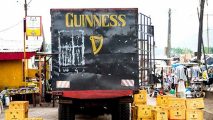
As a reminder, the creation and operation of Brasaf was announced 8 years ago. The owner, Samuel Foyou, who already owns a distillery (Fermencam), filed deeds of creation on July 10, 2014, with a notary in Douala. At the time, the company was created with a share capital of CFA100 million. Eight years later, the brewing company became the fourth of its kind alongside SABC Group (Castel), Guinness Cameroon (Diageo), and the Cameroonian Union of Breweries (UCB).
Let’s note that Samuel Foyou, who made his fortune through commercial activities in Congo and Angola, also owns Unalor, a match production company bought from the Fotso group in 2009, Plasticam, Sotrasel (kitchen salt production), Biscuiterie Samuel Foyou (BSF), and the Moore Paragon printing company.
Source: Business in Cameroon