9, October 2024
Poverty Culture: Several Francophone political leaders urging Biya to run in 2025 0
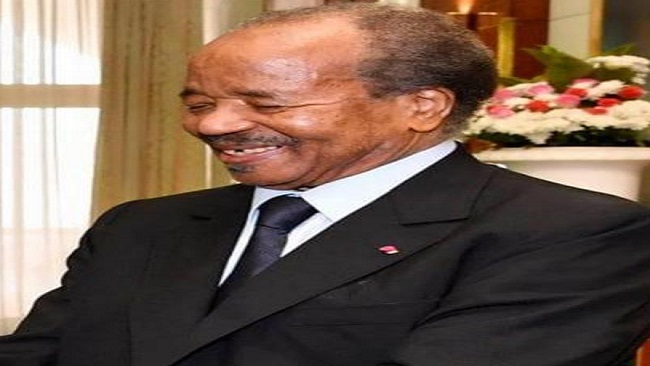
Several political leaders have called on the president to seek a new mandate in the 2025 election, despite persistent concerns about his health.
As with every presidential election in Cameroon, the calls for Paul Biya to run again—now 91 and facing many questions about his health—are multiplying. The leaders of the Cameroon People’s Democratic Movement (RDPC, the ruling party) began these efforts as early as 2023, but now the movement is spreading to smaller allied parties.
On October 6, the Democratic Movement for the Defence of the Republic (MDR) made its move. At a special convention in Maroua (Extreme North region), the MDR announced that it would keep to its long-standing policy of supporting the president.
“Implementation of Congress Recommendations”
“Remaining true to the path set by its founder, the late Dakolé Daïssala, the MDR will continue to back President Paul Biya’s candidacy in the 2025 election,” said a resolution signed by its president, Senator Paulin Djorwe. “We are preparing calmly. The party is ready. We are urging our supporters to follow this direction,” added the lawyer, who was officially installed as the new leader after serving two years as interim.
A few days earlier, another call for Biya’s candidacy came from the Union of the Populations of Cameroon (UPC) in Yaoundé.
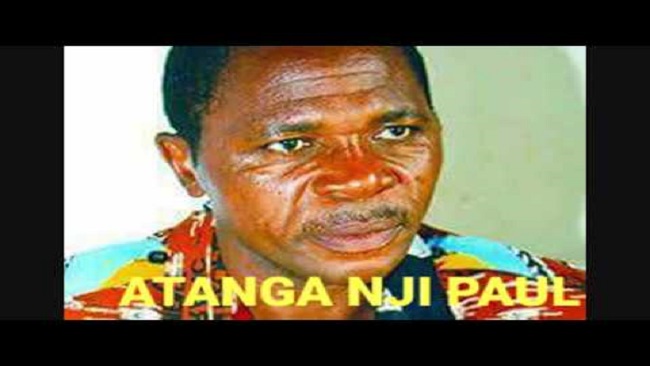
After an October 4 meeting between Minister of Territorial Administration Paul Atanga Nji and Robert Bapooh Lipot, who leads one faction of the historically divided UPC, Lipot said his party would support Biya in 2025. “We are carrying out the congress’s recommendations and honouring the commitments made by our late Secretary-General, Augustin Frederic Kodock, to support the man who made sure our heroes, Ruben Um Nyobe, Ernest Ouandié, Abel Kingué… are celebrated in this nation,” he added.
Battle of Coalitions
The MDR and the Lipot-led UPC are both part of the ruling majority. The MDR aligned with Paul Biya’s RDPC after the March 1992 legislative elections. Defeated by the opposition that year, the ruling party gained a majority only after the MDR’s six deputies joined them. That same year, the MDR entered the government, securing four ministerial posts.
The UPC joined a few months later. After tough negotiations with its then-Secretary-General Augustin Frederic Kodock, it also joined the government in October 1992, gaining four ministries and a position as Minister of State in 1994. However, decades later, both parties have greatly weakened.
Hampered by internal infighting, both the MDR and UPC have lost much of their influence. In the 2020 legislative elections, the MDR managed only one seat, while the UPC was barred from running due to its divisions. Nevertheless, these parties remain symbolic, and the RDPC continues to rely on them to promote its policy of inclusiveness. In 2018, the ruling party leaned heavily on the support of the G20—a coalition of allied parties—to counter the opposition, particularly the campaign of Maurice Kamto.
Who will mobilise more this time? As the next elections approach, the battle for coalition support has resumed in full force.
Culled from The Africa Report













16, October 2024
Biya’s Health: The power struggle is building up in Yaoundé! 0
It is becoming obvious that Cameroon’s President, Paul Biya, will no longer rule the country as his health takes a turn for the worse.
While Mr. Biya is fighting for his life, there is a huge battle brewing in Yaoundé as different factions seek to take control of things. The king is dying but the princes are more interested in his succession.
In the event that President Biya gives up the ghost in the days ahead, his constitutional successor, Niat Njifenji Marcel, is supposed to step in to run the interim, but he too is very ill and it is being reported that he is in a deep coma. Mr. Niat has been out of the country for almost three months and it is gradually emerging that he is not responding to treatment.
In such a situation, a vacancy can be declared at the Senate and Aboubakary Aboubakar, the 63-year-old Senate Vice President, will take the reins of power and run the country for at most 120 days.
The Lamido of Rey-Bouba was invited last week to Geneva where Mr. Biya is battling for his life and was asked to resign. The ruling mafia does not want him to run the transition period. He was not allowed to see the President. He left Switzerland disappointed and devastated.
Aboubakary has no plan to resign and is not in a rush to yield to any pressure and he is sticking to his guns. The ruling mafia does not want a northerner to be anywhere close to power and there are fears that if Mr. Aboubakary runs the show, he will deploy a game strategy that will not sit well with Chantal Biya and Ngoh Ngoh. The battle lines have been drawn and the pressure is mounting.
Meanwhile, the country’s finance minister, Louis-Paul Motaze, who was called to Geneva was refused access to the ailing 91-year-old Biya. Mrs. Biya who is now restricting access to the dying President rejected Motaze’s request to see his boss.
There is a lot of political drama playing out in Geneva and Yaoundé and the French are principal architects in the break dance. Nicolas Sarkozy, a former French President, is reported to be rooting for Franck Biya and he is insisting that power be handed to the young Biya who has no place in the country’s constitution.
Several regime insiders are against Franck Biya though not many of them have the courage to openly express their minds.
Cameroon Intelligence Report understands the ruling CPDM is quietly planning an extraordinary congress for the end of this year. Though not many party stalwarts are talking about it, the plan is for members to choose another candidate for the 2025 Presidential Election, given that the party’s natural candidate, Paul Biya, is caught up in another battle that he might not win.
By Soter Tarh Agbaw-Ebai