19, February 2020
After counterfeit twin poll, women on the front line to hold Cameroon together 0
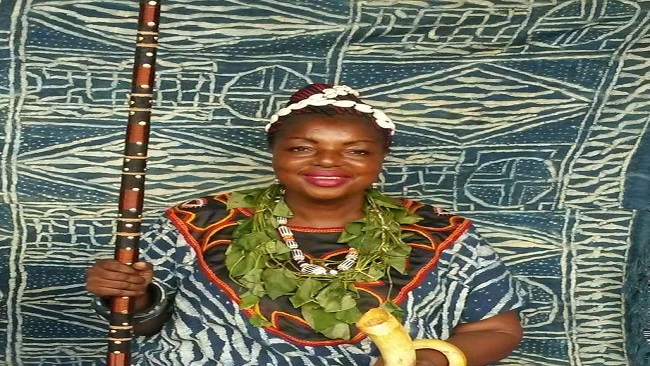
When Gladys Mbuya spoke at the African Peer Review Mechanism meeting in Kigali, her voice shook. She described her life as an internally displaced person in the violence ravaging her country, Cameroon. Her pre-conflict status in life stands in sharp contrast.
Mbuya is the Queen Mother of Alatening village, and head of the women’s traditional village council of the village Tekumbeng, a throne inherited from her mother.
The contradictions continue — Mbuya is national president of the International Federation of Women Lawyers (FIDA Cameroon) and Vice secretary of the Cameroon Bar Association.
Of the 10 regions making up Cameroon, eight are French speaking and two are English speaking. After the First World War, Cameroon, previously a Germany colony, Kamerun, was given as war spoils to the French and British. The British had northwest region and southwest regions, collectively known as Southern Cameroons. The French had the rest. At independence, Southern Cameroons voted to join francophone Cameroon to become one united country. Since then, the minority Southern Cameroons have been marginalised socially, economically and politically.
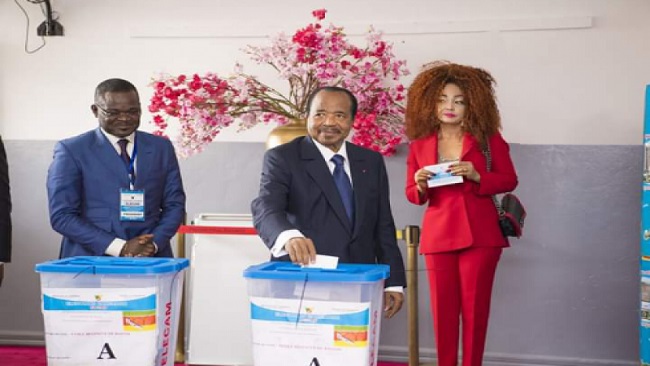
Cameroon’s national assembly elections happened last week, for the first time in seven years. A series of controversial decisions saw them moved twice. Paul Biya has ruled Cameroon for 37 years courtesy of a constitutional amendment removing presidential term limits in 2008. The main opposition leader Maurice Kanto who ran for president, subsequently spending nine months in jail in 2018, is abroad.
In 2016, teachers and lawyers in the English-speaking regions started a peaceful protest against the use of French in schools and courts. The government reaction of using lethal force against peaceful protesters created separatists who declared independence and named the Southern Cameroons “Ambazonia.” The government conducted a violent military crackdown and detained separatist leaders.
Mbuya narrowly escaped arrest as the military dragged lawyers and teachers out of homes and taxis. Non-state armed groups and military clashes in her home forced her to seek temporary shelter. War has continued unabated in the Southern Cameroons with an estimated 3,000 lives lost and 700,000 fleeing their homes as internally displaced persons.
A number of leaders arrested include lawyers’ President Agbor Balla, Mimi Mefo, a popular Cameroonian journalist arrested over a Facebook post, and Michele Ndoky an opposition party lawyer who was shot and survived four bullets. Agbor Balla was detained for nine months. Women leaders, Mimi Mefo and Michele Ndoky were eventually released.
In all the above cases, fiery Mbuya appeared as pro-Bono defence counsel, defending the right to freedom of opinion, assembly, association and freedom of peaceful protest. The releases were through presidential pardon, with cases discontinued by the head of state without the courts hearing and handing down judgement.
Women have now organised themselves in conversations in markets and roadsides seeking solutions. Mbuya also leads intercommunity dialogues with women across the divides particularly through radio Buea “Voices for Women.”
The separatists boycotted last week’s elections and government predictably reacted with renewed violence. The separatists abducted English-speaking candidates, saying they do not see themselves in a government carrying out extra judicial killings.
President Biya, recognising the rising power of women, directed electoral positions in his party be split evenly among women and men. His directive to prioritise the young was however met with calls for 87-year-old Biya to lead by example.
The women want mediation more inclusive than the Grand National Dialogue announced by Biya last year. Separatists boycotted the dialogue, demanding release of political prisoners and withdrawal of the military from Ambazonia. The bar council has submitted proposals for peaceful resolution to the Government.
The women want the African Union involved.
Source: The East African












21, February 2020
Biya Francophone regime silence causes concern 0
Cameroon government officials are quietly relieved that, during its recent condemnation of the killings at Ngarbuh, the United States administration made no commitment to eventual US recognition of an independent state of Southern Cameroons-Ambazonia.
Less pleasing in the Biya Francophone Beti Ewondo government eyes is the fact that the United States government has asked for witnesses to be protected and for an independent investigation to be carried out. And above all, the Trump administration is still not saying whether or not the international community plans to refer the Southern Cameroons crisis to the International Criminal Court.
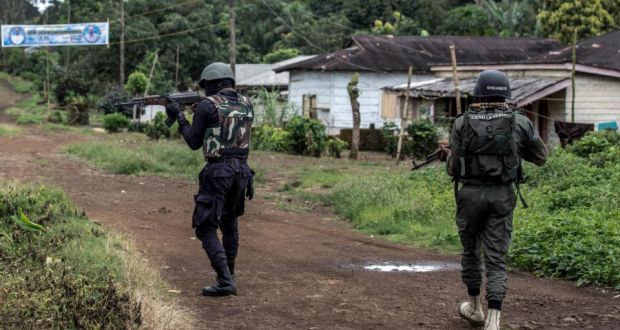
And most worrying of all is the warning from the US Assistant Secretary of State for African Affairs, Tibor Peter Nagy Jr that the military campaign ordered by the 87 year old Francophone dictator in Southern Cameroons must stop.
Mr Paul Biya, transparently blamed by the international community for his poor handling of the crisis in Southern Cameroons has not gone beyond France ever since the Swiss government forced him to leave his holiday resort in Geneva last year.
And US officials including Ambassador Peter Henry Barlerin are adamant that the killing of innocent Southern Cameroons civilians including women and children by the Francophone dominated Cameroon government military must come to an end.
We understand the United States and the European Union have decided at least for now not to join the people of Southern Cameroons who are seeking an independent state of Ambazonia, but senior EU and US Administration officials say that they have urged President Biya to end the war in Southern Cameroons or face severe consequences.
We gathered that US Assistant Secretary of State, Hon. Tibor Peter Nagy recently pledged that the United States would intervene with its European allies to accelerate negotiations on a permanent peace deal.
Biya and his Beti Ewondo political elites are still holding strong to their one and indivisible Cameroon doctrine in a country where the economy is on the brink and the politics has evolved from a struggling democracy to a full-blown dictatorship.
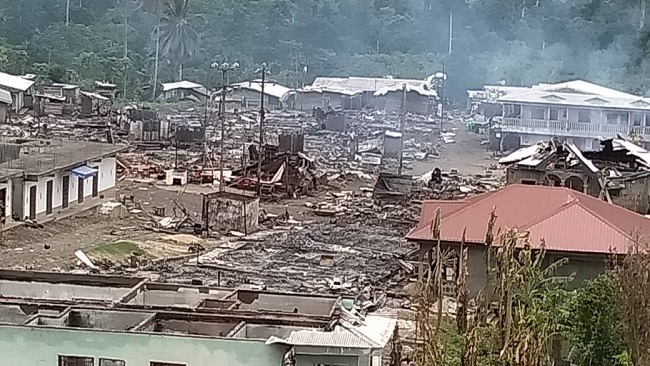
Elsewhere, Friday 21st February 2020 was the day set by His Lordship Bishop George Nkuo Bishop of the Roman Catholic Diocese of Kumbo as a day of prayer and mourning for those killed in Ngarbuh by French Cameroun army soldiers.
A Requiem Mass celebrated by the Bishop of Kumbo accompanied by his Eminence Christian Cardinal Tumi and a college of priests at Kumbo Cathedral witnessed Catholic Christians, Protestants, and non Christians in and around Kumbo joining the Bishop to pray for the 24 people killed and the many rendered homeless.
By Soter Tarh Agbaw-Ebai with additional editing from Oke Akombi Ayukepi Akap