3, May 2023
Bishop Bibi and the renovation of Divine Mercy Co-Cathedral: Be a Samaritan 0
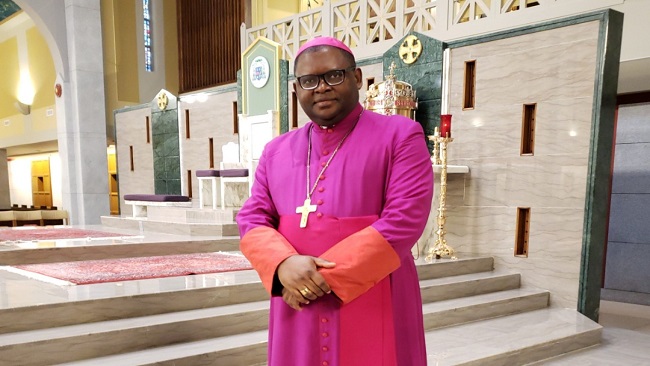
When Bishop Bibi was formally installed as Bishop of the Buea Diocese, one of the first ways he sought to implement the ever flowing spirit of Vatican II deep within the Diocese of Buea was to continue with renovation work at the Divine Mercy Co-Cathedral.
Influenced by donations coming in from several Samaritans, Bishop Michael Miabesue-to use his three names, is now full of praise to all lay faithful supporting the roofing and tiling of the external walls of the Divine Mercy Co-Cathedral.
Cameroon Concord News Group understands that the Bishop Bibi Divine Mercy Co-Cathedral Project is arguably the most drastic ever since the Holy Father placed him at the head of affairs in the Buea Diocese.
In his most recent pastoral letter dated May 3, 2023 and addressed to all societies of Apostolic life, members of the Institute of Consecrated Life including all lay faithful in the Buea Diocese and even beyond, the much respected Roman Catholic cleric observed that there is an urgent need for installation of aluminum, plastic glass windows and decorated gravel paper sticker in the Divine Mercy Co-Cathedral.
Reacting to Bishop Bibi’s pastoral letter on the Divine Mercy Co-Cathedral, Tambe Ndip Arrah of the Cameroon Catholic Community in Mulheim in the Federal Republic of Germany said it is the Bishop’s own version of Opera Artis, geared towards protecting the artistic heritage of the Divine Mercy Co-Cathedral
The laity is happy
The renovation of the Divine Mercy Co-Cathedral is significant in that it is very popular with all in the Diocese of Buea!
This editorial is simply to create a greater awareness of the renovation in the diaspora for all in Europe and North America to support the Bishop in the proposed changes to Buea Diocese historic Divine Mercy Co-Cathedral.
Material costs
The Bishop has made it easy for all not to wonder too much about the material cost of the renovation!! It is simply for families to choose where to help!! See document attached!!
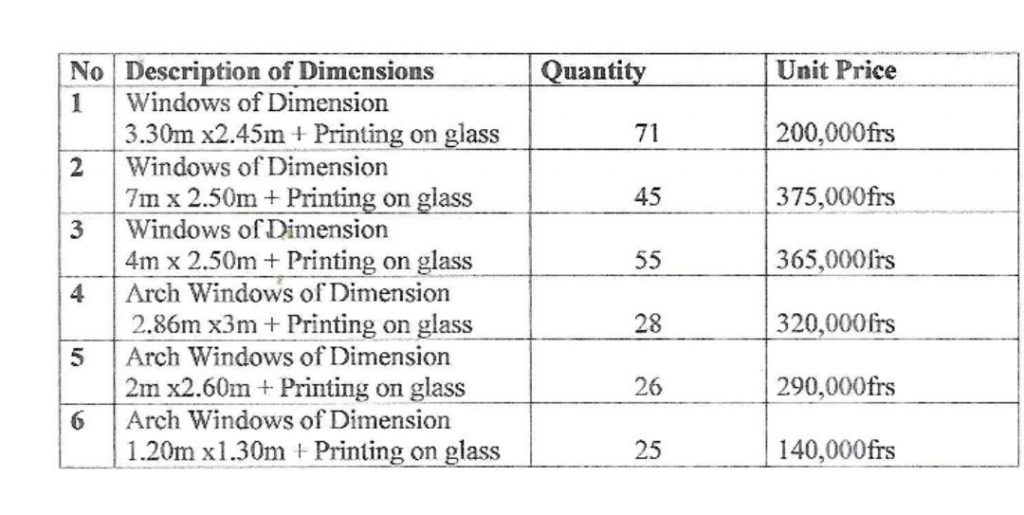
We of the Cameroon Concord News Group think it is good stewardship. Bishop Bibi has finally found creative solutions that preserve the old art, protect the integrity of the architecture, and maintain a sacral atmosphere. Be a part of the Divine Mercy Co-Cathedral project!
By Sheikh Soter Tarh Agbaw-Ebai
Chairman/Editor-In-Chief
Cameroon Concord News Group

















9, May 2023
Cameroon’s projections toned down due to challenging global environment 0
Cameroon’s economic growth was revised down to 3.4% for 2022, reflecting the impact of the security crises in the Anglophone regions and the Far North, inflationary pressure, global supply chain disruptions and tight financial conditions. In 2023, GDP growth is expected to recover somewhat to 4.3%, mainly driven by LNG and mining production.
Impact
Cameroon is the largest economy in the CEMAC (Central African Economic and Monetary Union) and is relatively well diversified compared to the other oil-reliant member states. Nevertheless, the country is highly dependent on commodity exports (oil, gas, mining and agriculture), making it vulnerable to external shocks and price volatility. Further economic diversification is essential, knowing that Cameroon’s existing oil fields are maturing and the decline in oil production is set to continue. Insecurity and an ongoing conflict since 2017 have deterred the development of new fields as Cameroon’s oil riches are mostly located in the Anglophone regions.
The country’s 2022 external balances benefitted from high international commodity prices following the Russian invasion of Ukraine. Despite higher inflation and import prices, Cameroon’s terms of trade improved. The current account deficit has moderated and is expected to stabilise at around a manageable 3% of GDP as of 2023. However, a funding squeeze – resulting from global risk aversion and high domestic and international borrowing costs – has been lowering capital inflows. Consequently, small financing gaps could emerge on the external balance of payments. Thanks to the improved terms of trade, Cameroon’s foreign exchange reserves have recovered to pre-Covid levels of around five months of import cover. In fact, Cameroon is the largest contributor to the reserves of the CEMAC, a monetary union consisting mainly of oil-exporting countries where liquidity levels still tend to follow the evolution of hydrocarbon revenues.
Cameroon participates in a three-year IMF Extended Credit Facility programme since July 2021, to help deal with the immediate financial consequences of the Covid-19 crisis and the country’s weak public payment behaviour. Although structural reforms are lacking and the general fiscal performance is mixed, the IMF programme remains on track. Assuming fiscal reforms will be strictly implemented, the public debt stock is expected to come down to 43% of GDP by the end of 2023, after having grown steadily over the past decade to 47% and 46% of GDP in 2021 and 2022 respectively. Despite the acceptable public debt stock level, the government’s finances have been under serious stress and the difficult liquidity position of the state – especially due to dysfunctional state-owned enterprises (SOEs) – have led to substantial domestic and external payment arrears over the past few years. The over-indebtedness of public oil company SONARA and the bad payment morality of other SOEs have seriously damaged the country’s financial reputation. Moreover, the IMF classifies Cameroon at ‘high risk of debt distress’, although it considers the country’s public debt to be ‘sustainable’, meaning a default is not anticipated. Rising LNG production and growing mining output will help Cameroon’s fiscal revenue collection in the near term, even though oil output will continue to decline.
Despite substantial domestic food production and the BEAC’s (a regional central bank, serving the CEMAC member states) tighter monetary policies, inflation in Cameroon still reached 6% in 2022 and is expected to remain at 5.7% in 2023. The rising cost of living is mainly driven by food inflation caused by unfavourable domestic weather conditions, security issues and high import prices. Together with shortages of fertilisers, high food prices do not only drive up inflation, they also raise the risk for food insecurity.
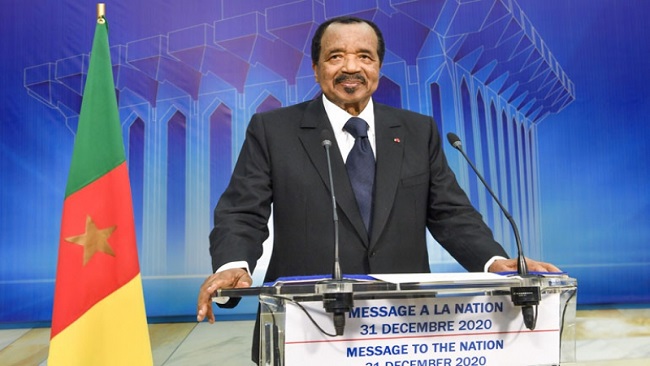
Credendo’s MLT political risk classification for Cameroon was downgraded from 5/7 to 6/7 in May 2020 during the Covid-19 crisis and has remained stable ever since. The separatist violence in the Anglophone regions and the insecurity related to Boko Haram in the Far North pose important downside risks. Another risk stems from the political scene that is dominated by 90-year-old President Paul Biya, who won a seventh term in 2018 during a flawed election and is rumoured to be in poor health. It is highly uncertain what will happen if and when Paul Biya becomes unable to rule, but that situation would entail a serious risk of political destabilisation.
Culled from Credendo