23, September 2020
National dialogues and Peace in Africa 0
‘We Feel safe If we trust our institutions, and we trust our institutions if we see them acting effectively in crises’ (Mary Kaldor “Old War, New Wars: organized Violence in a Globalized Era” 1998).
Generally, we all feel safe when threats are alleviated from our cherished values, which if left unmanaged threaten our survival or that of a referent object in the near future. Security is important and forms the basis of our existence and expression in society. Imagine what life will be without any form of threat, where security is normal, passive and not priorities and politically demanding issues? Absence of threat to a certain level is a prerequisite for growth and development of any society. Increase threats level drive down local production and inflow of foreign investments.
Security matters and absence of threats in our society remained a major illusion in our highly politicized society. Globalization and advent of technological development has continued to expose our societies to different forms of threats. Politics has continued to be instrumental to endangering security. While positive political environment allows for integration and development of peaceful co-existence, several political actors privy to command resources for eliminating threats have resolved to make politics a major issue in threat escalation.
Political nature of security has made the definition of the term security an object of argument based on the perspective of analysts and writers on the topic. Traditional understanding of security emphasizes the physical accumulation of military power to defend the state from external and internal aggression. African states at independence were incorporated into the geopolitical East – West polarization. The need for expression of influence by super powers was reflected in the strength of allied states armies. Big armies were used to prop up and maintain loyal stooges as powerful rulers in states without proper understanding of principle and operation of statehood.
The period between 1956 and 1989 when the Cold War ended, dictators like Idi Ami in Uganda (1971 -79), Gamal Abdel Nasser in Egypt (1954-1970), Ahmed Sekou Toure in Guinea (1958-84) and Mengitsu Haile Mariam in Ethiopia (1974-1991) ruled with iron fists in defense of their countries territorial integrity and redefined state security as security for the few ruling elites at the expense of the masses. The states employed the “Kill and go” mentality in elite securitization to defend their territory and unleash terror on dissenting public. The armies and the police in African states now become instrument of public oppressions, as there were no external aggressions to address.
The end of the Cold War brought new realities in international relations understanding of security. Emergence of “new wars” –intra-state wars- in Africa and Eastern Europe led to new thinking about the effects of globalization on security planning. Buzan Barry in 1983 introduced the theory of a shift from physical or critical security thinking towards a focus on human security. Mary Kaldor also emphasized the need for new directions for security in her work “Old War, New Wars: organized Violence in a Globalized Era” (1998). They both postulated the need for newer roles for states armies as numbers of inter-states wars have continued to reduce in the world while organized violence from non-state actors emerged as new threats to developing states in Africa and Europe at the turn of the century.
Emergence of organized insurgent groups and terrorists that targets civilians and non-combatants has been blamed on the lack of a shift in the roles of states security operations from elite centered towards public supports. The need to defend states sovereignty with the security forces at the expense of securing the people while crime and threats to lives grow due to lack of resources to achieve basic human development have ennobled the need for the shift of focus of citizens security to Private Security Companies (PSC) and ethnic militias in most areas of Africa. Initial goals of the public supports for these militias; remain in achieving security towards protection of cherished values in most states.
Regrettably, lack of states’ control and management of the growth and development of militia groups, expanding influence of militias has resulted in abuse of power and such influences. Most militia has turned from their roles as defenders of the people to direct anti-state organization. Thereby increasing people’s exposure to more threats.
Security is a relative and controversial term which relevance can only be surmised by the presence of object for security. People was traditionally ascribed the object of security in developing world however within international relation, the UN and other developed nations states empanelled the state as reverent object of all security discourse before the turn of the millennium.
The United Nations through the UNDP at the end of the Cold War, introduced in 1993 “Human Security” as the main focus of state security. The UN maintained that states duties to their citizens should include the assurance of their survival and securing their access to humane living conditions. States have to provide all basic amenities to secure citizens needs and aspirations. Human Security Index was introduced as the measure of legitimacy of states.
African states that have hitherto experienced patronage from international superpowers to maintain strong armed forces and equipment based on mere east/west alignments at the end of the cold war were unceremoniously left to dry. Low revenue for most states led to high inflation, unemployment, poverty and low capital formation. With huge and unmanageable security bills to supports and growing hunger, many states fell under the gun to coups and counter coups by the same armies that had helped in wasting the national fund.
The harsh military rules of the late eighties and nineties in Africa helped in building a new form of public resistance and anti-state movements. The growing need for re-organisation of condition for statehood in most states was blocked under the need to defend states’ territorial integrity. This challenge continued to form basis for ethnic strengthening instead of nation building. Challenging the traditional roles of states as sole controller of violence became more rampant as ethic armies demands emancipation and control of their territories in several states like Somalia, Nigeria, Chad, Mali, Niger and Sudan from the late eighties.
Lack of trust in weakening states institutions due to years of oppressions and high level of official corruption continued to contribute to stress of the political landscape. The failure of states to empanel proper conflict management and internal law enforcement mechanism to ensure justice, accountability and equity, finally sounded the knell on the popularity of the states in Africa. Public supports for the institutions of states waned and growth of radical thought escalated unbridled.
The growth of terror organisation in Africa becomes inevitable as poverty expanded. Lack of proper planning and finance for states’ internal security and inequalities in the sharing of resources of state has made radicals out of the youth with low life expectancy. Growth of illicit economies with huge rewards for participants in an environment with high incidence of poverty, have resulted in the development of a new class of African youth; ready to make it by every means necessary.
The Al-Shabab, Boko Haram, MEND, OPC, Bakassi Boys, MAJOC, AQIM, and others are the products of a system of elite security that have complete answer to all issues. The apparent lack of dialogue in African state is so appalling. The states are being run by an elites who are used to decrees and pronouncement without consultations. The elites have shown the public that security can only be achieved through the use of violence. State policies in most African states have always favoured ex-militants and violent individuals. The youth in Nigeria look at ex-Niger Delta militants that have become leaders in political discussions and businesses and choses their heroes and Kenyan youths’ hero is President Kenyatta himself, the President with cases of human rights abuse in the ICC.
There is urgent need for complete reformation of the African state focus of security, the people should be the focus of national security while the people in turn through their trust in national institutions support and uphold the sovereignty of the state. How we lose our African heritage of love, peace, equity and justice to these common criminals remain an issue. If we don’t address the issues of leadership and equity in Africa, here will always be another violent struggle to further endanger the peace of our people.
The author Don Michael ADENIJI is the Executive Director African Initiative for Peace and Human Development, Ibadan and also moonlights as Contributing Editor of the Cameroon Concord News Group
















24, September 2020
Southern Cameroons Crisis: Political Infighting Could Obstruct a Nascent Peace Process 0
In July, jailed separatist leaders in Cameroon fighting for the creation of an independent state held their first formal talks with the government about ending the violence plaguing the country’s two Anglophone regions. While the origins of the conflict are in colonial-era divisions of territory, its proximate cause was protests in 2016 against the marginalization of Cameroon’s Anglophone minority, which makes up roughly 20 percent of the population in the majority French-speaking country. In the years since, the conflict has killed several thousand people and displaced nearly a million more.
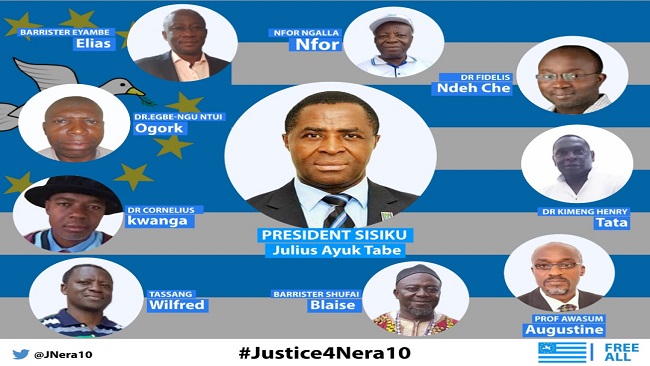
The recent talks with the government were led by the most prominent separatist leader, Sisiku Ayuk Tabe, who leads a self-declared English-speaking state that the separatists call Ambazonia, and has been imprisoned since 2018. They follow on earlier attempts at negotiations last year, facilitated by the Geneva-based Center for Humanitarian Dialogue, which failed to gain traction due to a lack of trust on both sides.
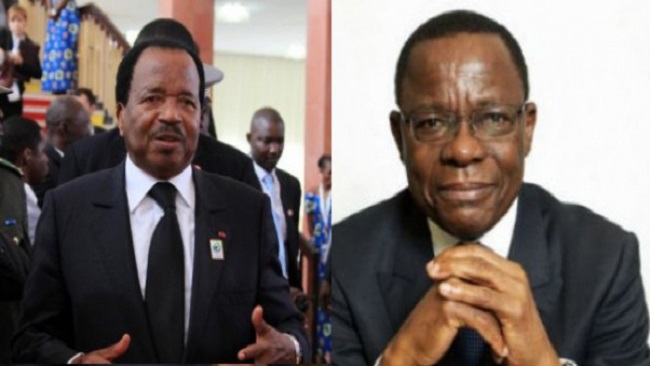
Part of the reason those talks fizzled was the Cameroonian government’s insistence that the ongoing crisis is an issue of terrorism, to be addressed militarily. In 2019, President Paul Biya announced a “Grand National Dialogue” that didn’t even include any separatists and didn’t address key issues, such as whether to revert to a federal form of government that existed prior to 1972.
Subsequently, in January, the government announced a new “Special Status” for the Anglophone regions, which created more regional legislative bodies, among other measures. But this new status did little to change the reality on the ground, and the following months saw widespread violence. Essentially, the Cameroonian government made clear that it was not interested in the separatists’ offers to engage in dialogue and would instead continue with its militaristic approach.
This is why the recent talks between imprisoned separatists and Biya’s government are so noteworthy. The government was represented by officials from the presidency and the office of Prime Minister Joseph Ngute. The separatists were represented by several imprisoned leaders, including Sisiku. Negotiators held two meetings outside the Kondengui Central Prison in Yaounde, the capital, where Sisiku and other political prisoners are being held.
The agenda for the talks centered on what separatists refer to as four action items that would create an enabling environment for further negotiations toward a lasting solution to the conflict. The action items include the demilitarization of the Anglophone regions, with the Cameroonian military being confined to barracks; an amnesty to allow separatists living overseas to return; the release of political prisoners; and a cease-fire that will last until the two sides convene for talks mediated by a third party. The most contentious of these is the release of prisoners, as Sisiku has insisted on a comprehensive release of political prisoners, not an arrangement where the government releases a select group of detainees. Sisiku has also said that if a release occurs in phases, he must be among the last to be released. During the talks, the two sides reached an understanding of the action items.
The talks were initially held in secret, and Sisiku only confirmed them after the second round had concluded. The news was welcomed by multiple separatist leaders and was applauded by civil society groups in Cameroon’s two Anglophone regions, which have long been advocating for a cease-fire. The government, however, did not comment for several days, and even then, its statement downplayed the talks, saying information that government representatives had met with “secessionists awaiting trial is not consistent with reality.”
If hard-liners in the Cameroonian government successfully sabotage the peace process, the costs would be horrific.
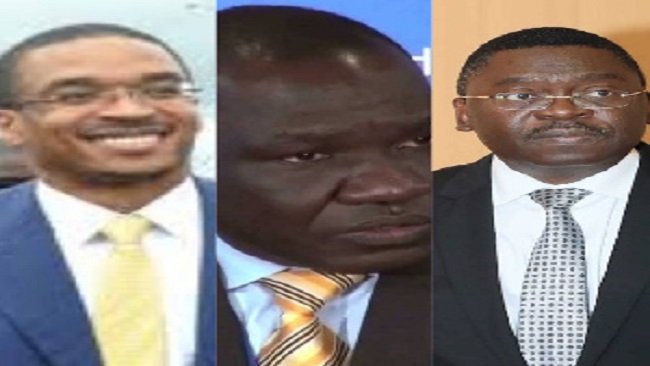
To many, this seemed as though the government was denying that the talks had taken place. But in reality, the statement was an indication that not all members of the Cameroonian government are sincere about ending the conflict. In fact, the government is divided into two camps: those advocating for overtures toward separatist leaders, and those seeking to obstruct any negotiated settlement. The first camp consists of Prime Minister Ngute, whose office has spearheaded the talks along with the intelligence chief, Maxime Eko-Eko, who has met with separatist leaders. Gregoire Owona, the minister of labor, and Achille Bassilekin, who is the minister of small and medium sized enterprises, are also in favor of the talks.
On the other side, one of the chief opponents of the talks is Ferdinand Ngoh Ngoh, the powerful secretary-general of the presidency. Other hard-liners in the government include Jacques Fame Ndongo, the minister of higher education, and Paul Atanga Nji, the minister of territorial administration. Notably, the divide does not break down along linguistic lines, as there are Anglophones and Francophones in both camps. Since the talks in July, the latter group appears to have seen success, as there have been no follow-up conversations with the separatists.
Clearly, certain prominent members of Cameroon’s Cabinet are not committed to reaching a lasting political solution to the war that has ravaged the country for nearly four years, with economic and humanitarian implications far beyond its two Anglophone regions. This internal division within the government has only been compounded by tensions about who might succeed the 87-year-old Biya, with both Ngoh Ngoh and Ngute angling for the position. While tensions over succession in Cameroon are not new, in the current environment, they could stymie a real chance to end a needless war.
There are also divisions on the separatist side, with the movement split between two main factions—one led by Sisiku and the other led by Samuel Sako, a former pastor based in the United States, in Maryland. Sisiku is the most influential, with the overwhelming majority of fighters seeing him as the leader of the movement. Even some separatist leaders who do not necessarily support Sisiku’s leadership have indicated that they support his initiative to negotiate with the government.
However, infighting within Biya’s Cabinet and jostling over who will succeed him may prevent the process from advancing. If hard-liners in the Cameroonian government successfully sabotage the peace process, the costs would be horrific: Residents of the Anglophone regions would continue to suffer from violence and human rights violations, as a country that was once known as a beacon of stability in a troubled region will continue to destabilize.
Events in recent weeks have shown that the government is continuing a hard-line approach. In response to the killing of a police officer in the Northwest region, the military banned motorbikes in the provincial capital of Bamenda and launched a military operation to sweep the city. Moreover, on Sept. 17, an appellate court in Yaounde upheld Sisiku’s life sentence on charges of terrorism and secession.
As the Cameroon authorities’ violent response to the peaceful protests that emerged in 2016 showed, the government is capable of starting a war by ignoring legitimate grievances. However, that same government now has the ability to seek an end to it. The only question is whether the hard-liners who have historically had the most influence in the Cabinet will prevent meaningful talks with separatists from advancing.
Culled from World Politics Review