5, October 2018
Cameroon: A ticking time bomb 0
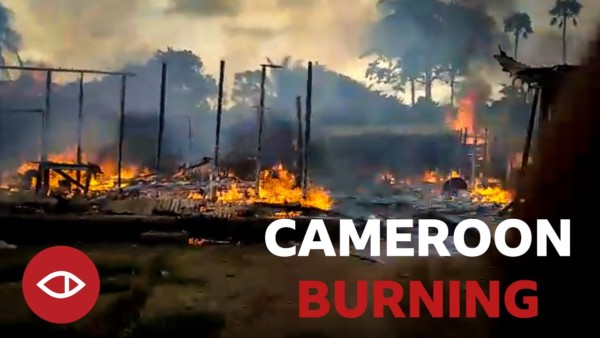
Cameroon is on the threshold of a disaster. If care is not taken, the world might play spectator to an orgy of killing in that part of the world. Over the last two years, the world has been having a taste of what might happen after the October 7, 2018 polls in the country’s English-speaking regions.
The anger and frustration in many towns and cities in the country could reduce the slaughtering that is playing out in Southern Cameroons to a dress rehearsal. The English-speaking regions have become the theater of mass killings. Some 4,000 Cameroonians have already lost their lives, including close to 2,000 army soldiers.
So far, the conflict in Southern Cameroons has been localized. The government has been working very hard to ensure that it does not spread to East Cameroon, but this might change very soon due to the presidential poll that will take place on October 7.
The elections are coming with pressure and this election could be that factor that might tip the country into the type of conflicts Africans are used to seeing. According to the International Crisis Group report, while political tension are growing as the presidential election approaches, the government has not come up with any framework for dialogue between Yaoundé, the opposition and civil society.
The government seems to be adopting the same strategy it employed during and after the 2011 presidential poll. The government is known for breaking the main social movements, isolating the most vociferous leaders and activists and recruiting leaders from the usual sources of opposition, such as students, street vendors, commercial motorcycle drivers and others from the transport sector. Recently, it has expanded its surveillance networks across social media, especially Facebook and Whatsapp.
This strategy could prove counter-productive. By decapitating these movements, the government loses its understanding of working class dynamics and hence its insight into how the population mobilizes. The absence of leaders means that when violence erupts, as with the serious riots in February 2008, there is hardly anybody in civil society or in the opposition to moderate the rioters and dialogue with the government.
The most challenging thing now is that opinions by ordinary people are increasingly radical. In Douala and Yaoundé, dozens of young people interviewed by Crisis Group think they should “make themselves heard by doing what the Anglophones are doing”. Some go so far as saying: “since the government and opposition are both against us, we might as well spoil everything so that nobody wins, the report adds.
Since 2017, intercommunal tensions have worsened throughout the country. On social networks and in the media, journalists, politicians, academics, activists and other civil society actors speak in terms that stigmatize ethnic groups. While ethnic divides are nothing new in Cameroon, the approaching presidential election is aggravating them as leaders of the governing party and the opposition use them to create or consolidate their political base. There is a danger that ethnic antagonisms will mirror political tensions and exacerbate any violence that may occur in the electoral period, the report says.
“In recent years, the government has used the tense security situation to further reduce civil liberties. For example, it has used the antiterrorist law passed in 2014 against journalists and civil society. Since 2017, the Ministry of Posts and Telecommunications and the Ministry of Communications have explicitly threatened journalists and sought to regulate the media more frequently,” the report adds.
To stave off criticism, the government is also restricting public expression by banning demonstrations organized by the opposition and civil society. Some in civil society have responded by not seeking the authorization to hold their marches. With the exception of the Stand up for Cameroon movement, they have, however, been careful not to express political grievances. They limit their demands; regularly emphasizing that their actions are not political and that they are not calling for the departure of Biya, no doubt to avoid harsher repression.
The journey down the dangerous path is relentless and the leaders seem to be enjoying their own dangerous rhetoric. They are working hard to stifle opposition and this has resulted in a brutal crackdown on journalists, activists, lawyers and others. This crack-down on civil liberties is accompanied by a hardening of attitudes towards international partners and international organizations. Yaoundé responds angrily to the smallest criticisms and maintains a stern attitude toward diplomats in the capital and international organizations.
A part of the population, whom the government has recently convinced that there is an international conspiracy to destabilize the country, approve of this attitude. The government is gradually leading the country down a dangerous path; a path that has seen many other African countries and today, those countries are suffering from the effects of such a mentality.
The October 7, 2018, poll remains a tough challenge to the country. Even the ICG report underscores that the political climate is tense, the economy shaky and much of the country insecure and it is torn between Boko Haram in the Far North and a conflict in the English-speaking regions. Intercommunal tensions are worsening not only in Southern Cameroons but also in other parts of the country.
However, the government and armed Southern Cameroons separatists still have time to declare a ceasefire to improve prospects for polling in areas affected by the conflict. But this might not happen as the separatists are prepared to disrupt the elections. Outside powers do have a role in this. They could push both sides to declare a ceasefire or even press for an inclusive dialogue that will spare the country and the region the bloodshed that has been noticed in other African countries.
The ICG report also underscores that the government should take steps to curb rhetoric stigmatizing specific ethnic groups and it should do a lot to sound more conciliatory. After the vote, both sides should support efforts by religious leaders to hold an Anglophone General Conference. Such a conference could help lay the ground for a national inclusive dialogue that is necessary to resolve the Southern Cameroons crisis that is already in its third year.
“The danger of violence around the vote in Anglophone regions is high. But other parts of the country could also be affected, even if the postponement of the parliamentary and municipal elections to October 2019, which carried their own danger of localized friction, has mitigated some risks. As Election Day approaches, tensions are growing and the government has become harder-line, opting for repression and peddling conspiracy theories in response to demands for social and political reform. Embryonic movements are emerging across the country, which reject the election. Some of them call for a popular insurrection to unseat Cameroonian President Paul Biya. In the Anglophone regions and parts of the Far North, insecurity may hinder the smooth conduct of the vote,” the report says.
The presidential election on October 7 will take place in an unprecedented political and security climate for Cameroon. Lack of clarity on the country’s future is worrying. Governance issues and the succession to Biya, now 85, are of pressing concern. Reducing the risk of violence during the election, including by security forces, is a precondition for putting Cameroon on track towards a peaceful transition. The priority for the incoming government will then be to organize a national dialogue to resolve the Southern Cameroons crisis, the report concludes.
Compiled by Soter Tarh Agbaw-Ebai, Kingsley Betek and Irene Nayongo.








5, October 2018
Race For Etoudi: Maurice Kamto and Akere Muna form coalition 0
With less than 48 hours to Sunday’s presidential election in Cameroon, two opposition candidates have formed a coalition, according to the spokesperson of Akere Muna, one of the candidates.
“Akere Muna agrees to withdraw his candidacy for the Presidency of the Republic (…) and to support Maurice Kamto in the said elections,” said a statement signed by Akere Muna’s spokesman, Paul Mahel.
Nine candidates will run for the presidency of Cameroon on Sunday, including incumbent president Paul Biya, who has been in office since 1982.
Source: Africa News