26, September 2018
Disgraced TV icon Bill Cosby sentenced to prison for sexual assault 0
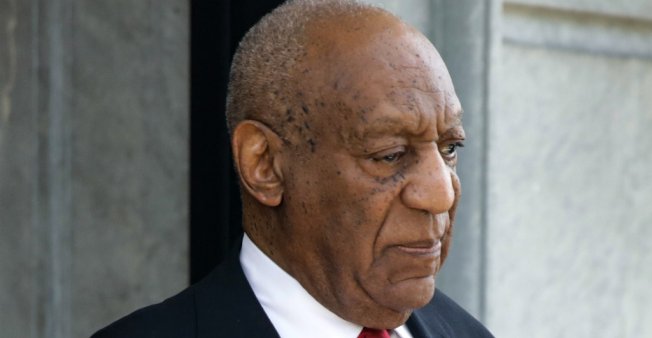
Bill Cosby was marched out of court in handcuffs on Tuesday after being sentenced to between three and 10 years in prison for sexual assault, capping the downfall of the once-beloved comedian known as “America’s Dad.”
Cosby, 81, was found guilty in April of three counts of aggravated indecent assault for the drugging and sexual assault of his one-time friend Andrea Constand, a former Temple University administrator, at his Philadelphia home in 2004.
The sentence ensures that Cosby will spend no less than three years in a Pennsylvania prison before he becomes eligible for supervised release, though he could end up staying behind bars for as much as a decade.
Montgomery County Court of Common Pleas Judge Steven O’Neill ordered Cosby, who had been out on bail since his conviction, to be jailed immediately. He was escorted out a back door of the courtroom with his hands and feet shackled and driven away in a black sport utility vehicle.
Minutes earlier, Constand left court with her arms folded, a smile spreading across her face as other women who have accused Cosby came to hug her.
Several of those women spoke to reporters in the rain outside the courtroom. “I wanted 30 years, but I’m very happy to know Mr. Cosby will do time in prison,” Chelan Lasha said.
Cosby was the first celebrity to be convicted of sexual abuse since the start of the #MeToo movement, the national reckoning with misconduct that has brought down dozens of powerful men in entertainment, politics and other fields.
O’Neill also fined Cosby $25,000 and ordered him to pay the costs of the prosecution, calling Cosby’s crime “very serious.” There was no visible reaction from the disgraced entertainer.
“Equal justice under the law does not allow different treatment because of who he is or who he was,” O’Neill said.
After the sentencing, Andrew Wyatt, Cosby’s spokesman, read a statement in which he said the entertainer had been subjected to “the most racist and sexist trial in the history of the United States.”
Before handing down the prison sentence, O’Neill also decided to designate Cosby a “sexually violent predator” under Pennsylvania law.
Under that designation, Cosby will have to undergo monthly counseling and register as a sex offender with police for the rest of his life. Neighbors and schools will be notified of his address and crimes.
Cosby’s lawyers have already said they planned to appeal his conviction, and he has denied any wrongdoing. Asked if he wanted to address the court with a statement before sentencing, Cosby declined through his lawyers.
More than 50 other women also have accused Cosby of sexual abuse going back decades, with most complaints too old to prosecute. The Constand case was the only allegation that led to criminal charges.
On Monday, the first day of the sentencing hearing, Constand said in a written statement submitted to the court that the attack had turned her into a woman who was “stuck in a holding pattern for most of her adult life, unable to heal fully or to move forward.”
“Bill Cosby took my beautiful, healthy young spirit and crushed it,” she wrote. Prosecutors had asked for the maximum prison sentence of between five and 10 years, citing the nature of Cosby’s crime as well as his alleged history of misconduct.
Citing Cosby’s frailty and blindness, Cosby’s lawyers had asked for house arrest rather than prison time.
Cosby’s first trial in 2017 ended in a mistrial when jurors could not reach a unanimous verdict. Soon after that proceeding, a series of women began leveling sexual misconduct allegations against influential men, launching the #MeToo and #TimesUp movements that have encouraged victims to speak up about their experiences.
Prison officials will process Cosby at the nearby state prison in Schwenksville before determining in which of Pennsylvania’s 22 male prisons he will serve his sentence, prison spokeswoman Amy Worden wrote in an email.
He will be one of 86 inmates over age 80 held by Pennsylvania’s Department of Corrections, where the two oldest inmates are both 91, Worden said.
(REUTERS)





















26, September 2018
Canada issues Cameroon travel advisory over rising insecurity 0
The Canadian government on Tuesday issued a travel advisory for Cameroon cautioning citizens on the security situation ahead of October 7 presidential polls. A summary of the safety and security tab read: Presidential elections are due to take place on October 7, 2018. Demonstrations could occur before, during and after the elections.
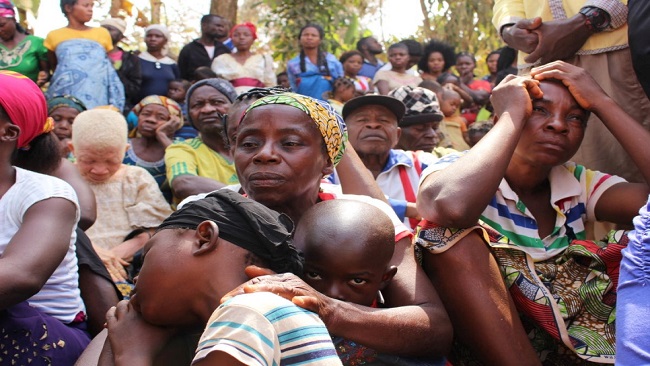
The upcoming polls have been cited as a key test of the security apparatus in the country especially with threats from separatists elements that voting will not take place in the English-speaking regions – North-West and South-West.
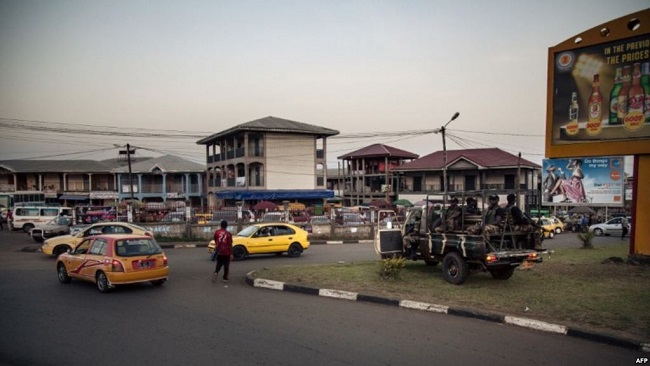
Specifically on the situation in the two regions, the advisory said: “Since late November 2016, demonstrations, general strikes and clashes stemming from local tensions have led to casualties in the North-West and South-West regions.
“The security situation has deteriorated since the beginning of 2018. Kidnappings have occurred and foreigners have been targeted. A curfew is in effect from 8 p.m. to 6 a.m.
“Unofficial road blocks could be set up by armed groups. At any time, local authorities could impose movement restrictions. Telecommunications could be disrupted.”
It also warned against the Far North and Mayo-Louti Department and areas bordering Nigeria, Chad and the Central African Republic.
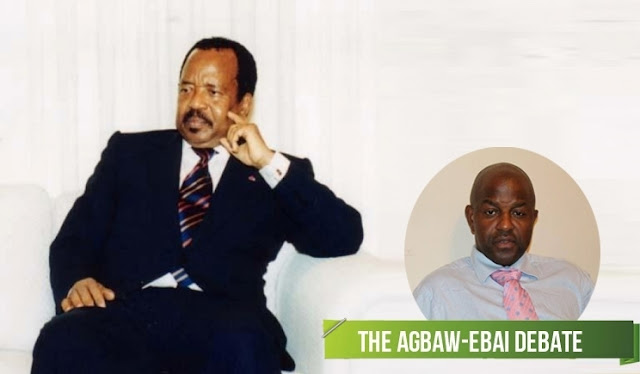
Cameroonians go to the polls to elect a new president. Incumbent Paul Biya is up against eight other candidates. The vote is the final process for a busy electoral year that has seen legislative polls being organised by the elections body, ELECAM.
Source: Africa News