
16, January 2025
Former Secretary General at the Presidency David Abouem à Tchoyi dies aged 81 0
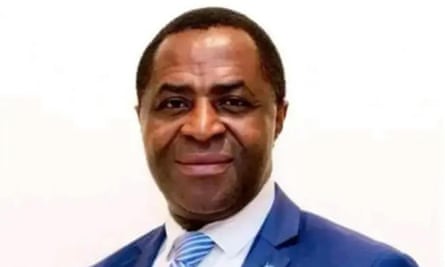
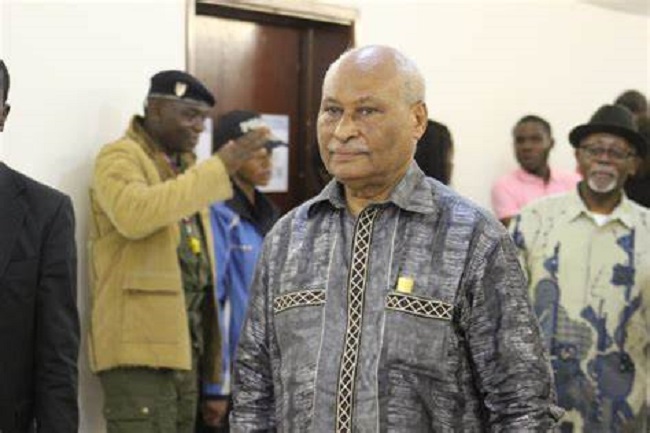
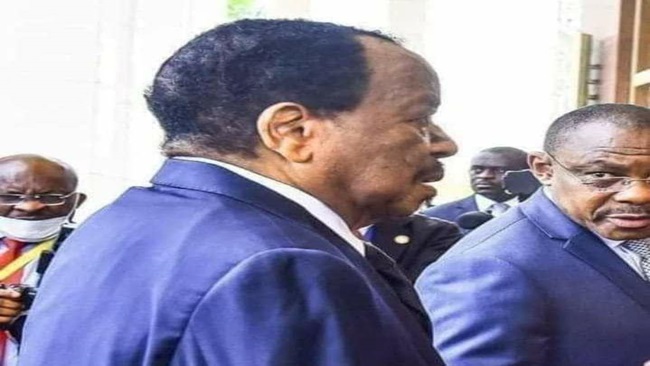
The former Secretary General at the presidency of the republic David Abouem à Tchoyi has died at the age of 81.
The renowned civil administrator, who was governor of the South West and North West provinces died Wednesday 15 January 2025 in Yaoundé.
Family sources said Mr Abouem had lost consciousness. He collapsed and was pronounced dead at his home. His family believes the cause of death to be a heart attack.
David Abouem à Tchoyi was an outstanding administrator and politician not just of his generation but for generations far before who possessed extraordinary charm and a common touch which endeared him to so many in both French and English speaking Cameroon.
For many years David Abouem à Tchoyi was an incredibly significant figure in Cameroon who worked tirelessly and fought fearlessly for the country that he loved. He was last seen in public on 10 January 2025 at the ceremony to present New Year’s greetings to President Paul Biya at the Unity Palace.
Abouem à Tchoyi was born on 15 January 1944 in Kribi, a seaside town and port in the South Region. He did his primary education in his village in 1950.
He completed his secondary education at the Collège Évangélique de Libamba from 1957 to 1964. He then enrolled at the University of Yaoundé, where he obtained a law degree in 1967, before entering the National School of Administration and Magistracy (Enam) and graduated in 1969. He also studied at the IIAP in Paris.
At the Ministry of Territorial Administration, he became Head of the Coordination Department, Director of Territorial Organisation and Secretary General on 31 August 1972.
He had a meteoric rise in the Francophone dominated Cameroon system and he successively held the following positions:
Secretary General at the Ministry of Planning and Regional Development, Secretary General at the Ministry of the Economy and Planning, and Secretary General at the Prime Minister’s Office from 17 July 1975.
On 8 September 1976, he was appointed Governor of the North-West region, before holding the same position in the South-West region. On 4 February 1984, he was appointed Secretary General at the President of the Republic. From 24 August 1985 to 21 November 1986, he was Minister of Higher Education and Scientific Research. He was also a member of the National Commission for Bilingualism and Multiculturalism.
By Soter Tarh Agbaw-Ebai





















16, January 2025
Global Economy Stabilizes, But Developing Economies Face Tougher Slog 0
Developing economies—which fuel 60 percent of global growth—are projected to finish the first quarter of the 21st century with the weakest long-term growth outlook since 2000, according to the World Bank’s latest Global Economic Prospects report. Even as the global economy stabilizes in the next two years, developing economies are expected to make slower progress in catching up with the income levels of advanced economies.
The global economy is projected to expand by 2.7% in both 2025 and 2026, the same pace as in 2024, as inflation and interest rates decline gradually. Growth in developing economies is also expected to hold steady at about 4% over the next two years. This, however, would be a weaker performance than before the pandemic—and insufficient to foster the progress necessary to alleviate poverty and achieve wider development goals.
The World Bank’s analysis is its first systematic assessment of the performance of developing economies in the first quarter of the 21st century. It finds that, during the first decade, developing economies grew at the fastest clip since the 1970s. Yet progress ebbed after the Global Financial Crisis of 2008-09. Global economic integration faltered: as a share of GDP, foreign direct investment (FDI) inflows into developing economies are at about half the level of the early 2000s. New global trade restrictions in 2024 were five times the 2010-19 average. As a result, overall economic growth dropped—from 5.9% in the 2000s to 5.1% in the 2010s to 3.5% in the 2020s. Since 2014, with the exception of China and India, the average per capita growth rates of income in developing economies have been half a percentage point lower than that in wealthy economies, widening the rich-poor gap.
“The next 25 years will be a tougher slog for developing economies than the last 25,” said Indermit Gill, the World Bank Group’s Chief Economist and Senior Vice President for Development Economics. “Most of the forces that once aided their rise have dissipated. In their place have come daunting headwinds: high debt burdens, weak investment and productivity growth, and the rising costs of climate change. In the coming years, developing economies will need a new playbook that emphasizes domestic reforms to quicken private investment, deepen trade relations, and promote more efficient use of capital, talent and energy.”
Developing economies are more important for the global economy than they were at the start of the century. They account for about 45% of global GDP, up from 25% in 2000. Their interdependence has also grown: more than 40% of their goods exports go to other developing economies, double the share in 2000. Developing economies have also become an important source of global capital flows, remittances, and development assistance to other developing economies: between 2019 and 2023, they accounted for 40% of global remittances—up from 30% in the first decade of the century.
As a result, these economies now have greater sway on growth and development outcomes in other developing economies. For example, an increase of 1 percentage point in the GDP growth of the three largest developing economies—China, India, and Brazil—tends to result in a cumulative GDP boost of nearly 2% in other developing economies after three years. Those effects, however, are only about half the effect of growth in the three biggest economies: the United States, the euro area, and Japan. The welfare of developing economies, in short, is still strongly tied to growth in the big three advanced economies.
“In a world shaped by policy uncertainty and trade tensions, developing economies will need bold and far-reaching policies to seize untapped opportunities for cross-border cooperation,” said M. Ayhan Kose, the World Bank’s Deputy Chief Economist and Director of the Prospects Group. “A good start would be to pursue strategic trade and investment partnerships with the rapidly expanding markets of other developing nations. Modernizing transportation infrastructure and standardizing customs processes are critical steps to cut unnecessary expenses and foster greater trade efficiency. Finally, sound macroeconomic policies at home will fortify their capacity to navigate the uncertainties of the global outlook.”
Over the next two years, developing economies could face serious headwinds, the report notes. High global policy uncertainty could undercut investor confidence and constrain financing flows. Rising trade tensions could reduce global growth. Persistent inflation could delay expected cuts in interest rates. Yet the global economy could also do better than expected—especially if its largest engines, the United States and China, manage to gain steam. In China, additional stimulus measures could boost demand. In the United States, robust household spending could result in stronger-than-expected growth, with beneficial effects for developing economies.
The report argues that developing economies have many options to improve their growth prospects, despite the headwinds. With the right policies, these economies can even transform some challenges into significant opportunities. Addressing infrastructure needs, speeding up the climate transition, and improving human capital can improve growth prospects while also helping to achieve climate and development goals. All countries, meanwhile, should work together to strengthen global trade governance, with the support of multilateral institutions.
Source: World Bank