
19, June 2017
Revealed: Biya regime paid Boko Haram 3.5 million US dollars 0
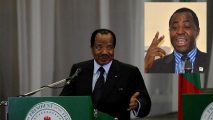
The Action Group Against Money Laundering in Central Africa (GABAC) has revealed in its April 2017 report that the Biya regime paid a ransom for the release in 2013 of the seven members of the French family Moulin- Fournier. Cameroon paid the sum of 3.5 million dollars (about 2 billion FCFA) to the terrorist group Boko Haram.
It was in April 2013 when the Nigerian Islamic sect abducted seven members of a French family Tanguy Moulin-Fournier. Gabac in its report cited a confidential file from the Nigerian government that says “Boko Haram received about $ 3.5 million from the French and Cameroonian negotiators in exchange for the hostages.”
Cameroon Concord News understands a certain Alhaji Abdallah, a Cameroonian financial agent and an exporter of vehicles based in Amchide was the intermediary who played a major role in the Boko Haram deal. In February 2013 and in exchange for the release of the French citizens, the government paid $ 3.5 million and did release some Boko Haram prisoners of war in April 2013.
Alhaji Abdallah was subsequently arrested by Cameroon security agents including all members of his team that took part in the Boko Haram negotiations. Seven French tourists, including four children, were kidnapped on a Tuesday (February 19th 2013) in the Far North region of Cameroon on the border with Nigeria.
By Chi Prudence Asong
Cameroon Concord News













19, June 2017
Boko Haram militants kill 16 people in northeast Nigeria 0
At least 16 people have been killed when suspected members of the Takfiri Boko Haram terrorist group detonated their explosive vests near a camp of displaced people in the volatile northeastern state of Borno, the birthplace of the terror outfit.
Nigeria’s National Emergency Management Agency (NEMA) said in a statement that the bomb attacks occurred close to the Dalori camp at Kofa village, located nearly 10 kilometers southeast of the provincial capital Maiduguri, at about 08:45 p.m. local time (1945 GMT) on Sunday.
According to Abdulkadir Ibrahim, the spokesman of the NEMA, two female terrorists first attempted to enter the camp but were thwarted by security personnel of the camp.
However, “two other female bombers detonated their explosives at the adjoining Dalori Kofa village, where they killed 16 people,” he added in the statement.
Borno state police spokesman Victor Isuku gave a more detailed account of the attacks in his initial report of the incident, saying the first assailant detonated her explosives “near a mosque”, claiming the lives of seven people, and the second one blew herself up “in a house”, killing six people. He added that at least 11 people also sustained injuries in the blasts and were taken to hospital.
However, Ibrahim updated Isuku’s report, saying three of the wounded succumbed to their injuries later on. “The 16 does not include the bombers,” he added.
Isuku revised the number of attackers up to five from four, and maintained that other three assailants, not directly involved in the blasts, were also killed.
No group has so far claimed responsibility for the attacks but they bear the hallmark of the Boko Haram Takfiri terrorist group, as it in the past employed radicalized females on multiple occasions to conduct bombing attacks against people or army troops.
Dalori is one of the largest camps allocated to internally displaced people (IDP) in the remote region and Boko Haram terrorists had previously tried to hit the camp. Back in January last year, Takfiri militants killed at least 85 people as they rampaged through the communities near Dalori. They burned down houses and killed people either by gunfire or by detonating explosives.
The Sunday attack is the deadliest one in Nigeria since June 8, when Boko Haram militants killed 14 people in yet another mixture of gunfire and blasts in the Jiddari Polo area of Maiduguri.
In recent months, army troops and civilian fighters in Nigeria have managed to foil many bomb attacks involving terrorists wearing explosive vests before the assailants were able to reach heavily-populated targets and detonate their bombs of their own accord.
Last December, however, two women, with the Boko Haram, killed 57 people and injured 177, including 120 children, after they detonated their explosive vests at a bustling market at Madagali, a town in the neighboring province of Adamawa.
On December 24, 2016, Nigerian President Muhammadu Buhari, who came to power in 2015 with a pledge to eradicate Boko Haram, announced that the army had “crushed” the terror group a day earlier by retaking its last key bastion, deep inside the thick Sambisa Forest in Borno.
The group, however, has resorted to sporadic shooting and bombing attacks in the northeast of the African country, spreading panic among the local residents.
Boko Haram, whose name means “Western education is forbidden,” has claimed responsibility for a number of deadly terror attacks in Nigeria since the beginning of their militancy in 2009, which has so far claimed the lives of at least 20,000 people and made more than 2.7 million displaced.
The United Nations has warned that areas affected by Boko Haram face a humanitarian crisis.
Back in February 2016, four nations of the Lake Chad Basin – Chad, Cameroon, Niger and Nigeria – launched a campaign, together with a contingent from Benin, to confront the threat from Boko Haram terrorists in the region.
Source: Presstv