5, September 2023
Make Noise: Central African States Suspend Gabon’s Membership 0
The Economic Community of Central African States (ECCAS) has suspended Gabon’s membership during an extraordinary summit in Djibloho, Equatorial Guinea, and condemned the use of force to resolve political conflicts.
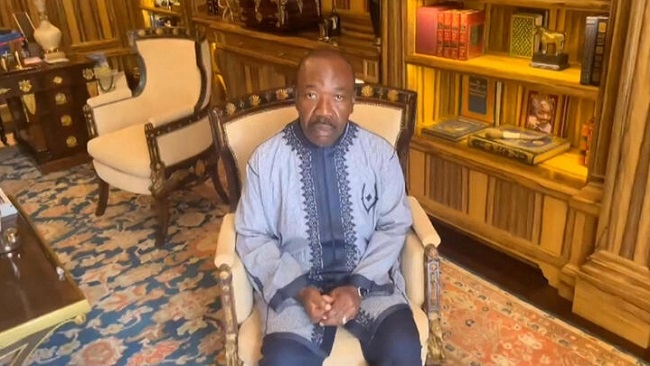
One week after a coup ousted Gabon’s president, Ali Bongo, little has been said about him and he hasn’t been seen since a video in which he was pleading for international help.
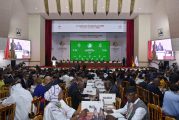
Monday’s extraordinary summit was held under the presidency of Equatorial Guinea President Teodoro Obiang Nguema Mbasogo.
Obiang said ECCAS wants Gabon to return to constitutional order so that all the institutions in the country can function. ECCAS said it expects the international and regional communities to help Gabon out of difficult times, but gave no details.
ECCAS said Gabon was suspended from proceedings because of an unconstitutional power change.
Chad’s foreign affairs minister, Mahamat Saleh Annadif, read the summit’s resolutions on Equatorial Guinea’s National Television.
He said ECCAS leaders are asking the military junta in Gabon to guarantee the physical integrity, safety and security of ousted President Bongo and his family. He said Gabon has an obligation under international law to protect all citizens and ensure a quick return to civilian rule.
Annadif said the summit designated Central African Republic President Faustin-Archange Touadera to negotiate with Gabon’s military junta to hand over power.
Etienne Ngola, an international affairs lecturer at the Omar Bongo University in Libreville, said via a messaging app that the coup in Gabon was one of the most peaceful in the world with no bloodshed. He said ECCAS should allow Gabon’s military junta, which has much internal support, enough time to bring back order and prepare civilians for democratic rule before handing over power.
Gabon’s ousted president has not been seen in public since August 30, when a group of Gabon military officers appeared on national television and announced that they had seized power and put Bongo under house arrest.
But an audio extract from a video of Bongo has gone viral on social media platforms. In the video, Bongo cries for help, asking people he calls his friends to come to his rescue.
“I am Ali Bongo Ondimba, president of Gabon, and I want to send a message to all the friends that we have all over the world, to tell them to make noise for the people here have arrested me and my family,” he said on the video. “My son is somewhere and my wife is in another place and I am at the residence, nothing is happening, I don’t know what is going on so I am calling you to make noise. I am thanking you.”
Shortly after the coup, Bongo’s son, 31-year-old Noureddin Bongo Valentin, was arrested and accused of high treason and corruption.
The ECCAS summit did not make any public statements regarding the arrest of Bongo’s son.
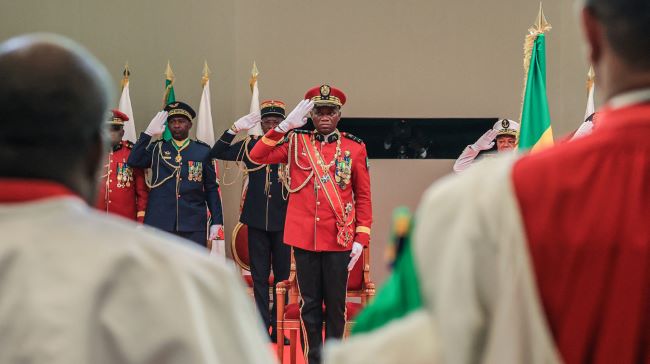
The military junta led by General Brice Oligui Nguema, a former commander of the Republican Guard, who was sworn in on Monday as Gabon’s transitional president, has not commented on his predecessor’s family situation.
During the summit, Niger-born Abdou Abarry, who is the special representative of United Nations Secretary-General Antonio Guterres for Central Africa and Head of the United Nations Regional Office for Central Africa, pleaded for the establishment of rules and strong institutions he said will consolidate Gabon’s democratic foundations at the end of a transition within a reasonable time.
Abarry also expressed hope that ECCAS and the regional office of Central Africa would equip themselves with what he called adequate instruments to deal with the resurgence of unconstitutional changes.
Presidents Denis Sassou Nguesso of the Republic of Congo, Joao Lourenco of Angola, Faustin-Archange Touadera of the Central African Republic, as well as Sao Tome and Principe Prime Minister Patrice Trovoada and a representative of Cameroonian President Paul Biya were present at the ECCAS summit. ECCAS also has Chad, Burundi, Gabon, The Democratic Republic of the Congo, Congo and Rwanda as members.
The summit said all member states agreed that more sanctions will be meted out on Gabon should the military junta fail to hand over to civilian rule soonest.
During his swearing-in ceremony on Monday, Nguema said he would hand over civilian rule, but did not say when.
Source: VOA

















6, September 2023
Cancer surging among under-50s worldwide 0
The number of people under 50 diagnosed with cancer has surged worldwide in the last three decades but it is not fully clear why, a study said on Wednesday.
Cases of cancer among people aged 14 to 49 rose by nearly 80 percent, from 1.82 million to 3.26 million, between 1990 to 2019, according to the study published in the journal BMJ Oncology.
While experts cautioned that some of that increase was explained by population growth, previous research has also indicated that cancer is becoming more commonly diagnosed among under-50s.
The international team of researchers behind the new study pointed to poor diet, smoking and alcohol as major risk factors underlying cancer in the age group.
But “the increasing trend of early-onset cancer burden is still unclear,” they added.
A little over one million people under 50 died of cancer in 2019, up 28 percent from 1990, the study said.
The deadliest cancers were breast, windpipe, lung, bowel and stomach cancers, according to the study.
Breast cancer was the most commonly diagnosed over the three decades.
But the cancers that rose the fastest were of the nasopharynx, where the back of the nose meets the top of the throat, and prostate.
Liver cancer meanwhile fell by 2.9 percent a year.
– Causes remain ‘elusive’ –
The researchers used data from the 2019 Global Burden of Disease Study, analysing the rates of 29 different cancers in 204 countries.
The more developed the country, the more likely it was to have a higher rate of under-50s diagnosed with cancer, the study said.
This could suggest that wealthier countries with better healthcare systems catch cancer earlier, but only a few nations screen for certain cancers in people under 50, the study added.
As well as poor diet, smoking and drinking, genetic factors, physical inactivity and obesity could also contribute to the trend, the study said.
Modelling predicted that the number of global cancer cases in under 50s will rise a further 31 percent by 2030, mostly among people aged 40-49.
The researchers acknowledged that cancer data from different countries varied greatly, with developing nations potentially under-reporting cases and deaths.
Experts not involved in the study said the slower increase in deaths compared to cases was likely due to improvements in early detection and treatment.
Dorothy Bennett, a researcher at the University of London, pointed out that the world’s population grew by roughly 46 percent between 1990 and 2019, accounting for some of the increasing cases.
Two doctors at Queen’s University Belfast, Ashleigh Hamilton and Helen Coleman, said it was “crucial” to work out what was behind the increasing cases.
“Full understanding of the reasons driving the observed trends remains elusive, although lifestyle factors are likely contributing, and novel areas of research such as antibiotic usage, the gut microbiome, outdoor air pollution and early life exposures are being explored,” they said in an editorial linked to the study.
Source: AFP