1, July 2022
Tunisia’s president pushes for new constitution that gives him broad powers 0
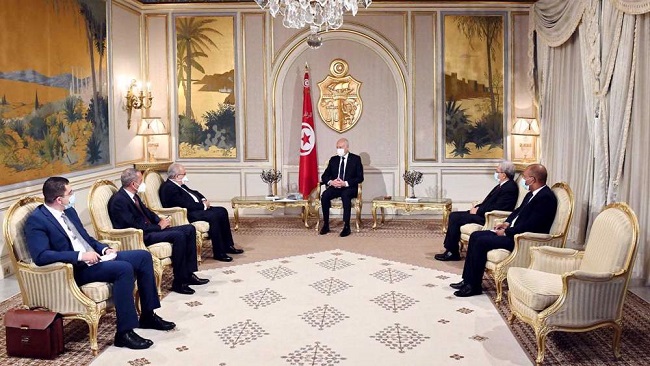
Tunisian President Kais Saied published a planned new constitution on Thursday that he will put to a referendum next month, expanding his own powers and limiting the role of parliament in a vote that most political parties have already rejected.
Saied has ruled by decree since July, when he brushed aside the parliament and the democratic 2014 constitution in a step his foes called a coup, moving towards one-man rule and vowing to remake the political system.
His intervention last summer has thrust Tunisia into its biggest political crisis since the 2011 revolution that ousted former autocrat Zine al-Abidine Ben Ali and introduced democracy.
Voters will be asked to approve the new constitution in a July 25 referendum for which there is no minimum level of participation.
With most of the political establishment opposed to his moves and urging their supporters to boycott the vote, analysts say the measure is likely to pass, but with only limited public involvement.
Many Tunisians are far more focused on a growing economic crisis and threats to public finances that has caused salary delays and threatens shortages of key subsidised goods.
The draft constitution published in the official gazette late on Thursday says Saied would continue to rule by decree until the creation of a new parliament through an election expected in December.
The new constitution would also allow him to present draft laws and have sole responsibility for proposing treaties and drafting state budgets, the gazette said.
It would create a new ‘Council of Regions’ as a second chamber of parliament.
Previously, political power was more directly exercised by the parliament, which took the lead role in appointing the government and approving legislation.
Under the new constitution the government would answer to the president, not to the parliament, though the chamber could withdraw confidence from the government with a two-thirds majority.
The president could serve two terms of five years each and has the right to dissolve parliament. A separate electoral law laying out how voting would work under the new political system will be published later, the draft constitution said.
However, judges, police, army and customs officials would not have a right to go on strike. Judges have recently been on strike for weeks in protest at Saied’s moves to curtail judicial independence.
In a move that may chafe with conservatives, Islam will no longer be the state religion, though Tunisia will be regarded as part of the wider Islamic nation.
However, Saied has maintained most parts of the 2015 constitution that enumerated rights and liberties, including freedom of speech, the right to organise in unions and the right to peaceful gatherings.
Source: REUTERS

















1, July 2022
Football: Inter sign goalkeeper Onana on free transfer 0
Inter Milan have signed Cameroon goalkeeper Andre Onana on a free transfer, the Serie A club said on Friday.
The 26-year-old, who declined to extend his contract with Ajax Amsterdam which expired in June, has joined Inter on a five-year deal according to media reports.
“I’m very happy to be part of this great club and this family, which is a great institution. What more can you say about a club that has done it all? Being here is amazing, and we hope to achieve important objectives in the future,” Onana said.
He will compete with Slovenia’s 37-year-old Samir Handanovic, who has been Inter’s first choice since 2012.
Onana, who was banned by European soccer’s governing body UEFA for violating doping rules last year, leaves Ajax having won three Eredivisie titles.
Inter, who lost their Serie A title by finishing second behind AC Milan last season, have already re-signed Belgium striker Romelu Lukaku on a season-long loan from Chelsea and signed Albania midfielder Kristjan Asllani from Empoli.
Source: Reuters