14, June 2021
Naftali Bennett: From tech millionaire to Israel’s ultranationalist PM 0
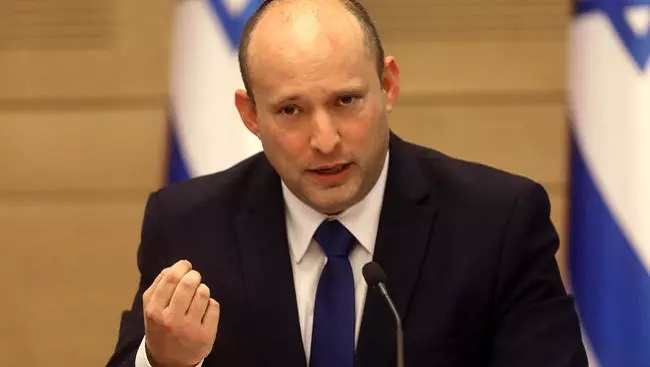
Naftali Bennett, who was sworn in Sunday as Israel’s new prime minister, embodies many of the contradictions that define the 73-year-old nation.
He’s a religious Jew who made millions in the mostly secular hi-tech sector; a champion of the settlement movement who lives in a Tel Aviv suburb, and a former ally of Benjamin Netanyahu who has partnered with centrist and left-wing parties to end his 12-year rule.
His ultranationalist Yamina party won just seven seats in the 120-member Knesset in March elections — the fourth such vote in two years. But by refusing to commit to Netanyahu or his opponents, Bennett positioned himself as kingmaker. Even after one member of his religious nationalist party abandoned him to protest the new coalition deal, he ended up with the crown.
Here’s a look at Israel’s new leader:
An ultranationalist with a moderate coalition
Bennett has long positioned himself to the right of Netanyahu. But he will be severely constrained by his unwieldy coalition, which has only a narrow majority in parliament and includes parties from the right, left and center.
He is opposed to Palestinian independence and strongly supports Jewish settlements in the occupied West Bank and east Jerusalem, which the Palestinians and much of the international community see as a major obstacle to peace.
Bennett fiercely criticised Netanyahu after the prime minister agreed to slow settlement construction under pressure from President Barack Obama, who tried and failed to revive the peace process early in his first term.
He briefly served as head of the West Bank settler’s council, Yesha, before entering the Knesset in 2013. Bennett later served as Cabinet minister of diaspora affairs, education and defence in various Netanyahu-led governments.
“He’s a right-wing leader, a security hard-liner, but at the same time very pragmatic,” said Yohanan Plesner, head of the Israel Democracy Institute, who has known Bennett for decades and served with him in the military.
He expects Bennett to engage with other factions to find a “common denominator” as he seeks support and legitimacy as a national leader.
Netanyahu in ‘politically dangerous place’
Rivalry with Netanyahu
The 49-year-old father of four shares Netanyahu’s hawkish approach to the Middle East conflict, but the two have had tense relations over the years.
Bennett served as Netanyahu’s chief of staff for two years, but they parted ways after a mysterious falling out that Israeli media linked to Netanyahu’s wife, Sara, who wields great influence over her husband’s inner circle.
Bennett campaigned as a right-wing stalwart ahead of the March elections and signed a pledge on national TV saying he would never allow Yair Lapid, a centrist and Netanyahu’s main rival, to become prime minister.
But when it became clear Netanyahu was unable to form a ruling coalition, that’s exactly what Bennett did, agreeing to serve as prime minister for two years before handing power to Lapid, the architect of the new coalition.
Netanyahu’s supporters have branded Bennett a traitor, saying he defrauded voters. Bennett has defended his decision as a pragmatic move aimed at unifying the country and avoiding a fifth round of elections.
FRANCE 24 spoke to Jordana Miller, ABC News’s foreign correspondent in Jerusalem, who said Netanyahu, now sitting in the opposition, has found himself in a “politically dangerous place”.
“This new government may pass a number of laws that will essentially bar him from leading Israel again until his corruption trial wraps up, which could be a number of years,” she said. “That’s why we saw him fight tooth and nail until the very last minute making all kinds of desperate overtures to his allies to try to stop this new so-called ‘change’ government, but he failed.”
Miller suggested that Netanyahu will now do his best to try to “pull off one or two defectors – which is all he’ll need in the coming months because this government has a wafer-thin majority and there are so many ideological differences.”
A generational shift
Bennett, a modern Orthodox Jew, will be Israel’s first prime minister who regularly wears a kippa, the skullcap worn by observant Jews. He lives in the upscale Tel Aviv suburb of Raanana, rather than the settlements he champions.
Bennett began life with his American-born parents in Haifa, then bounced with his family between North America and Israel, military service, law school and the private sector. Throughout, he’s curated a persona that’s at once modern, religious and nationalist.
After serving in the elite Sayeret Matkal commando unit, Bennett went to law school at Hebrew University. In 1999, he co-founded Cyota, an anti-fraud software company that was sold in 2005 to U.S.-based RSA Security for $145 million.
Bennett has said the bitter experience of Israel’s 2006 war against the Lebanese militant group Hezbollah drove him to politics. The month-long war ended inconclusively, and Israel’s military and political leadership at the time was widely criticised as bungling the campaign.
Bennett represents a third generation of Israeli leaders, after the founders of the state and Netanyahu’s generation, which came of age during the country’s tense early years marked by repeated wars with Arab states.
“He’s Israel 3.0,” Anshel Pfeffer, a columnist for Israel’s left-leaning Haaretz newspaper, wrote in a recent profile of Bennett.
“A Jewish nationalist but not really dogmatic. A bit religious, but certainly not devout. A military man who prefers the comforts of civilian urban life and a high-tech entrepreneur who isn’t looking to make any more millions. A supporter of the Greater Land of Israel but not a settler. And he may well not be a lifelong politician either.”
(FRANCE 24 with AP)




















14, June 2021
Cameroon Albinos Ask for Greater Attention, Care 0
International Albinism Awareness Day on June 13 has been observed in Cameroon, with albinos asking for more government and community care and protection. Those living with this hereditary genetic condition that reduces melanin pigment in skin, hair and eyes, say stigma, violence, superstition and killing have greatly lessened, but abuses have not been eliminated.
One hundred and sixty albinos and their family members assembled at the World Association for Advocacy and Solidarity of Albinos office in Cameroon’s capital, Yaounde, to mark International Albinism Awareness Day.
Among them is 16-year-old albino Ronald Essi, who said he was abandoned because of his condition.
Essi said he wants to become a police officer to defend his country Cameroon and punish civilians who abuse albinos’ rights. He said his mother abandoned him when he was two years old. He said his grandmother resisted family pressure to kill him. He said he has been living in the streets since 2015, when his grandmother died.
Essi said a Catholic priest rescued him from the street and sent him to a school in Yaoundé.
Essi is one of the about 2,200 albinos the government says live in Cameroon.
This year Cameroon reported that prejudice and discrimination against albinos in employment and social life had lowered drastically. The government said hunting down albinos for their body parts has been eliminated from many communities.
Witch doctors who claim that albinos bring wealth and good luck to people who have access to their body parts are disappearing. In many communities, albino babies are no longer considered signs of misfortune and buried alive or starved until they die.
Jean-Jacques Ndoudoumou, the founding president of the World Association for Advocacy and Solidarity of Albinos, says albinos are gradually being accepted by communities.
He said the association he leads is happy, as people are increasingly accepting albinos as normal human beings. He said many albinos have graduated from universities and are using the knowledge they acquire to contribute to developing Cameroon. He said complaints of stigma and violence on albinos have greatly declined and there are now marriages between albinos and people without the condition.
Ndoudoumou said his association has instructed all its members to continue teaching people albinos are normal human beings who need special assistance.
Gregoire Amindeh is member of The Association for the Promotion of the Rights of Albinos.
Amindeh said that although Cameroon’s government has done a lot, albinos still urgently need special reading glasses and handheld magnifiers to stop their high school dropout rate from low vision. He said they need subsidies to be treated in hospitals since their skin is extremely sensitive to the sun and can develop cancer. He said skin cancers remain a major cause of death in African albinos.
Pauline Irene Nguene, Cameroon’s minister of social affairs, says albinos are placed in the group of people with special protection needs. She said Cameroon ensures the socio-economic integration and protection of albinos, and immediately intervenes to protect albinos whenever cases of abuse are reported.
She said in 2020, staff of her ministry visited more than a hundred villages where abuses of the rights of albinos were reported. She said civilians in the villages were taught in their local languages to respect the health, education and social rights of albinos. She said the government has continued to lobby for private enterprises, schools and outside organizations not to reject albinos looking for positions in their institutions.
Nguene said 60 government offices created in Cameroon’s administrative units receive complaints and immediately help albinos in need.
International Albinism Awareness Day is observed by the United Nations on June 13 every year. This year’s theme, “Strength Beyond All Odds,” according to the U.N. highlights the achievements of people with albinism all over the world.
Source: VOA