10, April 2020
Ravaged by war, Southern Cameroons Southern Zone turns attention to Covid-19 fight 0
Covid-19 has had a big impact on Cameroonians around the country, especially those living in the Centre Region, Littoral, West and Southwest regions. In February 2020, when we first heard of Covid-19 virus, many Cameroonians took the pandemic—and our preparedness to fight it—for granted. The government did not immediately plan or announce any measures to tackle the pandemic. As a result, in the Centre Region, it was business as usual, with educational institutions and commercial spaces remaining open.
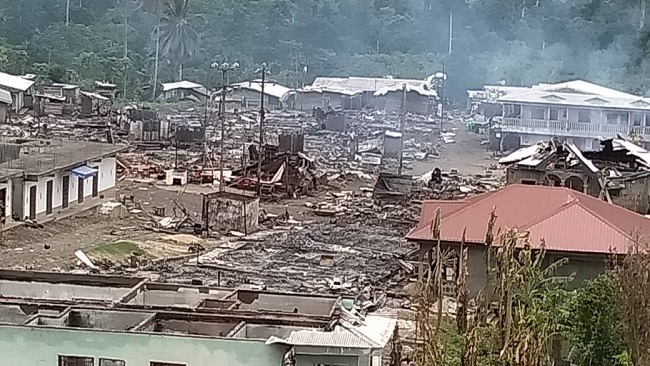
Meanwhile, the Northwest and Southwest regions were still reeling from the economic and social impact of the ongoing Anglophone crisis, which began in 2017 and has already taken many lives and caused widespread displacement. The onset of Covid-19 has only aggravated the situation in the Northwest and Southwest regions. After a delayed initial response to the Covid-19 crisis, Cameroon has finally put some measures in place to tackle the pandemic.
Impact of government measures
The Cameroonian government has now announced several measures to curtail the spread of Covid-19. These include social distancing, a ban on public gatherings of 50 or more people, a lockdown of all shops and bars after 6 PM everyday, and a restriction on the number of people that can be ferried in a taxi at a time.
Although businesses used to do relatively well in the Southwest region, with people buying and selling things at a low cost, the onset of Covid-19 has impacted the economy and has significantly hit the supply of goods in this area. The price of hand sanitisers, which were not in much demand previously, has skyrocketed. Masks and gloves have also have seen a rise in price, even as their stocks deplete. The government’s decision to close several marketplaces has had a direct impact on the livelihoods of many people. The government has also closed down Cameroon’s borders, halting the trade of some goods as a result. The situation is graver for those who run small shops as they are now unable to meet the basic needs of their families.
Before the Covid-19 pandemic struck, Cameroon maintained a good trade relationship with China. But with the closure of all borders, trade has been hit. Most goods used by Cameroonians are from China, but now there is a stigma attached to Chinese goods due to a lot of misinformation. The Southwest region is experiencing a widespread shortage of products, forcing many to look elsewhere to satisfy their needs. This has made life even more difficult for the less privileged and differently-abled, who are now struggling to access even basic amenities.
Cameroonians have typically neglected health and sanitation issues. Activities such as washing hands, cleaning your surroundings and waste disposal have seldom been followed. Most people did not even know of or how to use hand sanitisers. The healthcare system has also been plagued by malpractice and the incompetence of inadequately trained medical personnel. But with the arrival of Covid-19, there has been some change in personal health and hygiene practices and the functioning of the medical system. The government is working to sensitise Cameroonians around the country on measures to protect themselves against this disease, including issuing communiqués on the proper techinique of on washing your hands with soap.
People comply with advisories
People in the Southwest region have become more aware and alert since the government’s measures to counter the spread of Covid-19 went into action. The government has also set up a dedicated helpline to help people access the right information. News of three alleged cases in the region caused some panic but people have been adhering to the safety and hygiene measures more strictly since then. The cases were later found to be negative, but the people continue to remain cautious and follow the government’s advisories.
Some civil organisations such as Social Change and Establishment Center for Youths and Disabled Persons are teaching people how to make hand sanitisers and face masks themselves since there is a shortage of these product and those that are available are being sold at a high pricer. Even the artistic community is doing its bit to educate people. A musician in the Southwest region has written a song to help inform people about the dangers of the of the Covid-19 virus.
There has been no positive Covid-19 case in the Southwest region as of now, and people are continuing to adhere to the government restrictions and suggestions. However, the shortage of basic goods continues and people are struggling. The government must take into consideration the concerns of the people, especially the differently-abled and less privileged, and must plan to help them meet their basic needs.
Culled from orfonline.org












10, April 2020
UN chief calls for solidarity among discordant Security Council over coronavirus crisis 0
UN Secretary General Antonio Guterres urged the Security Council on Thursday to display unity as it met to discuss what he called the “fight of a generation” — the global coronavirus pandemic.
“A signal of unity and resolve from the Council would count for a lot at this anxious time,” Guterres told the divided body holding its first meeting about the crisis.
The meeting of the 15-member Security Council is being held behind closed doors by videoconference but the UN released a copy of the secretary general’s remarks.
“The engagement of the Security Council will be critical to mitigate the peace and security implications of the COVID-19 pandemic,” Guterres said.
“To prevail against the pandemic today, we will need to work together,” he said. “That means heightened solidarity.
“This is the fight of a generation — and the raison d’être of the United Nations itself,” he said.
Security Council members gathered after weeks of disagreement — especially between the United States and China, where the coronavirus outbreak began in December.
Led by Germany, the meeting was requested last week by nine of the council’s 10 non-permanent members who were fed up with the body’s inaction over the unprecedented global crisis.
Though the council meeting was closed-door, several ambassadors taking part released extracts of their remarks on Twitter or to reporters.
While Germany described the pandemic as an “international peace and security issue,” several other countries, notably Russia, China and South Africa, said health matters were not part of the Security Council’s brief.
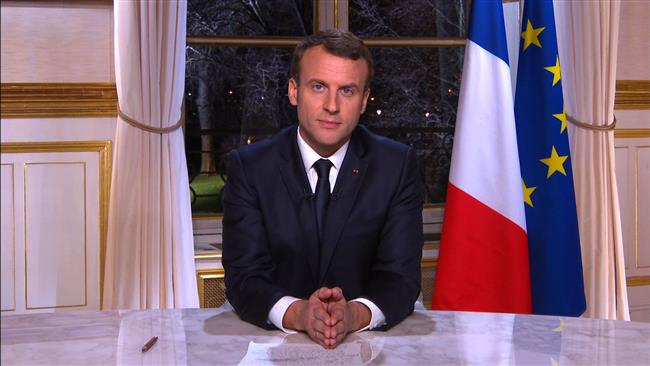
France, meanwhile, confirmed that it would provide 1.2 billion euros ($1.3 billion) to fight the virus in Africa.
Non-permanent member Estonia, for its part, said holding the Security Council meeting was “better late than never,” a jab at those seen as delaying the talks.
‘Missing in action’
Ahead of the meeting, the United States and China had been arguing over the origins of the virus, which President Donald Trump has referred to as the “Chinese virus.”
There were two competing draft resolutions up for debate.
One, spearheaded by Tunisia on behalf of the 10 non-permanent members and obtained by AFP, calls for “an urgent, coordinated and united international action to curb the impact of COVID-19.”
It calls for the Security Council to “monitor the impact of the COVID-19 pandemic on international peace and security and asks the Secretary General to brief the Council on such developments when appropriate.”
It also seeks an “immediate global ceasefire to allow for adequate humanitarian response” to the pandemic.
That draft resolution has been in development since March 30 and has only been discussed by the 10 non-permanent members.
The second text, proposed by France, focuses on Guterres’s call last month to cease all hostilities around the world as part of a “humanitarian pause” to fight the pandemic.
That one has only had input from the five permanent members — Britain, China, France, Russia and the United States — which diplomats from non-permanent countries told AFP has been “very frustrating.”
France has argued that the so-called P5 need to smooth out their differences before any wider negotiations with the council.
But efforts to convene a meeting of the five have been stymied by the hospitalization of British Prime Minister Boris Johnson, who has the COVID-19 illness, and Chinese reticence to participate without first setting a clear agenda.
While Gutteres has been outspoken about the crisis and the 193 members of the UN General Assembly unanimously adopted a resolution calling for “cooperation,” an ambassador to the UN described the Security Council as “missing in action.”
In the Security Council, at least nine votes out of 15 are necessary to adopt a resolution, without a veto by one of the five permanent members.
Source: AFP