4, March 2020
Southern Cameroons Crisis: Yaounde ups payment ID rules for senders and recipients of mobile money transactions in Ambazonia 0
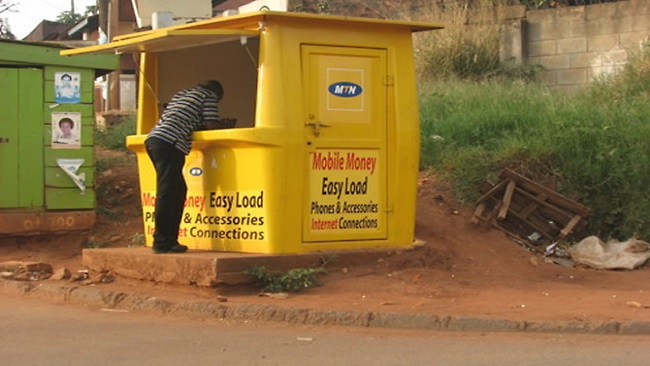
A top minister in the Biya Francophone regime in Yaounde recently told local divisions of Orange and MTN to impose mandatory identification for senders and recipients of mobile money transactions, in the wake of a spate of ransom payments made over cash transfer services.
Territorial administration minister, Paul Atanga Nji took the hard-line position following a meeting with the two operators, highlighting the issue of payments being made following demands from armed militia the regime reportedly created in Southern Cameroons to stifle the Ambazonia uprising.
Minister Paul Atanga Nji wanted by the Special Criminal Court for financial crimes against the state of Cameroon revealed that an estimated XAF540 million ($916,064) in ransoms had been paid by Southern Cameroonians, using a range of cash transfer services in the last four months.
Although not specifying the sums which came from Orange or MTN users, Nji informed representatives from the companies they must introduce an identification process for both senders and recipients of funds.
Mobile money transfers between users of the same platform are traced as both parties have to be registered. However, when transfers are sent to those on another operator, the transaction goes via a code, which is then redeemed at a physical agent rather than deposited directly in an account.
Operators were given 45 days to comply with the request, with both reportedly supportive of the move.
By Staff lady Chi Prudence Asong with files from Mobile worldlive.com

















4, March 2020
Women bearing brunt of ongoing violence in Southern Cameroons 0
Giving birth in the bush, being forced into prostitution, unable to go to school, struggling to take care of family – women in Cameroon’s Anglophone regions are suffering as the crisis continues, unabated, as women such as Pearl, 30, scramble to protect their families and survive during difficult times.
“There was shooting from morning until night, and we don’t know who’s shooting,” says Pearl, who fled on December 10 with her husband and three children– and the rest of Ekona village. It took three hours for the village to get to safety in the bush.
She remembers the buildup of violence around the beginning of October, when she gave birth to her daughter in the local hospital.
“I was so stressed because I heard the gunshots, I couldn’t nurse the baby for three days after I gave birth,” she said. And she was one of the lucky ones.
North-West and South-West regions erupted in violence in 2017 after a Francophone central government crackdown on peaceful protests. The repression against Anglophone teachers and lawyers rallying against alleged discrimination spurred an armed separatist movement and self-declaration of independence for so-called Ambazonia.
This conflict has escalated between armed separatists, and the Cameroonian security forces in the villages and towns, as people flee both sides, not knowing if a stray bullet will kill their family members or themselves.
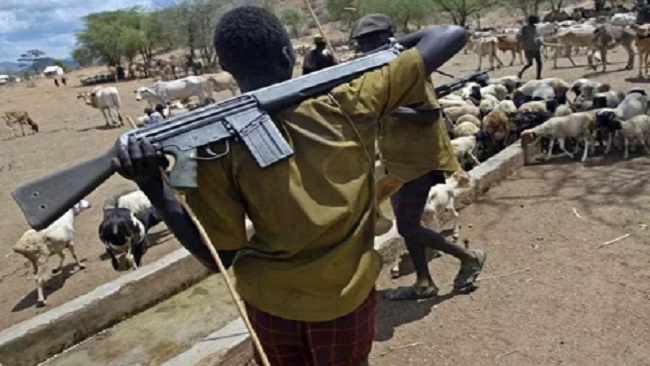
The various armed groups are fighting against the Cameroonian military, specifically the Rapid Intervention Battalion (BIR), the elite fighting unit accused of human rights abuses in the far north of the country.
While the Anglophone crisis has escalated over the past three years, women who experienced major tragedy in one blow continue to suffer.
Giving birth in the bush
At Mount St. Mary hospital in Buea, General Supervisor Isadore Ngunyam reflects on the spike in cases of sexual violence, rape, and gunshot wounds. But pregnant women delivering babies in the bush has also increased, he says, because they are unable to access medical assistance.
“Just two days ago, a lady delivered somewhere in Munya. Because they were not able to get here or somewhere else nearby, they got here two days later. As soon as they arrived, unfortunately, we lost the child,” he said. “There are so many cases like this, we can’t even count.”
Giving birth in the bush has become normalized, even for the international agencies and non-governmental organisations who are trying to help.
The UN Population Fund (UNFPA) works throughout Cameroon, where it handles social and reproductive health. Part of its work is providing kits, including rape kits, caesarian birth kits, and even bush kits for those who need them.
Each bush kit contains the essential items for women who are giving birth in the bush — a clean plastic sheet to give birth on, gloves, scissors to cut the cord, as well as diapers for the newborn. UNFPA has carried out bush kit distribution since 2018.
Cameroon, unlike a number of other countries in Central Africa, was not a war-torn state. Cameroonians lived in relative peace in the Anglophone regions until three years ago. There was no need to flee to the bush; major attacks on civilians in the Anglophone regions were not commonplace before the separatists took up arms.
“We were taught in history class, that Cameroon, our country, is the most peaceful country in Africa, and the world,” says Jacqueline, who works at the South-West/North-West Task Force, a civil society group that focuses on helping women.
“Everything is changing, and it is affecting women seriously because they have never experienced this kind of situation — every day you learn a new strategy to deal with it. Every day. Women give birth in the bushes, there’s gang rape, and women have been tortured — it’s terrible,” she says.
She speaks of a story of one woman in Bamenda, the biggest city in the Anglophone North-West region, who was raped and then shot in her vagina.
“I think every woman in Cameroon now, especially in the North-West and the South-West, feels useless. There’s no point in giving birth to a child who could be killed at any time. There’s no need to get pregnant, because you might end up in the bush,” she adds.
Vulnerable young women become prey
The desperation of some families, who find themselves barely surviving, turn to vulnerable family members, creating a cycle of abuse.
Joyce, 21, was in the lower sixth at school in Buea, the capital of the South-West region, where children can go to school, relatively out of harm from the separatists.
Her parents were living in a nearby village until gunshots and arson by the military became a regular occurrence in their hamlet, and they fled to the jungle, along with most of the community. Joyce was visiting her family on school holiday, and ended up there too, unable to go to back to school.
“I met a guy in the bush and he said he was going to help me leave there and come to town in Kumba,” says Joyce. Desperate to get back to school, she followed him. “I got pregnant. Since then I haven’t seen him,” she says.
Her nightmare continued after she moved in with her unmarried aunt, who rents a house in Kumba. Although Joyce’s aunt sells food, she says it was not enough to pay the rent. She and other families in town struggle to pay their rent, an expense they did not have in the village when they were living in their own home before the crisis broke out.
“When she sells food, men and boys come and tell her they like me, so she tells them to pay her so I will go and sleep with them,” says Joyce, her voice dropping to almost a whisper. She looks older than her 21 years, wearing a large, long brown dress and a youthful neon pink head wrap, the only sign betraying her true age.
The men pay her aunt 2,000 Central African CFA Francs, the equivalent of three euros, every time she is forced to have sex with a man.
“I feel bad. It’s not good. I’m not happy doing it, but I don’t have anywhere to go, that’s why,” she says, her eyes brimming with tears.
“People laugh at me and they say I’m sleeping with men old enough to be my father. I don’t care about them because I know deep in me, it’s not what I want,” she adds.
Going back to the bush with her parents is not an option, because Joyce is still breastfeeding her 2-month old son.
Fractured families trying to survive
One casualty of the ongoing crisis is the family unit — those who have not had a loved one killed or maimed in the fighting have lost touch with them in the scramble for safety during attacks by soldiers or the separatists. Twenty-year-old Chloe, from Berera village, lives with her parents and two-year-old child in Mamfe. They fled to the safety of town after her brother, Caius, was shot in the head and left for dead. He was walking to Mamfe and did not see who shot him.
While Caius receives medical treatment in Douala, Chloe says her husband, Donald, fled to neighboring Nigeria after he witnessed the whole village burnt down and saw people killed. Chloe says life is expensive in Mamfe, but would she think of joining her husband in Nigeria?
“Nigeria is too stressful,” she laughs nervously. Donald calls her from a refugee camp when he can.
“He tells me they have nothing to eat, that they are suffering. We say we’re better here in Cameroon than in Nigeria.”
While Chloe speaks to her husband, Nora, 26, has no idea about the whereabouts of her partner, the father of five-month-old Hosea, asleep but breathing heavily in her arms. He has never seen Hosea. Everyone fled when the military burnt their house and killed her brother in a close-by village last May.
“We don’t know if my husband’s actually dead or if he ran to an area that has no [telephone] network,” says Nora. She leaves Hosea with a neighbor and goes back to the village during the day to pick cassava to sell in town so she can pay the rent in Mamfe.
Children desperate for education
The majority of women with children say they left the village to escape the gunfire, but they also want to give their children an education. The crisis began in part due to the influx of Francophone teachers in to Anglophone classrooms in the North-West and South-West regions. The separatists have prevented children from going to school as part of their action against the government.
Some children in the regions have not attended school for three years– the schools in the villages located on the main road from Buea towards Kumba and further on to Mamfe are empty. Many of the bungalow cinderblock-built schools have been torched; others have sprouted vegetation growing in cracks in the walls; all are abandoned.
In Buea, however, the seat of the South-West region, children are attending school in relative safety. The military remain a large, looming presence on the streets of the regional capital.
Victorine, a 16-year-old student in Form 3, is currently living in Buea with her aunt. She excels at geography and hopes to become a doctor one day.
“I love school…but my four brothers and sisters are still suffering in the bush. There’s malaria and a lot of insecurity and I worry about them,” she says. “I want them to have the opportunity to go to school and continue their study,” she adds.
Victorine attends classes with 13-year-olds, while her friends of the same age are in Form 5. She is behind because she did not attend school for three years.
Relative safety, but daily life difficult
Other families in town struggle to pay their rent, an expense they did not have in the village when they were living in their own home. Emily, 28, exhales loudly when asked when she left her village to come to Buea with her husband and four children.
“We came on August 16. They burned our house down, my children had not been going to school for two years, and we were living in the bush for six months before coming here,” she says, looking spent after cataloguing the events in her life over the past year.
Emily’s brother-in-law is helping pay the school fees for her children, and the whole family lives with him, which can be difficult, she says.
Jobs are scarce in the Anglophone areas, as Anglophones say government jobs frequently go to Francophones, one of the reasons for the start of protests in the first place.
Emily, like other women, sells fried doughnuts, called ‘gateaux’ or ‘puff-puff’ on the street to make money for school fees, food and rent.
Women say neither the military nor the Amba Boys separatists respect women and children, according to the numerous interviews carried out by RFI in the region. Women and children have been shot, killed, set on fire, just like the boys and men in the Anglophone regions.
Agatha barely escaped with her life the day separatists surrounded the plantation she worked on. She had worked for the Cameroonian Development Company (CDC), the country’s second-largest employer, for 28 years.
The Anglophone separatists reportedly consider those who work for CDC, a parastatal company, as traitors, and attack workers, cutting off their fingers.
As they rushed in, the workers, including Agatha, were bending back the metal fence to escape into the bush.
“The military were shooting and the Ambazonia forces were shooting all over the place,” says Agatha. Her back is scarred from the metal fence that cut her as she fled. After four days in the bush, relatives sent her mobile money and she used that for herself and fellow workers to come to Buea.
She also lives in Kumba and is struggling to feed her children. The stress of the situation has had a negative impact on her health. She collapsed one month after leaving the bush.
“They did tests and found out I have high blood pressure,” says Agatha.
An organisation with a vision
The enormity of the crisis is not lost on Baudouin Akoh Ngah, the founder and head of Global Forum for the Defense of the Less Privileged (GFDLP) in Buea. Ngah’s organization provides a number of services for the neediest, from providing legal aid, to helping re-register those who have lost their identification cards and birth certificates.
But Ngah’s biggest project to date is his plan to open a crisis centre for the most vulnerable Anglophones, with a focus on young women.
“A lot of them are victims of gender-based violence… and young girls who have been displaced have health issues,” he tells RFI, while standing on one hectare of land outside of Buea where he plans to build a facility that will incorporate job training, healthcare, and a small school.
“We would like to have part of the facility where visiting doctors can see patients,” he says, pointing to an area covered in banana trees. Another section is earmarked for food processing training for young girls, which would be separate from the small school for displaced children that he envisions.
The land is property of GFDLP — now he needs partners to make his plans to come to fruition.
The possibility of a place that could help the neediest is welcome for people like former CDC worker Agatha, who are barely surviving.
“Sister, for now, I get no hopes,” she says in Pidgin English. “Because when you get money or do something, you get hopes. But I don’t do anything now, so I not got no hopes.”
*Names have been changed for the safety and security of those featured in this report
Culled from RFI