1, November 2019
Southern Cameroons War: Peace prospects slim 0
A month after Cameroon held a national dialogue hoping to resolve the country’s bloody anglophone separatist crisis, the prospect of peace still seems far away.
Armed anglophone separatist forces have clashed with government troops almost daily over two years of escalating conflict in the North West and South West regions of the central African country.
The population has been hostage to the violence, which has claimed more than 3,000 lives in English-speaking parts of the mostly francophone country, according to the International Crisis Group. More than half a million people have abandoned their homes.
The Yaounde government responded to international pressure by organising the talks that took place from September 30 to October 4, leading to the adoption of dozens of recommendations to restore peace.
French Foreign Minister Jean-Yves Le Drian will be in Cameroon on Wednesday for a two-day visit, with the declared aim of encouraging President Paul Biya “to follow up on this dynamic”.
“The population in the crisis zones is still confronted with the same realities as prevailed before the dialogue,” said Blaise Chamango, an activist in Buea, the capital of the South West region.
– ‘Bandit groups take advantage’ –
Schools in some districts “remain closed and inaccessible,” he added, while “dead city” protest strikes imposed every Monday by separatist forces have not stopped.
Several attacks by armed groups have been reported in the past weeks, notably in the North West, reputed to be the more rebellious.
“Atrocities have resumed strongly in Bamenda,” the North West regional capital, Cameroon state radio declared last week.
“There are people who still have weapons, who are still in camps,” acknowledged George Ewane, the spokesman for the national dialogue.
“We’re not necessarily dealing with separatists, but with bandit groups who take advantage of the situation.”
Ewane said that 58 fighters had laid down their arms in the South West earlier this month. “The situation gets better by the day… The grand dialogue has brought much comfort to people’s hearts.”
The five days of talks were boycotted by most separatist leaders, but gathered more than 1,000 participants. They recommended “special status” for the North West and South West regions, home to most of the anglophone minority that makes up 16 percent of Cameroon’s population.
The language split is a vestige from federation in 1961, a year after independence, when a British-ruled territory on the Nigerian border joined with the former French Cameroons.
The federal system was replaced in 1972 by a united republic. Some separatists have long argued that centralised francophone power neglected the anglophone regions. In 2017, the tension erupted into violent conflict.
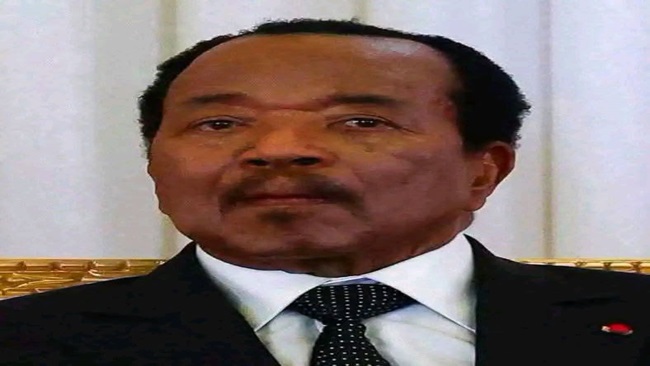
Biya, who has maintained authoritarian rule since 1982, hailed the resolutions from the dialogue as “rich and varied”. He promised that they will be “the object of attentive and diligent examination with a view to implementing them.”
– ‘Special status’ –
An expert group is currently working on “the content of the special status” and the government is drawing up legislation to give shape to such status in practice, Ewane said.
“We would like the bill to be put to parliament during the next parliamentary session,” he added, which is in November.
The anglophone population remains “rather sceptical”, said activist Chamango, “because they no longer have confidence in the government.”
The recommendations were also immediately rejected by separatist leaders based abroad.
Absent from the dialogue amid talk of his failing health, Biya surprised many by ordering the release of 333 detainees linked to the crisis, as well as 102 opposition activists arrested during peaceful protests against his re-election in 2018.
Those freed included the president of the Movement for the Renaissance of Cameroon (MRC), Maurice Kamto, who challenged Biya at the polls and was released after eight months in jail.
“The grand national dialogue does not seem to have brought a new and lasting solution to the demands of the anglophones regarding the shape of the state,” Kamto said as he came out of prison.
He argued that peace required “direct talks with the political representatives of the armed groups that control the terrain”.
At the end of August, the most influential separatist chief, Julius Ayuk Tabe, was given a life jail term by a military court in Yaounde, with nine of his supporters. From jail, he dismissed the dialogue as a “non-event”.
But government spokesman Rene Emmanuel Sadi has said: “We don’t envisage any dialogue more inclusive than the one… that just took place in Yaounde.”
Culled from AFP







1, November 2019
Girl Miraculously Survives French Cameroun Landslide 0
A young girl survived miraculously after she got buried by a landslide in Western Cameroon.
Her father, Tabou Victor, told CNN that the 12-year old survivor was buried on Monday night after his house collapsed due to the landslide. He recalled hearing them cry for help during the mishap. He was able to save his other children — two girls and a boy — by breaking the back door and pulling them out.
He got a bruised on his left eye and a fractured arm. His children were also severely injured, while the 18-year old daughter died in the hospital.
Rising Death Toll
The landslide was triggered by torrential rain on Monday while the residents are sleeping at night.
One survivor, Albert Kenge, said that it all started around 10:00 p.m. He first heard a loud noise and saw a huge cloud of dust. “Then, the mountain suddenly collapsed,” he told Reuters news agency.
Ever since the rescue mission has started, workers have recovered the bodies of 26 children and four pregnant women, according to the local media Cameroon Radio Television (CRTV).
The rescue mission is still going on as of Wednesday, but the recent death toll has risen to 42 people, from 37 on Tuesday.
Authorities issued an evacuation order due to the fear of more landlines to come as the rains continue.
The government had warned them…
Fonka Awa Augustine, the government of the region, said that they have warned the residents about the ground instability of the areas but people still built their houses there. The slopes in the area were making the rescue mission more difficult, Augustine added.
An inspection will be done by a delegate of the Prime Minister to evaluate the situation and decide the appropriate measures to be taken, Augustine also said.
President Paul Biya extended his condolences to the victim. “I am saddened by the death of several compatriots,” he said in a message addressed to the governor of the region.
The government also pledged to endow financial assistance on the medical bills of the eight survivors, including Victor’s family.
Non-stop Rain in Central Africa
Even if the rainy season of Central Africa, the region is still experiencing heavy rains that caused severe flooding. At least 30,000 people Cameroon’s neighbor country, the Central Africa Republic, lost their homes.
Nearly one million South Sudanese were also affected by the flood caused by the rain that has been going since July, the United Nations reported.
And the problem will not end yet once the flood recedes due to food scarcity. For at least a month, families might not be able to support themselves due to a considerable amount of crops and livestock damage.
Source: Nature World News