25, June 2021
$335m Covid-19 fund investigation: French Cameroun prosecutors question PM Ngute for three hours 0
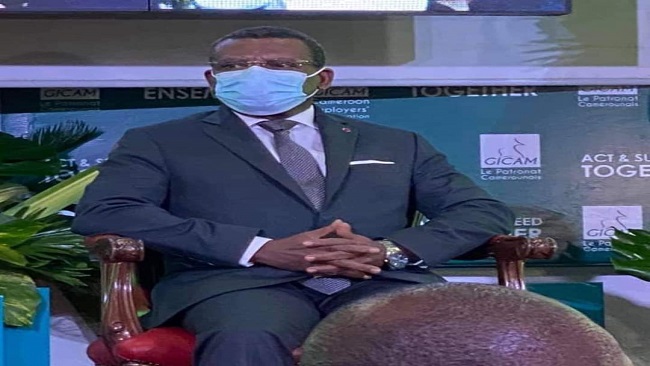
Prime Minister Dion Ngute was questioned by Francophone prosecutors recently about Cameroon’s response to the coronavirus outbreak and the alleged disappearance of the country’s coronavirus relief fund.
The prosecutors are reportedly looking into how about $335 million of Cameroon’s coronavirus relief fund has gone missing.
Cameroon Intelligence Report understands that Prime Minister Dion Ngute, who was questioned as a witness for three hours in his residence in Yaoundé is not under any criminal investigation.
Equipment for the coronavirus pandemic in the country has also gone missing. Reports say some seven government ministers have so far been called to answer questions before an auditing panel over the matter.
Accordingly, the funds that had been allocated to ministries went missing along with the personal protective equipment donated to Cameroon by the Chinese mega-investor Jack Ma to curb the spread of the coronavirus.
As a result, the 88-year-old President Paul Biya, ordered the investigation. But reports say Cameroonians are doubtful that the investigation will lead to any meaningful outcome.
A source at the Ministry of Public Health hinted this reporter that the money was used to pay accrued salaries owed the military.
By Rita Akana in Yaoundé















25, June 2021
Runway lights malfunction disrupts operation at Douala International airport 0
Air travelers have been warned that a “technical issue” affecting lighting at Cameroon’s largest airport, Douala International Airport, will affect their journeys, a government official said on Thursday.
Cameroon’s Minister of Transport, Jean Ernest Massena Ngalle Bibehe said, there had been a problem with the lighting on the runways.
“The malfunctions are linked to an insulation fault of cables,” Ngalle Bibehe said in a statement on Thursday.
“This situation had as a direct consequence the postponement of certain flights departing from this airport and the unfolding of other flights which were to land there, thus causing disruptions in the operating programs of the airlines,” he added.
The minister assured that competent authorities were actively working to ensure normal activities resume at the airport in the shortest possible time.
Source: Xinhuanet