6, June 2021
Burkina Faso: More than 130 killed in deadliest attack 0
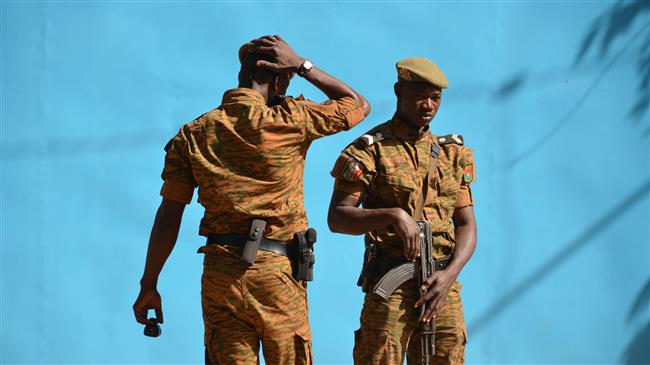
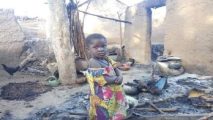
Suspected jihadists have massacred at least 138 civilians in Burkina Faso’s volatile north, in the deadliest attacks since Islamist violence erupted in the west African country in 2015, officials said Saturday.
President Roch Marc Christian Kabore denounced an attack near the borders with Mali and Niger, where jihadists linked to Al-Qaeda and Islamic State have been targeting civilians and soldiers.
“Several injured have succumbed to their wounds and new bodies have been discovered. The still provisional toll is 138 deaths,” one local official said Saturday evening.
“The bodies were buried in mass graves,” the official said, adding that “there are dozens of injured” after the overnight attack by armed assailants.
“We must remain united and solid against these obscurantist forces,” Kabore said, condemning the massacre in the village of Solhan as “barbaric” and “despicable.”
Declaring three days of national mourning, ending Monday night at 11:59 pm, the government stated that “terrorists,” a term for jihadists, killed civilians of all ages and set fire to homes and the main market.
A security source lamented “the heavy human toll, the worst recorded to date,” while warning it could still increase.
The assailants struck around 2:00 am (0200 GMT) against a position of the Volunteers for the Defence of the Motherland (VDP), an anti-jihadist civilian defence force which backs the national army, before attacking homes and carrying out “executions,” a local source said.
Opposition leader Eddie Komboigo demanded that “the massacre of our people, we never tire of repeating, must stop unconditionally. Every measure must be taken to protect the Burkinabe” people.
The VDP was set up in December 2019 to help Burkina’s poorly-equipped military fight jihadists but it has suffered more than 200 fatalities, according to an AFP tally.
The volunteers are given two weeks’ military training before working alongside the security forces, typically carrying out surveillance, information-gathering or escort duties.
‘Neutralise these terrorists’
The government said that “the defence and security forces are at work to neutralise these terrorists and restore calm to populated areas.”
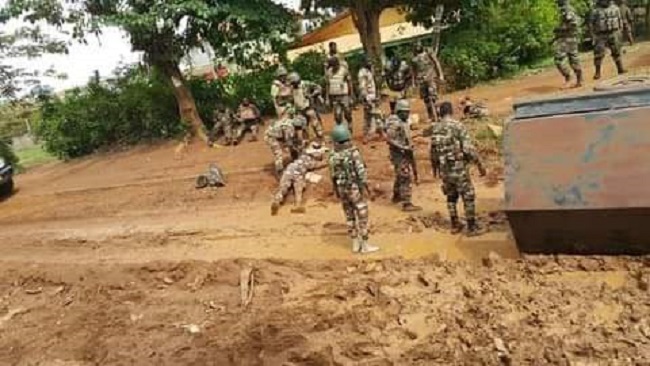
A security forces official said that men were deployed to secure populated areas and to remove and bury bodies.
Solhan, a small community around 15 kilometres from Sebba, the main city in Yagha province, has suffered numerous attacks in recent years.
On May 14, Defence Minister Cheriff Sy and military top brass visited Sebba to assure people that life had returned to normal, following a number of military operations.
The massive attack by suspected jihadists came hours after another attack Friday evening on Tadaryat village in the same region in which 14 people were killed, including an armed volunteer who had come to help them.
Since 2015 Burkina Faso has struggled to fight back against increasingly frequent and deadly jihadist attacks from groups including the Group to Support Islam and Muslims (GSIM) and the Islamic State in the Greater Sahara (EIGS).
The attacks first started in the north near the Mali border, but have since spread to other regions, particularly in the east.
Around 1,400 people have died and more than a million have fled their homes.
Source: AFP












7, June 2021
Leader of Boko Haram is dead, says rival militant Islamist group 0
The Islamic State West African Province (ISWAP) militant group said in an audio recording heard by Reuters on Sunday that Abubakar Shekau, leader of rival Nigerian militant Islamist group Boko Haram, was dead.
Shekau died around May 18 after detonating an explosive device when he was pursued by ISWAP fighters following a battle, a person purporting to be ISWAP leader Abu Musab al-Barnawi said on the audio recording.
“Abubakar Shekau, God has judged him by sending him to heaven,” he can be heard saying.
Two people familiar with al-Barnawi told Reuters the voice on the recording was that of the ISWAP leader.
A Nigerian intelligence report shared by a government official and Boko Haram researchers have also said Shekau is dead.
Last month, Nigeria’s military said it was investigating Shekau’s alleged death, also reported in Nigerian and foreign news outlets. The audio statement, first obtained by local media, is ISWAP’s first confirmation that its arch rival in the Lake Chad region has been killed.
Islamic State “are consolidating the whole area, the Lake Chad region and (Shekau’s stronghold),” said Bulama Bukarti, an analyst specialising in Boko Haram at the Tony Blair Institute for Global Change.
“ISWAP had framed Shekau as the problem and he was the only person they wanted to remove,” Bukarti said of Islamic State’s attempt to lure Boko Haram commanders and fighters to their side.
Shekau’s death could lead to the end of a violent rivalry between the two groups, enabling Islamic State West Africa Province (ISWAP) to absorb Boko Haram fighters and consolidate its hold on territory in northeastern Nigeria, political analysts said.
That would allow ISWAP to focus its attention on the government and military, whose war efforts are languishing.
Shekau ‘killed himself instantly’
Boko Haram’s leader was reported to have been killed on several occasions over the last 12 years, including in announcements by the military, only to later appear in a video post.
In the audio recording, the man identified as al-Barnawi said his fighters had sought out the warlord on the orders of the Islamic State leadership, and battled Boko Haram insurgents until Shekau fled.
ISWAP chased him down and offered him the chance to repent and join them, he said.
“Shekau preferred to be humiliated in the afterlife than getting humiliated on earth, and he killed himself instantly by detonating an explosive,” he said.
Boko Haram grabbed headlines worldwide with its 2014 kidnapping of more than 270 schoolgirls from the town of Chibok, sparking a global campaign for their return dubbed #BringBackOurGirls, backed by the likes of Michelle Obama.
Around 100 of the Chibok Girls are still missing, and some are thought to have died in captivity.
Shekau led the transformation of Boko Haram from an underground Islamic sect in 2009 to a full-fledged insurgency, killing, kidnapping and looting its way across northeast Nigeria.
The group has killed more than 30,000 people, forced around 2 million people to flee their homes and spawned one of the world’s worst humanitarian crises.
ISWAP was previously part of Boko Haram before its split five years ago, pledging allegiance to Islamic State. The schism was caused by religious ideological disagreements over the killing of civilians by Boko Haram, to which ISWAP objected.
(REUTERS)