5, April 2020
Queen Elizabeth will ask Britain to show resolve against coronavirus in rare address 0
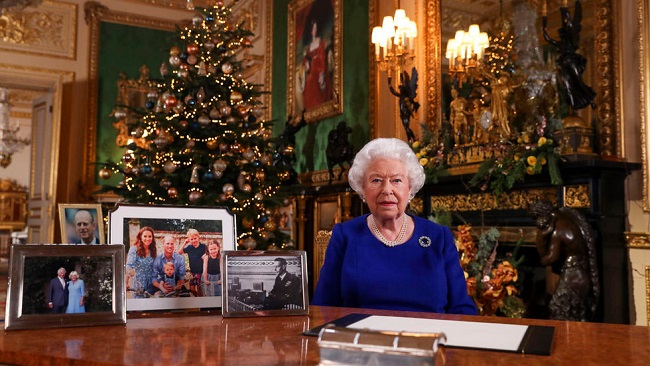
Queen Elizabeth will call on Britons to show the same resolve as their forebears and take on the challenge and disruption caused by the coronavirus outbreak with good-humoured resolve when she makes an extremely rare address to rally the nation on Sunday.
In what will only be her fifth special televised message to the country during her 68 years on the throne, the queen will also thank healthcare workers on the front line and recognise the pain already suffered by some families.
“I hope in the years to come everyone will be able to take pride in how they responded to this challenge. And those who come after us will say that the Britons of this generation were as strong as any,” the 93-year-old monarch will say, according to extracts released by Buckingham Palace.
“That the attributes of self-discipline, of quiet good-humoured resolve and of fellow-feeling still characterise this country.”
On Saturday, the government said the death toll of those who had tested positive for the virus rose by 708 in 24 hours to 4,313, with a 5-year-old among the dead, along with at least 40 who had no known previous health conditions.
Health officials have cautioned that high fatalities were expected for at least another week or two even if people complied with strict isolation measures.
Like many countries in Europe, Britain is in a state of virtual lockdown, with pubs, restaurants and nearly all shops closed, and social gatherings banned.
Britons have been told to stay at home unless it is absolutely essential to venture out to try to stop the spread of the epidemic. Prime Minister Boris Johnson, who is still in self-isolation, and a number of senior ministers have been among those who have tested positive for the virus.
‘As strong as any’
“I am speaking to you at what I know is an increasingly challenging time,” Elizabeth will say in what has been framed as a deeply personal message.
“A time of disruption in the life of our country: a disruption that has brought grief to some, financial difficulties to many, and enormous changes to the daily lives of us all.”
Sunday’s address, which will be aired at 1900 GMT, was recorded at Windsor Castle where the monarch is staying with her husband Prince Philip, 98.
In order to ensure any risk to the queen herself was mitigated, it was filmed in a big room to ensure a safe distance between her and the cameraman, who was wearing personal protective equipment and was the only other person present.
Earlier this week, Elizabeth’s son and heir Prince Charles, 71, came out of self-isolation himself after seven days following a positive test.
The queen usually only broadcasts to the nation with her annual televised Christmas Day message and this special address will be only the fifth she has made.
The last was in 2012 following celebrations to mark her 60th year as queen. That came a decade after the preceding broadcast which followed the death of her mother, the Queen Mother, in 2002 when she thanked Britons for their messages of condolence.
She also gave an address at the start of the Gulf War in 1991, and most famously, delivered a sombre live broadcast after the death of her daughter-in-law Princess Diana in a Paris car crash in 1997 amid a national outpouring of grief and criticism of the royal family’s response.
(REUTERS)











5, April 2020
France reports 357 new coronavirus hospital deaths in 24-hour period 0
France on Sunday reported 357 coronavirus deaths in hospital in 24 hours, a lower tally than in each of the previous two days, bringing the country’s total death toll to 8,078.
The total death tally included 5,889 patients who died in hospital, and 2,189 people in old age homes and other medical facilities, a government statement said.
(FRANCE 24 with AFP)