20, March 2026
Smarter Water Use Could Feed 10 Billion and Create Nearly 250 Million Jobs 0
Rebalancing water use across the global food system is key to meeting future food demand sustainably and could generate 245 million long-term jobs, largely in Sub-Saharan Africa, according to a new World Bank Group report launched today.
The report – Nourish and Flourish: Water Solutions to Feed 10 Billion People on a Livable Planet – notes that current agricultural water management practices, marked by overuse in some countries and underuse in others, can only sustainably support food production for less than half the global population. By 2050, 10 billion people will need to be fed. Addressing both the overuse that depletes water in stressed regions and the underuse that leaves available water and productive capacity untapped in water-abundant regions will be essential to meet that demand sustainably.
It introduces a new framework for agricultural water management that links water availability with food production and trade. By categorizing countries based on water stress and their food import or export status, the framework helps identify where expanding rainfed agriculture can increase food production, where irrigation investments can unlock jobs and growth, where water use must be rebalanced to protect ecosystems and future productivity, and where trade offers a more sustainable path than local production.
“The way we manage water for food will have profound implications for jobs, livelihoods, and economic growth. By making smarter choices about where crops are grown, how water is allocated, and how trade supports food security, we can strengthen resilience, expand opportunity, and safeguard the resources which we all rely on,” said Paschal Donohoe, Managing Director and Chief Knowledge Officer of the World Bank Group.
Realizing these outcomes will require stronger private sector participation and financing alongside public investment, supported by effective policies, institutions, and regulations to boost food production, create jobs, and support sustainable growth. Public funding alone cannot deliver the sustained services, innovation, and scale needed to expand irrigation, improve performance, and maintain results. Farmers, who are the primary users of irrigation and its main investors, are already willing to co-invest when access to finance, quality equipment, markets, and digital tools reduces the risks and transaction costs they face.
“When investments in infrastructure and natural resources, business-enabling policies, and private capital mobilization come together, the impact can be greater than the sum of its parts,” said Guangzhe Chen, Vice President for Planet at the World Bank Group. “By linking global evidence with country realities, this framework can help policymakers navigate trade-offs and adapt food production to today’s water and climate realities—delivering food, jobs, and resilience together.”
Expanding irrigation where water is available, alongside modernizing existing systems, is estimated to require an additional $24–70 billion per year through 2050. Governments already spend roughly $490 billion annually on agricultural support, most of it on subsidies. Redirecting a portion of current spending—combined with regulatory reform, use of blended finance, and public-private partnerships—will crowd in private capital, including co-investment by farmers themselves, and support financially sustainable water and food security.
The World Bank Group works alongside countries, companies, partners and people to translate these insights into action by combining policy reform, public investment, and private capital to strengthen food systems, create jobs, and protect natural resources. It has committed to doubling annual agribusiness financing to $9 billion by 2030 and mobilizing an additional $5 billion per year under the AgriConnect initiative to help smallholders move from subsistence to surplus. Through the Water for Food and Water for the Planet pillars of its Water Strategy Implementation Plan, the World Bank Group addresses the twin challenge of water and food security by strengthening food production systems and improving farmer livelihoods.
Reported by the World Bank Group




















20, March 2026
Iran debuts multi-warhead ‘Nasrallah’ missile to strike Israel’s oil refineries 0
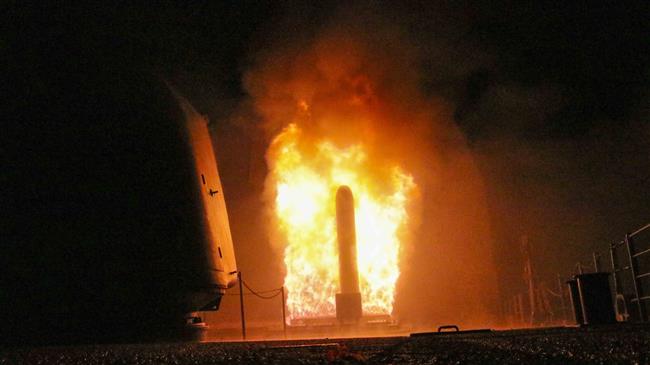
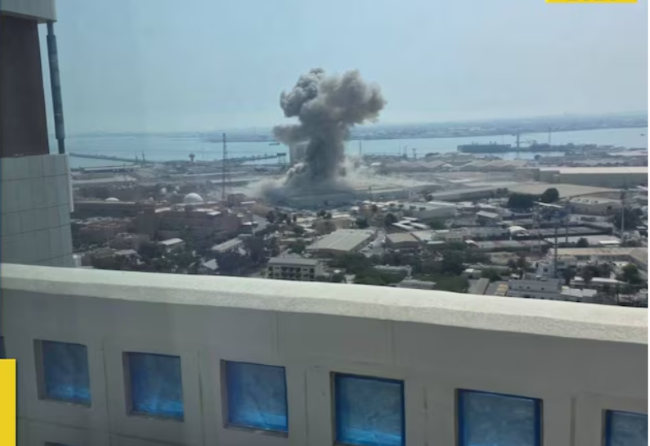
The Islamic Revolution Guards Corps (IRGC) has launched the 65th wave of its ongoing retaliatory Operation True Promise 4 targeting Israel’s oil refineries, debuting multi-warhead “Nasrallah” ballistic missile.
In a statement on Thursday, the IRGC said that the fresh wave of retaliatory strikes targeted Ashdod and Haifa oil refineries, which are among the Israeli regime’s biggest refineries, using Nasrallah ballistic missile system for the first time.
Nasrallah is the upgraded and the guided version of Qadr missiles used in previous strikes against US military assets in the region and targets in the Israeli-occupied territories.
The 65th wave employed a variety of other domestically manufactured long-range precision missiles, the statement said.
The IRGC has so far employed a variety of powerful weaponry in the latest strikes, including multi-warhead Qadr missiles, Kheibar Shekan missiles, Emad missiles, and Haj Qassem missiles.
According the statement, the new retaliatory wave of strikes also employed medium-range missiles of Qiyam and Zolfaghar for hitting US military assets in Al Kharj Air Base in Saudi Arabia, which is the main logistics and refueling center for F-16 and F-35 fighter jets as well as AWACS surveillance aircraft.
Furthermore, the same missile targeted Fujairah Sheikh Isa in the United Arab Emirates (UAE), which serves as the headquarters and the data center control and the communication center of the US military in the region.
The US terrorist army forces at al-Zafra base in the UAE, which played a supporting and intelligence role in the attack on Iran, was also targeted by medium-range missiles of Qiyam and Zolfaghar and long-range ballistic missile of Kheibar Shekan, which carries multiple warheads.
Operation True Promise 4, a sequel to the IRGC’s previous instances of successful reprisal against adversaries, began late last month momentarily following the launch of Washington’s and Tel Aviv’s latest bout of unlawful aggression targeting the Islamic Republic.
The IRGC has pledged to sustain the reprisal until the enemies’ “complete defeat.”
Sources from Hebrew media reported strong and consecutive explosions heard in northern Israeli occupied territories, including Haifa, Kiryat, Carmel, and the Golan Heights. Israeli prime minister Benjamin Netanyahu held his press briefing in a reinforced underground bunker.
The missile strike by Iran resulted in significant damage to aircraft and infrastructure at Israel’s Ben Gurion Airport.
The spokesperson for the Central Command of the Iranian Armed Forces, in a statement, emphasized that all US and Israeli assets would be targeted as part of Iran’s retaliatory actions, taking full responsibility for the attack.
“As previously stated, we will target all American and Zionist regime infrastructure, and we officially accept responsibility for this operation,” the spokesperson added.
As a result of the damage inflicted on its aviation sector, Israel’s airline industry has faced unprecedented disruption.
The Ben Gurion airport’s management announced a 50% reduction in international flight capacities, and several airlines, including El Al, were forced to cancel flights, with El Al halting all flights scheduled between March 21 and March 27.
According to Israel’s Channel 12 News, the Israir carrier also suspended all scheduled flights until March 31 and stopped selling tickets for the foreseeable future, citing new restrictions imposed by the so-called ministry of transport.
The airline also mentioned limited capacity on remaining flights, though it would attempt to accommodate some passengers.
The strike comes just days after a bombing campaign that targeted fuel depots in Iran.
In Israeli occupied territories, the attack has sparked widespread panic, with reports of long queues at airports, ticket offices, and even border crossings as settlers attempt to flee the occupied lands.
Concerns about further missile attacks have led to fears of being trapped in the event of additional strikes, especially after the announcement of the 50% flight capacity reduction.
Source: Press TV