26, September 2026
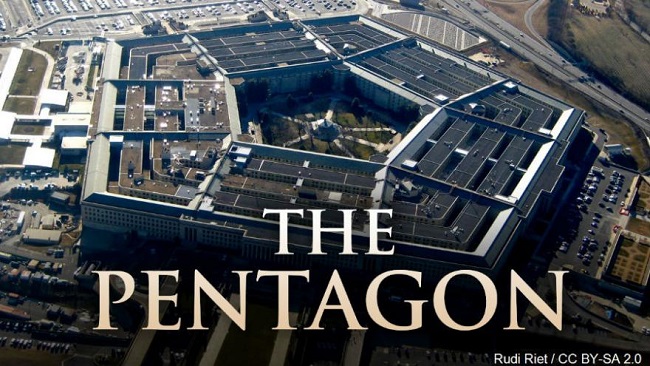
Pentagon quietly adds dozens to tally of troops wounded amid war on Iran 0
The United States Department of War has quietly added dozens to the tally of troops wounded amid the unprovoked war on Iran, the database shows.
A web portal for the War Department this week increased the total number of personnel wounded since the start of the illegal US-Israeli military aggression against Iran to 861.
Data published on the Defense Casualty Analysis System, also known as the DCAS database, publicly shows that 29 US sailors and eight Marines had been added to the list of wounded military personnel this week.
According to a review of the Pentagon’s public database of personnel killed and wounded during US conflicts and other offensives overseas, the first three members of the US military were killed, and five more were wounded on March 1 in the war against Iran.
Hundreds more have been added to the database since then, with the Pentagon increasing the tally by 37 this week without offering any explanations from military officials.
Earlier this month, The Washington Post, in a report citing six Department of War insiders, revealed that more American forces have died across the West Asia region during the US-Israeli war on Iran than are reflected in the US Department of War’s publicly available “casualty records.”
The insiders, who were described as being familiar with the department’s internal casualty accounting data, told the newspaper that at least 22 US military personnel had died, four more than the 18 fatalities listed by the department’s “Defense Casualty Analysis System.”
Iran has experienced two major rounds of unprovoked US-Israeli military aggression over the past Iranian year (March 2025-March 2026).
The first was a 12-day war in June 2025, during which more than 1,000 people were killed in Iran, including women and children, according to Iranian official figures.
The second round began on February 28, when joint US-Israeli strikes targeted locations across Iran.
The war continued for around 40 days before a ceasefire was reached in April. Iranian health authorities reported that more than 3,500 people were killed during the aggression, including hundreds of women and children.
The two rounds of attacks also resulted in the martyrdom of dozens of senior Iranian military commanders and nuclear scientists, as well as the Leader of the Islamic Revolution, Ayatollah Seyyed Ali Khamenei.
Civilian and economic infrastructure was also damaged in several parts of the country.
During both wars, Iranian armed forces responded with forceful retaliatory strikes against the attacking forces, while maintaining military pressure that contributed to the eventual ceasefire.


















5, October 2026
Algeria cuts diplomatic ties with UAE 0
Algeria has decided to sever diplomatic relations with the United Arab Emirates (UAE), saying it had exhausted all efforts to preserve ties amid months of escalating tensions between the two countries.
In a statement issued on Thursday, Algeria’s Foreign Ministry said it had repeatedly raised concerns with Abu Dhabi over UAE’s “hostile actions” and had made extensive efforts to prevent the disputes from causing irreparable damage to bilateral relations.
“Despite these numerous warnings, the United Arab Emirates has persisted in these actions, which have reached a point where they can no longer be considered acceptable or tolerable within the framework of relations between two sovereign states, or remain unanswered,” the ministry said.
Algeria informed the UAE ambassador of the decision and gave him 48 hours to comply, formally ending diplomatic ties after months of mounting tensions.
The rift has deepened over Algeria’s concerns about what it regards as an increasingly interventionist UAE policy across North Africa, the Sahel and West Asia, including countries close to Algeria’s borders.
Among the sources of tension is Libya, where the UAE has provided extensive political and military support to Field Marshal Khalifa Haftar, commander of the self-styled Libyan National Army, including drones and other military equipment.
Algiers has also accused the UAE of backing the civil war in Sudan, where Abu Dhabi has been providing support to the Rapid Support Forces (RSF).
In April 2024, Algerian President Abdelmadjid Tebboune, in remarks widely understood to be directed at Abu Dhabi, said, “Wherever there is conflict, the money of this state [the Emirates] is there, in Mali, Libya, and Sudan.”
A UN fact-finding mission has documented mass killings, sexual violence and other atrocities committed by the RSF in and around El-Fasher, a city in western Sudan, saying in February that the group’s actions pointed to a “genocidal path” targeting the Zaghawa and Fur communities.
The Algerian president has also referred to an unnamed Gulf state as a “midget state,” maintaining that it sought to interfere in matters where Algeria had prevented major powers from intervening.
On February 7, Algeria began withdrawing from its bilateral air-services agreement with the UAE, signalling deteriorating relationship between the two countries.
The rift has also been fueled by the UAE’s close ties with Morocco, Algeria’s regional rival. Abu Dhabi has backed Rabat’s position on the disputed Western Sahara and opened a consulate in Laayoune, the largest city in the disputed territory, in 2020.
The UAE’s normalization of relations with Israel has further widened the divide with Algiers, which has firmly rejected the so-called Abraham Accords.