15, April 2018
French soldiers, UN peacekeepers attacked in Mali 0
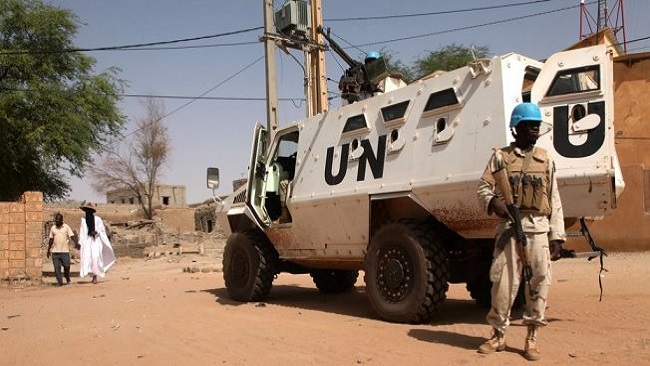
A rocket and car bomb attack left one UN peacekeeper dead, a dozen wounded and another dozen French soldiers hurt at Timbuktu’s airport area, Mali’s security ministry said Saturday. “A terrorist attack targeted” France’s Barkhan camp as well as UN troops stationed outside the northern Mali city during the afternoon, the ministry said on Facebook.
A dozen rockets were fired at the two camps with gunmen dressed as UN blue helmets riding two vehicles rigged with bombs. “One of the vehicles exploded, while the second bearing the UN sign was halted,” the statement said.
The ministry said the latest casualty toll was one UN soldier dead, a dozen wounded, five of them seriously, and a dozen French soldiers also hurt. “The fighting ended towards 18h30. The sector is being searched. The situation is under control,” it added.
A foreign security source told AFP that the assault was “unprecedented” in Timbuktu. The United Nations had earlier released the same toll for its troops. In a tweet, the UN Multidimensional Integrated Stabilization Mission in Mali announced, “One blue helmet was killed in gunfire exchanges with the assailants, a dozen wounded.”
MINUSMA had earlier “confirmed a major and complex attack on the camp at Timbuktu this afternoon (mortars + exchanges of fire + suicide attack vehicle)”. “It’s the first time there has been an attack on this scale against the MINUSMA in Timbuktu,” the security source said.
“We’ve never seen an attack like this,” an official from the Timbuktu governorate told AFP. “Shell fire, rockets, explosions and perhaps even suicide bombers.” Unrest in Mali stems from a 2012 Tuareg separatist uprising against the state, which was exploited by jihadists in order to take over key cities in the north.
More than a dozen of Timbuktu’s holy shrines, built in the 15th and 16th centuries when the city was revered as a centre of Islamic learning, were razed in a campaign against idolatry by jihadist groups linked to Al-Qaeda in 2012. The United Nations has nearly 13,000 troops and police in Mali, many of whom are deployed in the country’s lawless north.
Seven UN peacekeepers have been killed in attacks in Mali this year alone, serving in a mission that has been described as the UN’s most dangerous. A total of 102 have been killed since MINUSMA’s deployment began in 2013.
Islamist extremists linked to Al-Qaeda took control of the desert north of Mali in early 2012, but were largely driven out in a French-led military operation launched in January 2013. Insurgents remain active, linked to drug, arms and migrant trafficking in the vast Sahel region.
(AFP)
















15, April 2018
London: Ambazonians protest for independence of Southern Cameroon 0
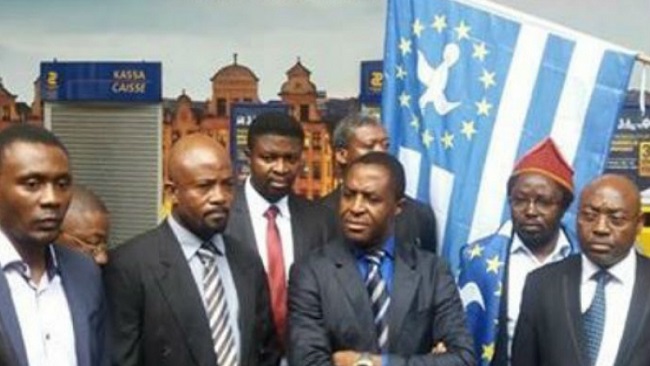
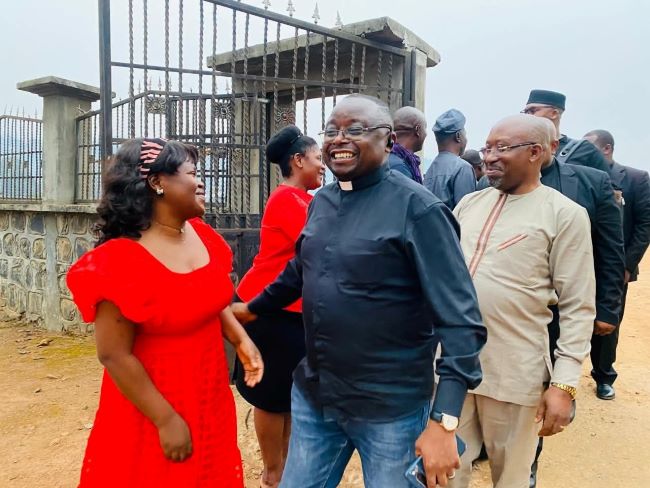
Anglophone secessionists protested in the United Kingdom on Saturday, calling for the international community to come to their rescue and free Southern Cameroon in Africa.
The secessionists have been protesting since the end of 2016, arguing that they were being marginalized by majority French speaking Cameroonians in virtually all areas of public life.
But impoverished French speaking Cameroonians have reacted with dismay, saying they were as impoverished, and as neglected, as the Anglophones, by an irresponsible dictatorial regime led by one man for almost four decades.
French speaking Cameroonians in the country’s far north who are being massacred by Boko Haram terrorists without a single visit by President Biya have found Anglophones’ blames incomprehensible.
But the Anglophones have argued that Cameroon should return, not to the united nation it was under the German occupation, but to an entity of two “separate” states that it became after the first world war, when French and British colonial powers divided the country and imposed their languages and cultures.
Many French speaking Cameroonians have argued that Anglophones’ claims that Cameroon should go back to the arrangement before the reunification in 1972, should also argue that Cameroon should go back to the unified country it was under the German occupation long before the British and the French divided it following the first world war.
Those who disagree with the Anglophones, argue in effect that Cameroon existed long before the brutal occupations by French and British forces.
Those in favor of this school of thought often react with sadness that today’s generations do not seem to remember the whole history, and are choosing to protest in the United Kingdom, a bloody country that caused the mess now being experienced in many countries in Sub-Saharan Africa, including Cameroon.
Source: Today News Africa