5, September 2022
Kenya’s Supreme Court upholds Ruto’s presidential victory over Odinga 0
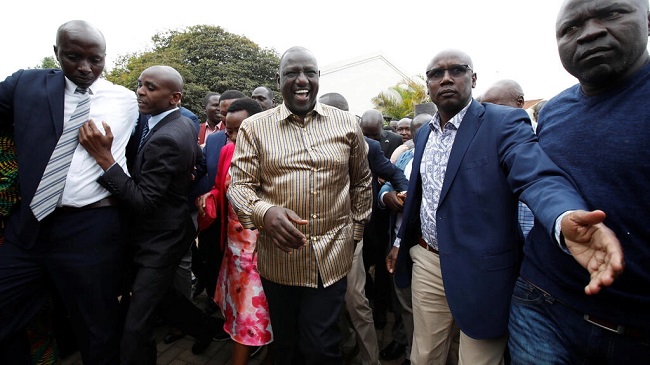
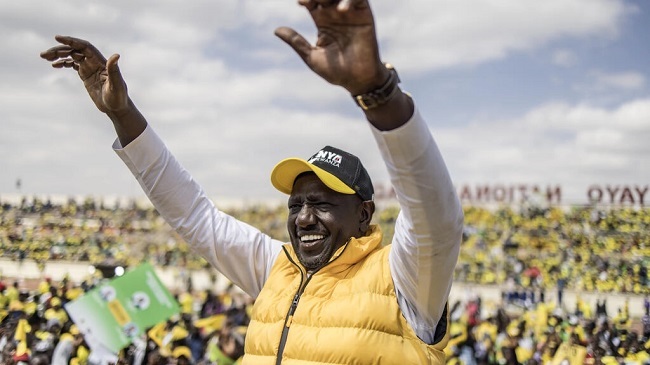
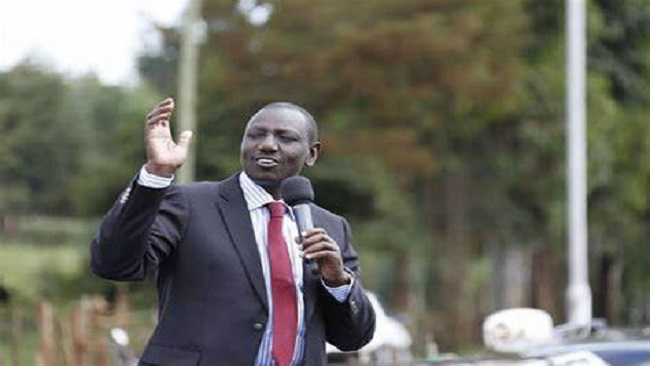
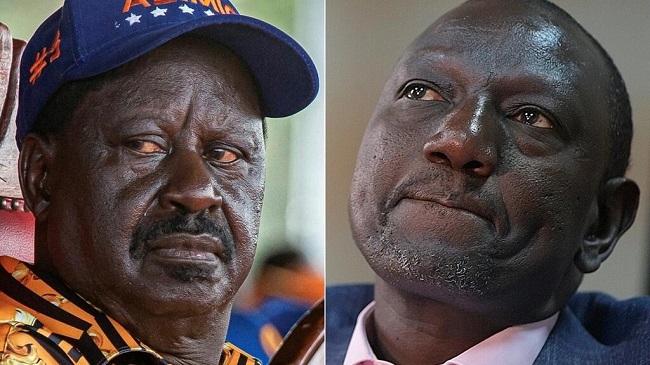
Kenya’s Supreme Court on Monday upheld William Ruto’s victory in the August 9 presidential election, ending weeks of political uncertainty and delivering a blow to challenger Raila Odinga who had alleged fraud in the poll.
“This is a unanimous decision. The petitions are hereby dismissed, as a consequence we declare the first respondent (Ruto) as president-elect,” Chief Justice Martha Koome said.
Deputy President Ruto, 55, scraped to victory by a margin of less than two percentage points in a tightly-fought race against Odinga, a veteran opposition politician now backed by the ruling party.
Odinga filed a petition to Kenya’s top court last month, claiming he had “enough evidence” to show he had in fact won the election, which ranked as one of Africa’s most expensive polls.
Although voting day passed off peacefully, the results sparked angry protests in Odinga strongholds and there are fears that the dispute could fuel violence in a country with a history of post-poll unrest.
Judges spent the last two weeks sifting through boxes of evidence to establish if any irregularities were substantial enough to nullify the election, as was the case with the August 2017 presidential poll, which Odinga also challenged.
Koome began reading out the verdict shortly after midday (0900 GMT), methodically listing the court’s response to the nine issues at the heart of the case.
She said the technology used by the Independent and Electoral Boundaries Commission (IEBC) met the standards of “integrity, verifiability, security and transparency”.
Any “irregularities were not of such magnitude as to affect the final results of the presidential election”, she said, dismissing all the claims made by the petitioners.
Odinga’s 72-page petition alleged hackers broke into IEBC servers and uploaded doctored result forms, but the claim was dismissed by the court.
Both the candidates had pledged to respect the verdict, which sparked celebrations by Ruto supporters.
Cost of living crisis
After 2017’s annulment, the IEBC was under heavy pressure to deliver a clean poll.
But this year’s outcome sparked a rift within the IEBC itself, with four of its seven commissioners accusing chairman Wafula Chebukati of running an “opaque” process.
Chebukati denied the allegations, insisting he carried out his duties according to the law of the land despite facing “intimidation and harassment”.
Since 2002, no presidential poll outcome in Kenya has gone uncontested.
At around 65 percent, turnout was sharply lower than in the August 2017 election, with observers saying it reflected growing disillusionment among citizens.
Odinga, who previously said he was cheated of victory in the 2007, 2013 and 2017 polls, had framed the legal battle as a fight “for democracy and good governance”.
Ruto in turn had urged the court to toss out the petition, accusing Odinga of trying “to have another bite at the cherry through a judicially-forced re-run”.
The 2017 poll saw dozens of protesters killed at the hands of police.
Kenya’s worst electoral violence occurred after the 2007 vote, when more than 1,100 people died in politically motivated clashes involving rival tribes.
Ruto will be sworn in on September 13, becoming Kenya’s fifth president since independence from Britain in 1963 and taking the reins of a country beset by inflation, high unemployment and a crippling drought.
Source: AFP











6, October 2022
Burkina Faso: Traore officially appointed as president after coup 0
Captain Ibrahim Traore was appointed as president of Burkina Faso on Wednesday, according to an official statement, after the West African country’s second coup in less than nine months.
The impoverished Sahel nation plunged into renewed turmoil at the weekend when Lieutenant-Colonel Paul-Henri Sandaogo Damiba — who had seized power in January — was toppled by newly emerged rival Traore, leading a faction of disgruntled junior officers.
It was the latest putsch in the Sahel region much of which, like Burkina Faso, is battling a growing Islamist insurgency.
Traore has been appointed as “Head of State, Supreme Head of the Armed Forces”, according to the official statement read out on national television by spokesman for the ruling junta Captain Kiswendsida Farouk Azaria Sorgho.
The statement said that Traore would now be the “guarantor of national independence, territorial integrity… and continuity of the State.”
Damiba fled to Togo following the two-day standoff, which was defused by religious and community leaders.
Burkina is struggling with a seven-year-old jihadist campaign that has claimed thousands of lives, forced nearly two million people to flee their homes and left more than a third of the country outside government control.
Swelling anger within the armed forces prompted Damiba’s coup against the elected president in January.
Appointing himself transitional head of state, Damiba had vowed to make security the country’s top priority — but after a brief lull the attacks revived, claiming hundreds of lives.
Tensions
Delegates from the Economic Community of West African States (ECOWAS) wrapped up a fact-finding mission Tuesday and held meetings with religious and traditional leaders and Traore.
Traore said the ECOWAS visit was to “make contact with the new transition authorities” as part of the support that Burkina Faso derived from the region.
Speculation has risen that Burkina’s new leader may follow other fragile regimes in French-speaking Africa and forge close ties with Moscow at the expense of France, the region’s former colonial power and traditional ally.
The dramatic takeover coincided with violent anti-French protests and the sudden emergence of Russian flags among demonstrators.
On the streets, demonstrators’ slogans included “France get out”, “No to ECOWAS interference”, and “Long live Russia-Burkina cooperation”.
The United States has warned the junta of the risks of allying with Russia, saying they condemned “any attempt to exacerbate the current situation in Burkina Faso”.
“We strongly encourage the new transitional government to adhere to the agreed-upon timeline for a return to a democratically elected, civilian-led government,” a State Department spokesman said earlier this week.
Traore has previously said he would stand by a pledge that Damiba gave ECOWAS for restoring civilian rule by July 2024.
Source: AFP