2, November 2022
Equatorial Guinea shuts land borders ahead of election campaign 0
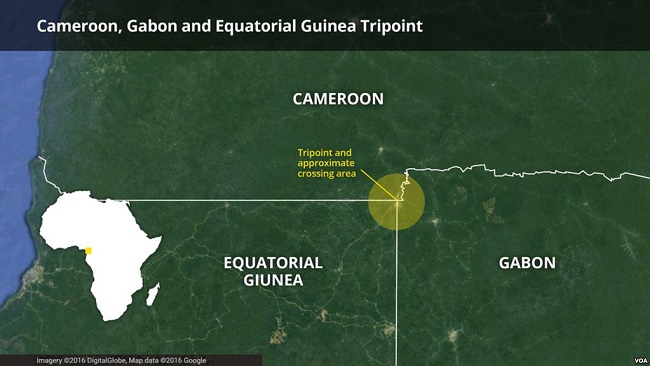
Equatorial Guinea on Monday closed its land borders with Cameroon and Gabon to prevent what it describes as “infiltration” groups intent on “destabilising” the presidential election campaign starting this week.
Vice President Teodoro Nguema Obiang Mangue had said the measure would “prevent the infiltration of groups who may attempt to destabilise the (election) campaign”, which begins on Thursday.
He did not fix a date for the reopening of the borders when he announced last Tuesday that only airports would remain open.
A local official in the northern border town of Ebebiyin told AFP on condition of anonymity that the frontier had been closed since Monday morning.
Initially scheduled for April 2023, the presidential poll was brought forward to November 20 to coincide with legislative, senate and local elections following a decree by long-serving leader Teodoro Obiang Nguema Mbasogo.
The war in Ukraine and the Covid-19 pandemic were cited as the reasons behind the decision to hold the costly votes simultaneously.
The central African nation has heightened border security since what the authorities described as an aborted coup attempt in late 2017 that aimed to kill President Obiang.
The coup was allegedly orchestrated by Equatorial Guineans and foreign mercenaries crossing from Cameroon.
Equatorial Guinea regularly shuts its borders on security grounds despite a regional agreement on the free movement of people and goods with Cameroon, Gabon, Congo-Brazzaville, the Central African Republic and Chad.
The country possesses major oil and gas resources, but a majority of its 1.3 million people live below the poverty line, according to the World Bank.
Source: AFP










27, November 2022
Advance Democracy: President Obiang elected to another 7 years in Equatorial Guinea 0
President Teodoro Obiang Nguema has been elected to another seven-year term in Equatorial Guinea, where the 80-year-old has held the office since August 1979.
The National Electoral Board said Obiang received 405,910 votes, accounting for a notably high 94.9% of all votes cast in the West African nation. In reporting results, the board said it was “scrupulously respecting the sovereign will of the people” following last Sunday’s vote.
Presidential candidates Andrés Esono and Buenaventura Monsuy received 9,684 votes and 2,855 votes, respectively.
Obiang’s Democratic Party of Equatorial Guinea (PDGE), a coalition of political parties, also kept its hold in the legislature and in the country’s municipal offices. That includes all 100 seats in the Chamber of Deputies, all 55 seats in the Senate, and all 588 offices contested at the municipal level.
Despite his fragile health, Obiang’s re-election was fully expected in Equatorial Guinea, where opposition political leaders and human rights activists are routinely silenced and corruption is common.
That pressure continues following a 2017 coup attempt and questions about succession by his son, Teodorin Obiang, who has been convicted on corruption and fraud-related charges in multiple countries including France, the United States and Brazil.
More than 100 people have been detained since the elder Obiang announced his intent to run for office in September, according to human rights lawyer Tutu Alicante, head of the Equatorial Guinea Justice organization.
Although Obiang isn’t the oldest leader in Africa—President Paul Biya of Cameroon is 89 years old—he has now become the longest-running elected leader in the world.
Source: Africa Times