27, March 2025
Biya’s election season stirs renewed anxiety in Southern Cameroons 0
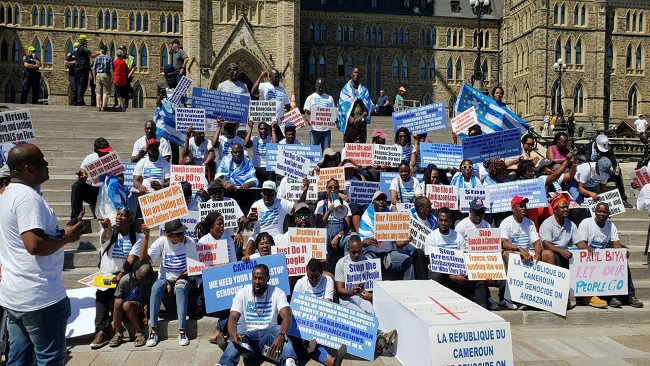
While Biya’s re-election in October seems all but inevitable, his prolonged stay in power – without meaningful dialogue or efforts toward a peaceful resolution – signals continued suffering and a deepening crisis for the Anglophone population.
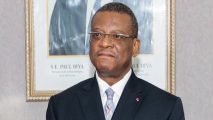
At 92, Paul Biya, Africa’s second-longest-serving leader, announced in January that he would seek his eighth presidential term in the October elections, ending months of speculation over his candidacy.
In Anglophone Cameroon – the Northwest and Southwest regions – years of alleged electoral fraud, a deadly and protracted conflict and political exclusion have eroded faith in democratic participation. For the millions living there, daily life has become a constant struggle against fear, displacement and uncertainty.
Anglophone Cameroon has been engulfed in a deadly conflict for years, characterised by violence and deepening mistrust between separatist groups and the central government, which many in the region accuse of systemic human rights violations.
In search of recruits
On some nights in Tiko, a coastal town in Cameroon’s troubled Southwest region, 39-year-old Mbuh Margaret* stays awake while her two young daughters, both under 12, sleep nearby. Her eyes remain fixed on the door, her mind racing with fear of what might come.
“I don’t think I’ll ever recover,” she says, still haunted by the traumatic ordeal she endured in 2018 – an event that continues to cast a long shadow over her life.
That year, just weeks before the presidential election, separatist fighters stormed her home in a remote part of Bamenda, the Anglophone capital of Cameroon’s Northwest region. They arrived at midnight, demanding that her 43-year-old husband join their movement.
“They wanted more manpower against the government forces and were recruiting by any means necessary,” she recalls.
When he refused, they shot him in the head.
“I didn’t believe what I saw; everything happened in a second,” Margaret recalls.
Two days later, fearing for their lives, she fled with her daughters to Tiko, her late husband’s hometown. Now working as a farm labourer in a nearby village, she earns between CFA2,500 ($4) and CFA7,500 ($12) a week – barely enough to survive. Her meagre income forces her to borrow constantly, and the debts continue to mount.
Call for election boycott
Biya’s announcement of his candidacy for the October elections has reignited calls from separatist groups to boycott the vote in the Anglophone regions. Despite ongoing government crackdowns, separatist leaders argue that participating would only serve to legitimise Biya’s decades-long rule over their communities.
For Margaret and many others in the Anglophone regions, already enduring nearly nine years of conflict between separatist fighters and government forces, the election season brings renewed fear and uncertainty.
“In 2018, separatist groups first warned us to stay away from the election, using threats and violence to enforce compliance,” Margaret tells The Africa Report.
“At night, whenever I think about what led to my husband’s death, and how easily it could happen again, I lose my peace,” she says.
More than 6,000 killed
In October 2016, civil unrest broke out in Cameroon’s Anglophone regions when lawyers and teachers led protests against the marginalisation of English-speaking Cameroonians. The Francophone-led government in Yaoundé responded with force, shutting down internet services and branding the demonstrations a “terror procession”.
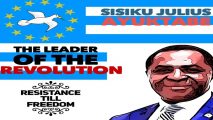
By 2017, what began as peaceful protests had spiralled into a full-scale separatist rebellion. Rebel leaders declared the independence of the self-styled Federal Republic of Ambazonia, claiming the Anglophone Northwest and Southwest regions. Though these areas make up just 3% of Cameroon’s territory, they are home to nearly 20% of its population.
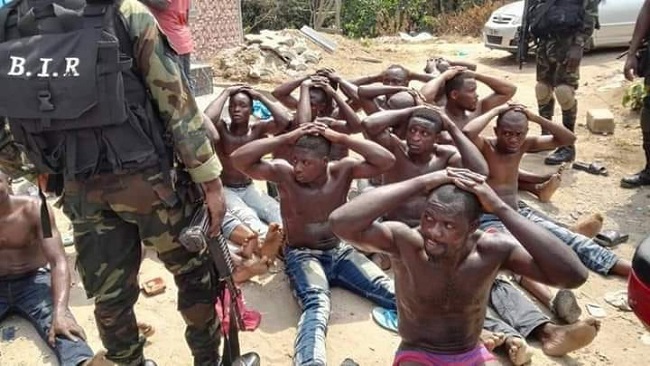
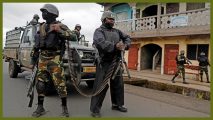
As the conflict escalated, the government responded with a brutal crackdown, arresting thousands and opening fire on protesters. President Biya deployed the elite Rapid Intervention Battalion (BIR), a unit repeatedly accused of severe human rights abuses, to crush the separatist movement.
Nearly a decade later, the war drags on. More than 6,000 people have been killed, thousands remain missing, and hundreds of thousands have been displaced – many of them children struggling with malnutrition and disease in overcrowded camps or remote villages.
“It’s an ugly situation, and no one is safe,” says Beatrice*, 45, a resident of Kumba in the Southwest region. She lost her husband and three sons in a fire during a clash between separatists and government forces. She was the only one who survived.
‘We lost everything’
From Northwest’s Kumbo and Bamenda to Mamfe and Buea in the Southwest region, the scars of war are visible throughout Anglophone Cameroon. Bullet-riddled homes and abandoned buildings, left in ruins, have become common sights in communities where violence is now part of daily life.
Entire villages lie empty, silent evidence of what many describe as a partial genocide and a host of underreported war crimes. In these conflict-affected areas, children are among the most vulnerable. Many are forced into harsh agricultural labour or degrading work just to help their families survive.
“In late 2019, as government soldiers and separatist fighters exchanged gunfire in our village in Buea, my mother’s grocery shop was looted and set on fire,” says Peter*, a 15-year-old fisherman’s assistant in Limbe, a coastal town in the Southwest region. “I remember how we lost everything and became even poorer that night.”
Peter now earns between CFA15,000 ($24) and CFA24,000 ($38) a week, most of which goes toward supporting his family of five. According to UNICEF, nearly 500,000 children – including Peter and his childhood friends – were out of school across Cameroon’s Anglophone regions in 2024, as the conflict continues to disrupt education and displace communities.
As the crisis grinds on, Cameroon’s healthcare infrastructure continues to deteriorate, particularly in the English-speaking regions where medical facilities under Yaoundé’s control are often targeted in the conflict. The violence has forced many healthcare workers to flee, leaving residents to rely on private or religious clinics that are frequently overpriced, understaffed or ill-equipped.
Joy Francis*, a 19-year-old from a small village near Bamenda, tells The Africa Report that menstrual hygiene has become an overlooked emergency. Menstrual pads have either become unaffordable or completely unavailable, forcing many girls to use old rags or even thick leaves.
It’s a similar situation for Margaret, whose 12-year-old daughter also relies on scraps of old cotton during her period.
“It is disgusting and cruel for Paul Biya, a man who calls himself the father of the nation, to ignore the plight of Anglophone Cameroonians,” says a Douala-based political analyst, speaking anonymously due to a media ban on openly criticising the president.
“Without genuine political reform,” he warns, “we may be heading toward deeper anarchy in the English-speaking regions.”
Wave of violence
Ahead of the 2018 presidential election, Biya declared that Cameroon’s national unity was non-negotiable. Yet, both during his campaign and after securing re-election, he publicly acknowledged the severity of the Anglophone crisis, pledging to pursue a peaceful resolution. In 2019, he launched the Major National Dialogue aimed at addressing the grievances of the separatist movement.
However, separatist leaders and political critics dismissed the initiative as inadequate and unrealistic, arguing that it excluded key secessionist figures and failed to address fundamental demands, such as power-sharing or the prospect of independence.
“The crisis worsened, but Biya was not interested in recognising the separatist movement or their demands,” says a Yaoundé-based political analyst. “The peace plans were largely a political manoeuvre to convince the international community that the Anglophone unrest was merely a domestic issue that could be easily resolved.”
In reality, critics argue, little changed. Separatist leaders continued to be arrested and allegedly tortured, and before long, the dialogue collapsed – triggering yet another wave of violence and deepening the crisis.
Requests for comment from both the Cameroonian ministry of defence and the prime minister’s office went unanswered.
Possibility of Biya election loss?
Despite heavy media censorship in Yaoundé and state-controlled praise of Biya, French-speaking Cameroonians still discuss the future of their country, politics and economic policies in markets, offices and homes.
However, “when Cameroonians speak about their country, regime change rarely comes up”, says a senior lecturer and political analyst in Yaoundé. He explains that beyond Biya’s deep-rooted ties to France and the West, his regime’s longevity is due in part to its ability to suppress dissent and avoid the mistakes that toppled other long-serving leaders. “From the Arab Spring to the rise of anti-French sentiment, Biya seems to learn from leadership gaps that have ended other regimes,” he says.
English-speaking Cameroonians seldom debate the possibility of Biya losing an election – because survival, not politics, is their most pressing concern.
“It’s about our lives first,” says Margaret. “We don’t know if we’ll be even more forgotten by our countrymen – and the world.”
As external funding dries up, separatist fighters have increasingly turned on the very communities they claim to defend, looting homes, kidnapping civilians and extorting so-called “liberation taxes”. Women are often the most vulnerable. “I pay these taxes,” Margaret says. “Many women have been raped on the farms for failing to pay.”
Though some separatist factions have allowed schools to reopen, fear still lingers. For Margaret, the risk is too great. “Until my daughters’ safety is assured, they stay at home,” she says. “It’s better they lose their education than their lives.”
Culled from The Africa Report















1, April 2025
Biya’s Succession: Catholic bishops urge electoral reform ahead of presidential election 0
Catholic bishops in Cameroon are calling for electoral reform as the country prepares for the 2025 presidential election.
In a March 28 Pastoral Letter, the bishops insist that the electoral code as it stands now cannot make for a free, fair and transparent election, echoing the demands of several opposition parties.
“The electoral process in Cameroon is governed by the Constitution and the 2012 Electoral Code?’ Despite this legal framework, the opposition parties and civil society in our country continue to criticize the electoral process for its lack of transparency, justice and fairness,” the bishops say.
They emphasized the need for a revised Electoral Code and improvements in the systems governing elections and campaign financing.
They acknowledged that immediate reforms may not impact this year’s elections but stressed the importance of establishing a code of good conduct.
“The code of good conduct for elections can be understood as a series of behavioral standards drawn up and adopted by all the parties involved in an electoral process and aimed at helping to create conditions conducive to the organization of fair, free, credible and transparent elections, and to the acceptance of the election results by all,” the bishops said.
Father Humphrey Tatah Mbuy, a leading priest and researcher in Cameroon, questioned the autonomy of the body in charge of managing elections in Cameroon, Elections Cameroon (ELECAM), explaining that there was “too much interference by the Ministry of Territorial Administration or the government in ELECAM, and people are questioning very seriously if ELECAM is as independent and autonomous as it should be.”
“Once it is not, it goes without saying that everything they organize will be seen by others as if they are teleguided. Also, if you look at the whole election the way it is, we don’t have an electoral map. Nobody knows how many people are in what part of Cameroon at any given moment,” Mbuy told Crux.
He said the absence of data on population dynamics makes it hard for political parties and contestants for political office to identify where to seek the most votes.
The priest added that the electoral code is defective in several areas, but offered no specifics, saying simply that the government’s seeming allergy to revising it as advocated by several opposition parties and civil society organizations means “there is something that may be hidden.”
“Opposition parties have also worked on the electoral code and suggested what could be added and what could be subtracted, and what could be better in our code. The better it is, the better for all of us. If elections are fair, they are fair for everyone,” he told Crux.
On February 17, the mail service of the Presidency of the Republic admitted to having received a document detailing the proposals of the opposition parties and civil society on what to improve on Cameroon’s electoral code.
The proposals include the introduction of a single ballot paper; lengthening the duration of electoral campaigns (to 30 days instead of 15); lowering the security deposit required for legislative elections (from $5,000) to $825 per candidate) and municipals (from $8 t9o $40); and prohibiting polling stations from being set up in barracks or chieftaincies.
The proposed reform also seeks to reduce the abstention rate by suggesting that voting should be made compulsory.
In addition, the proposed reform seeks to make ELECAM more independent of government and the ruling party and seeks to make the counting of votes more efficient and transparent.
Besides reforms to the electoral code and electoral process, the Catholic bishops in their March 28 Pastoral Letter also propose that the media should exercise balance in the way they cover elections.
They said the media’s role in democratic participation was indispensable, noting that without a clear understanding of the political landscape, facts, and proposed solutions, meaningful participation becomes impossible.
They emphasized the need to promote pluralism in information and communication, supported by laws that guarantee equal access to these tools.
The bishops, however, expressed concern that the concentration of media ownership among a few individuals or groups poses a significant threat to democracy, especially when intertwined with governmental and financial interests.
“The information provided by the media is at the service of the common good. Society has a right to information based on truth, freedom, justice, and solidarity,” they said.
They said a diverse media landscape is essential for voters to access reliable and varied information, enabling free and objective choices. Unfortunately, some digital media outlets thrive on disinformation, defamation, and hate speech, often exploiting tribalistic sentiments.
This underscores the need for vigilance from bodies like the National Communications Council (NCC) and adherence to laws, such as the 2019 legislation against hate speech and tribalism.
“Men and women of the media must be competent; distinguished by their expertise and the quality of the information they broadcast, as well as by their ability to resist pressures that run counter to their professional ethics,” the bishops said in their statement.
Source: Crux